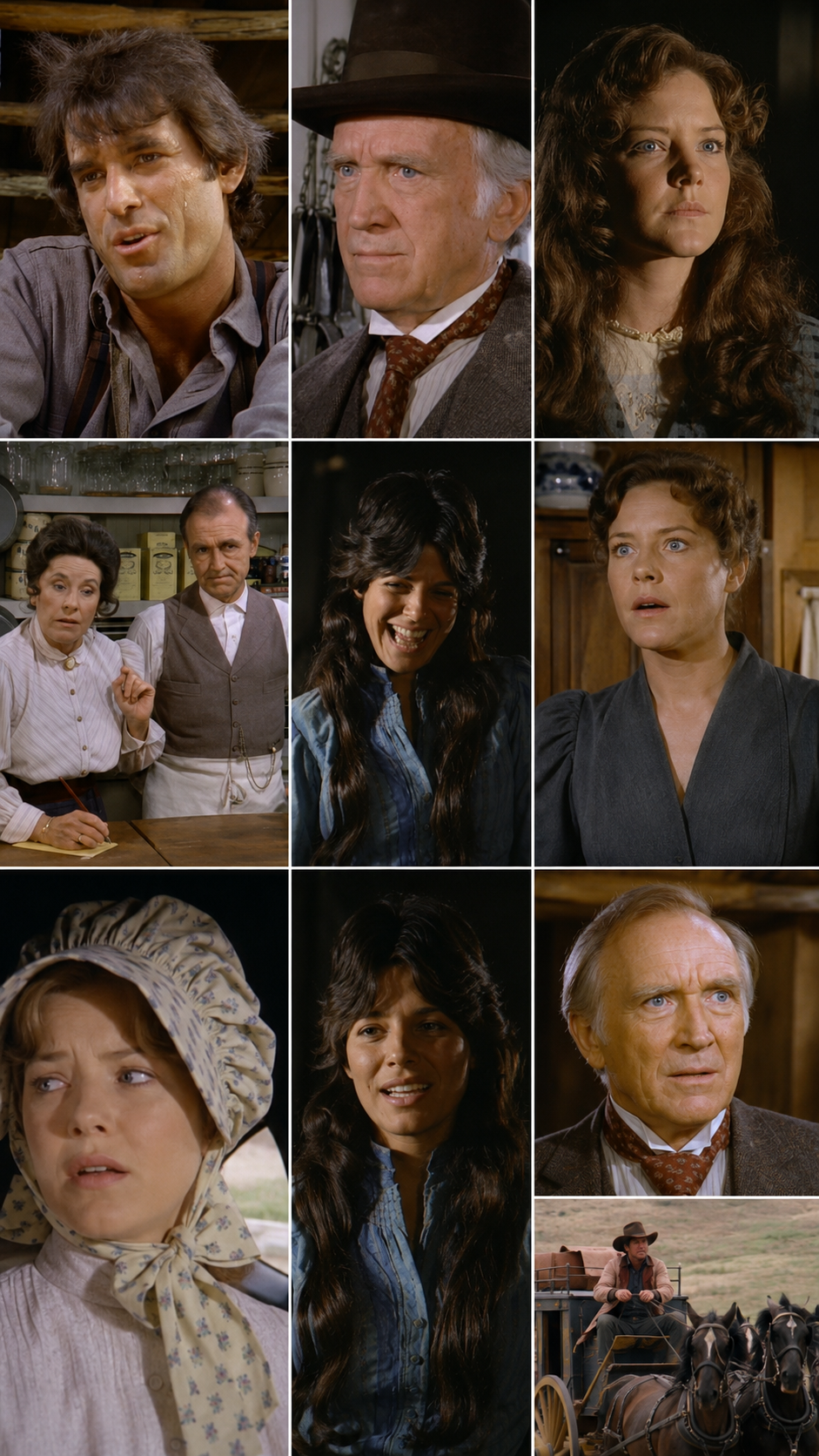
Spring had finally returned to Walnut Grove.
The snow had melted from the fields, the trees were beginning to bud, and the town was slowly waking from the long winter. Children ran along the road after school, merchants opened their doors to the fresh air, and farmers prepared their land for another planting season.
But for one man, spring brought little joy.
Marvin lived quietly on the edge of town. He was older now, and years of hard work had left him tired and withdrawn. He spoke little to his neighbors and rarely asked anyone for help. Most people thought he simply preferred being alone.
The truth was more painful.
Marvin had lost much of what once gave his life meaning. His family was gone, his strength was fading, and the small garden beside his house had become neglected. Once, it had been full of flowers, vegetables, and laughter. Now weeds covered the soil, broken boards leaned against the fence, and the old path had nearly disappeared beneath the grass.
To Marvin, the garden was not just a piece of land.
It was a memory.
Years earlier, he had worked there beside someone he loved deeply. Every row of flowers reminded him of a voice he could no longer hear. Every empty corner seemed to hold the shadow of a happier life.
That was why he could not bring himself to repair it.
One afternoon, Laura Wilder passed Marvin’s property and noticed him standing near the ruined fence. She greeted him kindly, but Marvin answered with only a small nod.
Laura looked at the garden.
“It must have been beautiful once,” she said.
Marvin’s face tightened.
“It was,” he replied. “A long time ago.”
Laura sensed that he did not want to talk, so she did not press him. But as she walked away, she kept thinking about the sadness in his eyes.
Later, Laura mentioned Marvin to Almanzo. She explained that the garden seemed important to him, even though he had allowed it to fall apart.
“Maybe it hurts too much to fix it,” Almanzo said.
Laura nodded. “Or maybe he thinks there’s no reason to.”
At school, Laura spoke to the children about how a place could hold memories. She asked them whether they had ever seen something old or broken that still mattered to someone.
Several hands went up.
One child spoke about a chair made by a grandfather. Another mentioned a dress that had belonged to a mother. Soon, the children began to understand that Marvin’s garden might mean more than flowers and vegetables.
A few of them suggested helping him.
Laura warned them that Marvin was proud and might refuse.
“He may not want anyone touching it,” she said.
But the idea had already taken root.
The next day, a small group of children stopped near Marvin’s house. They brought simple tools—rakes, shovels, and a wooden bucket. They stood nervously beside the gate until Marvin appeared.
“What are you doing here?” he asked.
One boy stepped forward.
“We thought we could help with your garden.”
Marvin stared at them.
“I didn’t ask for help.”
The children fell silent.
Laura, who had followed at a distance, approached gently.
“They only wanted to do something kind.”
Marvin looked back at the garden. For a moment, pain crossed his face.
“There’s nothing worth saving there,” he said.
Then he turned and went inside.
The children were disappointed, but Laura asked them not to be angry.
“Sometimes people push kindness away because accepting it means facing what they’ve lost,” she explained.
Still, the children did not give up.
Instead of entering Marvin’s property, they began clearing weeds from the roadside near his fence. They repaired a small section that had fallen into the ditch. They carried away broken branches and stacked the usable wood neatly.
Marvin watched from his window.
At first, he was irritated.
Then he noticed something he had not seen in years—children laughing near the garden.
The sound stirred a memory.
He remembered a younger version of himself, kneeling in the dirt with someone beside him. He remembered planting seeds, arguing over where the roses should go, and sharing cool water beneath the shade of an old tree.
That evening, Marvin stepped outside after everyone had left.
He touched the repaired fence.
The work was rough, but it had been done with care.
The next morning, the children returned. This time, Marvin did not order them away immediately.
He stood at the gate and asked, “Do any of you know what you’re doing?”
The children looked at one another.
“Not really,” one girl admitted.
Marvin almost smiled.
“Then you’ll ruin the soil.”
Laura stepped forward. “Perhaps you could show them.”
Marvin hesitated.
For years, he had protected his memories by keeping everyone away. But now he began to wonder whether the garden had died because he had stopped caring for it—or because he had stopped allowing life to enter it.
At last, he opened the gate.
“Only the front section,” he said. “And nobody touches the rose bed.”
The children cheered.
Over the next several days, they worked together. Marvin showed them how to loosen the soil without damaging the roots. He taught them which weeds should be pulled and which small plants should be left alone.
His voice became stronger as he taught.
He corrected their mistakes, complained when they stepped on the rows, and insisted that every tool be cleaned before it was put away.
But beneath his gruff manner, something inside him was changing.
The children began looking forward to their visits. They listened to Marvin’s stories about gardening, weather, and patience. He told them that some seeds grew quickly, while others remained hidden beneath the ground for weeks.
“Just because you can’t see something growing,” he said, “doesn’t mean nothing is happening.”
Laura realized he was no longer speaking only about plants.
One afternoon, a child discovered an old wooden sign buried beneath the weeds.
The faded words read:
Marvin’s Garden
Marvin took the sign in his hands.
For a long time, he said nothing.
Then he quietly explained that his wife had painted it many years before. They had planned to fill the garden with flowers from every season.
The children asked what had happened to her.
Marvin looked toward the empty rose bed.
“She died before we finished it.”
The joyful mood faded.
Laura placed a gentle hand on his shoulder.
Marvin swallowed hard.
“I thought if I let the garden disappear, the memories might hurt less,” he admitted. “But they didn’t.”
A little girl looked up at him.
“Maybe the garden isn’t here to make you sad,” she said. “Maybe it’s here so you won’t forget the happy part.”
Marvin’s eyes filled with tears.
That evening, after the children went home, he carried the old sign into his workshop and began repairing it.
For the first time in years, a lamp glowed late into the night inside Marvin’s house.
And outside, beneath the soft spring rain, the newly planted seeds rested in the dark soil—quietly preparing to grow.
End of Part 1
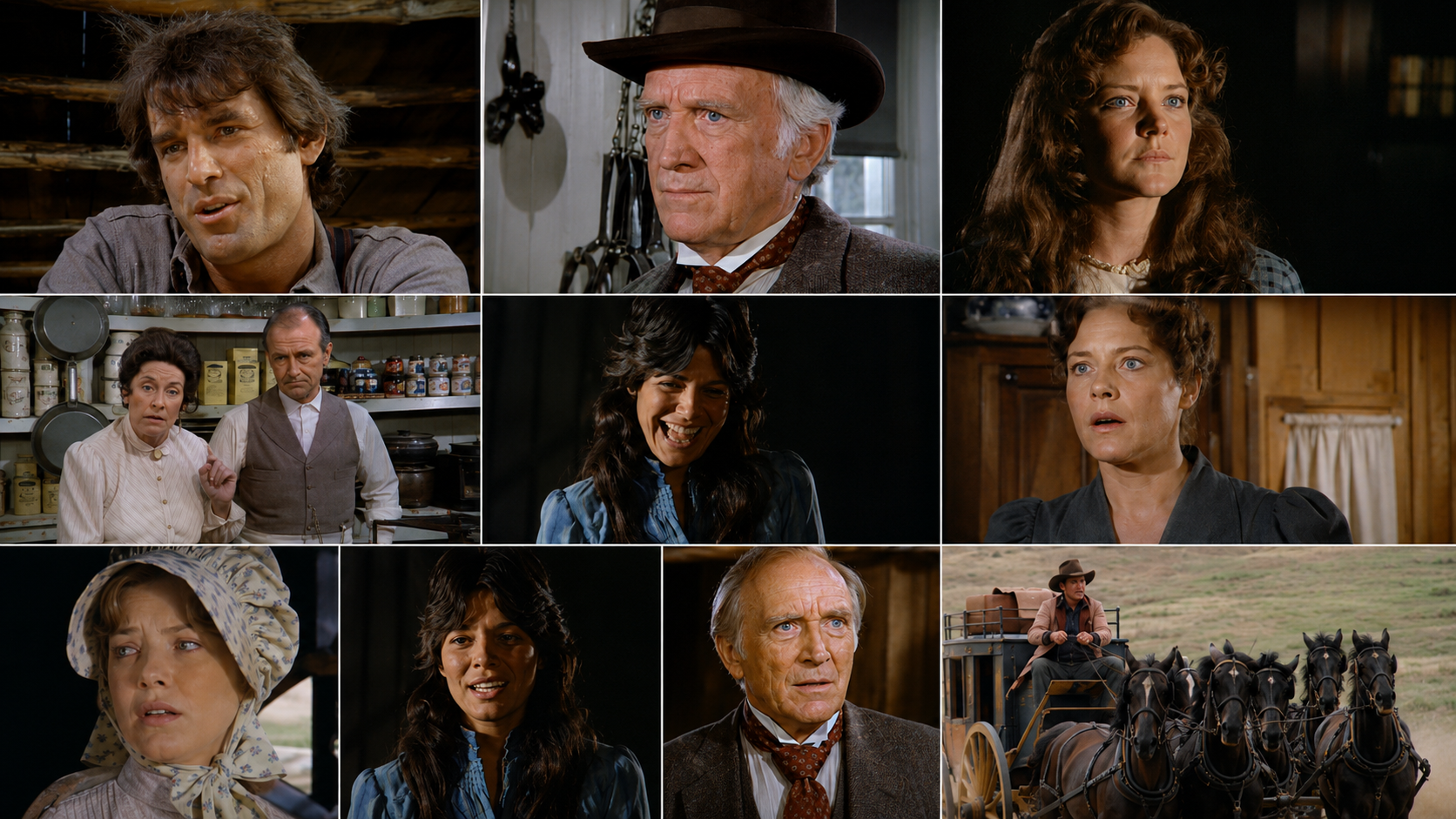
Season 9, Episode 13 — “Marvin’s Garden”
Part 2
The work on Marvin’s garden soon became a project for the entire community.
Some people brought seeds. Others donated lumber for the fence. Almanzo repaired the garden gate, while Mr. Edwards helped rebuild a small wooden bench beneath the tree.
Even those who had once described Marvin as unfriendly began to see him differently.
He still complained when someone planted too deeply. He still frowned when the children left tools in the wrong place. But now his complaints ended with patient instructions instead of angry silence.
Every morning, Marvin walked through the garden before breakfast.
He checked the soil, measured the new shoots, and studied the sky. The children often found him there waiting for them.
The old man who had once insisted that nothing was worth saving had become the first to arrive and the last to leave.
As the weeks passed, green leaves pushed through the earth.
The children celebrated every new sprout as if it were a miracle.
Marvin pretended not to share their excitement.
“They’re only plants,” he said.
But Laura noticed the way he smiled when he thought no one was watching.
The rose bed remained untouched.
Marvin had forbidden anyone from planting there. It had once been his wife’s favorite part of the garden, and he was not ready to face it.
Then one afternoon, a violent storm swept across Walnut Grove.
The wind bent trees and tore loose roof shingles. Heavy rain flooded the road and washed soil from the fields.
Marvin rushed outside to protect the garden.
Laura, Almanzo, and several neighbors arrived to help. Together they covered the young plants, reinforced the fence, and dug small trenches to carry the water away.
But part of the old rose bed collapsed.
When the rain stopped, Marvin stood in the mud and stared at the damage.
Half-buried beneath the washed-away soil was a small tin box.
He knelt and lifted it carefully.
The box was rusted, but still sealed.
Inside, wrapped in cloth, were several packets of old flower seeds and a folded letter.
Marvin recognized the handwriting immediately.
It belonged to his wife.
His hands shook as he opened it.
The letter had been written during her final illness. She had hidden it in the garden, hoping Marvin would find it one day when he was ready.
In the letter, she thanked him for every season they had shared. She wrote that she did not want the garden to become a monument to grief.
She wanted it to remain a place of life.
She asked him to continue planting flowers, to welcome children through the gate, and to sit beneath the tree whenever the world felt lonely.
Most of all, she asked him not to stop living simply because her life had ended.
Marvin read the letter twice.
Then he sat on the broken bench and wept.
No one tried to stop his tears.
Laura stayed beside him quietly.
After a while, Marvin looked toward the damaged rose bed.
“She knew me better than I knew myself,” he said.
The next morning, Marvin gathered the children.
He placed the old seed packets on the table.
“These may not grow,” he warned. “They’re very old.”
A boy shrugged. “We can still try.”
Marvin nodded.
Together, they planted the seeds in the rose bed.
They worked slowly and carefully. Marvin showed each child how to make a shallow opening in the soil. Then he covered the seeds with his own hands.
Days passed.
Nothing appeared.
The children checked every morning, but the soil remained bare.
Some began to lose hope.
Marvin did not.
“Remember what I told you,” he said. “Just because you can’t see something growing doesn’t mean nothing is happening.”
Another week passed.
Then, one bright morning, a little girl shouted from the garden.
A tiny green shoot had broken through the earth.
Soon there were three.
Then five.
Not all the old seeds survived, but enough did.
Marvin stood beside the rose bed, looking at the fragile new growth.
For him, it was more than a sign of spring.
It was permission to begin again.
The community decided to hold a small gathering when the garden was ready. They repaired the path, painted the fence, and restored the wooden sign.
On the day of the opening, nearly everyone in Walnut Grove came.
Children ran between the rows. Families sat beneath the tree. Neighbors shared food and stories while music carried across the yard.
Marvin hung the restored sign above the gate.
Marvin’s Garden
Beneath the old words, he had added a new line:
Everyone Is Welcome
Laura smiled when she saw it.
The flowers moved gently in the breeze, and the garden that had once seemed forgotten was alive again.
Marvin stood near the rose bed as the first blossoms began to open.
He imagined his wife beside him—not as a painful memory, but as part of every beautiful thing they had built together.
A young boy approached him holding a watering can.
“Where should I start?” the boy asked.
Marvin looked around at the garden, the children, and the people gathered beneath the trees.
Then he pointed toward a new empty row.
“Over there,” he said. “We still have more to plant.”
As the afternoon sun lowered over Walnut Grove, Marvin knelt beside the children and pressed new seeds into the earth.
He had learned that grief did not disappear when a person opened their heart again.
But love could grow beside it.
And sometimes, the most beautiful gardens began in places that once seemed too broken to bloom.
The End
This is a dramatized, heartwarming retelling inspired by the themes and characters of the classic television series.


