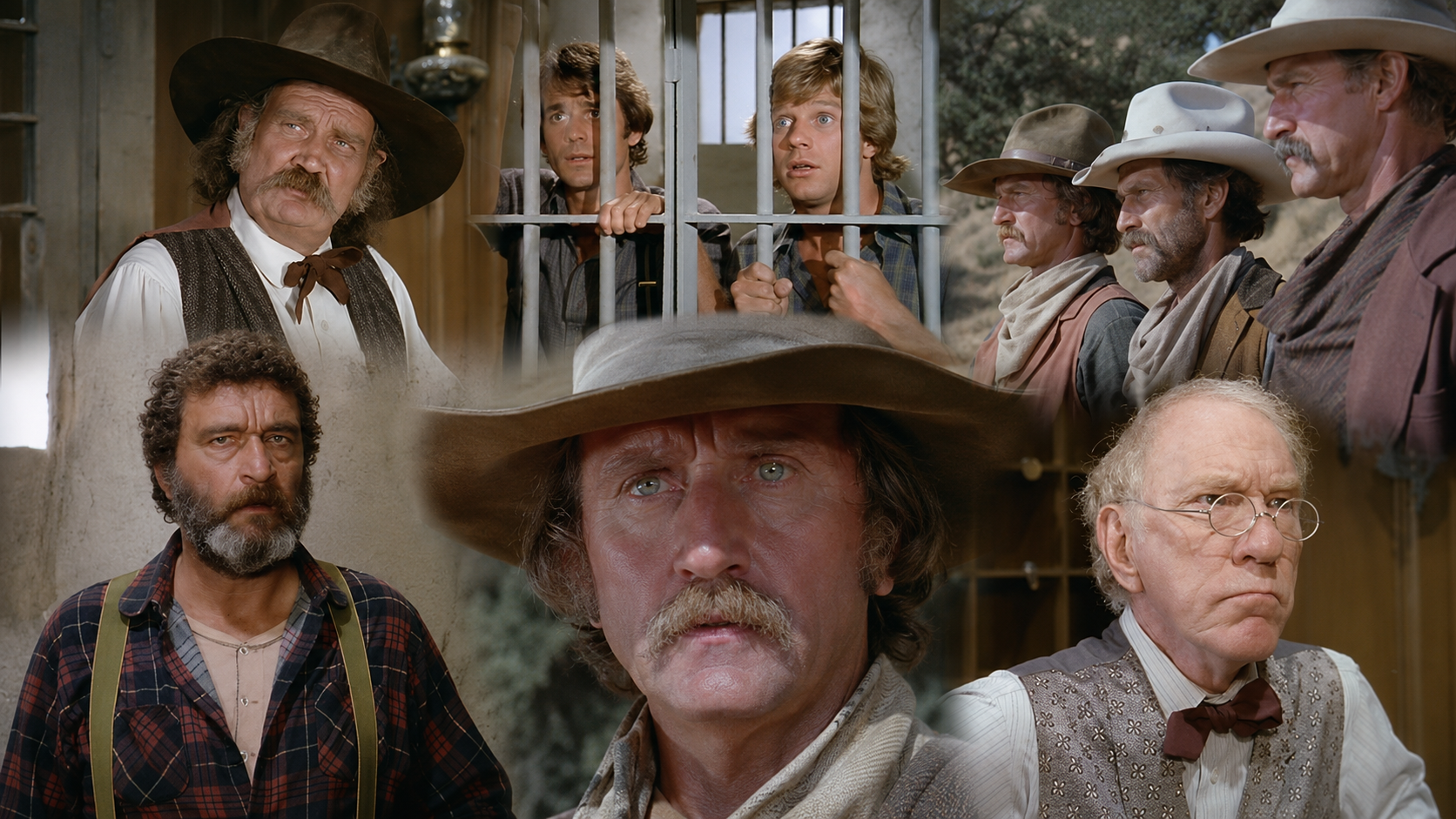
Walnut Grove had always been a peaceful town.
People worked hard, helped their neighbors, and trusted that trouble would pass them by. But one quiet morning, that sense of safety disappeared when three rough-looking brothers rode into town.
Their clothes were dusty, their faces hardened by years on the road, and their eyes seemed to study every building they passed.
They were the older brothers of the infamous Younger family.
No one in Walnut Grove knew exactly why they had come, but their arrival immediately made people uneasy.
At first, the men tried to appear harmless. They entered the mercantile, bought supplies, and spoke politely enough. But Harriet Oleson noticed the way they watched the cash drawer. Nels noticed the pistols beneath their coats.
When the brothers left, Harriet leaned toward her husband.
“Those men are criminals,” she whispered.
Nels warned her not to accuse strangers without proof, but he shared her concern.
Meanwhile, John Carter heard about the newcomers while working at the blacksmith shop. He had seen dangerous men before and recognized the tension in their movements.
“They aren’t here to settle down,” John said quietly. “They’re waiting for something.”
That evening, the brothers camped outside town. Around their fire, they discussed their real purpose.
They believed Walnut Grove would be an easy place to rob.
There was no sheriff stationed nearby, few armed men, and everyone trusted one another. To the brothers, the town looked weak.
But they made one serious mistake.
They confused kindness with helplessness.
The next morning, one of the brothers entered the mercantile again and began provoking Nels. He knocked merchandise from the shelves, insulted Harriet, and refused to pay for supplies.
When Nels ordered him to leave, the man laughed.
“You folks don’t have much courage around here.”
John Carter, who had entered moments earlier, stepped forward.
“You’ve been asked to leave.”
The stranger stared at him, then slowly walked away.
Outside, he warned John that the matter was not finished.
Over the next several days, the brothers caused more trouble. A farmer’s wagon was stolen. Livestock disappeared. A family returning home found their house searched.
Fear spread through Walnut Grove.
Some residents wanted to confront the men. Others believed resistance would only invite violence.
John tried to keep everyone calm.
“We protect one another,” he told them. “But we don’t become like the men we fear.”
The brothers soon learned that a large payment was expected at the bank. It was money belonging to several local farmers who had survived a difficult season.
They decided to take it.
On the morning of the robbery, Walnut Grove appeared unusually quiet.
The school was closed. Curtains were drawn. Wagons had been moved away from the street.
The brothers rode into town smiling.
They believed everyone was hiding.
But inside the buildings, the townspeople were waiting.
John Carter stood near the bank with Isaiah Edwards and several other men. They had no wish for violence, but they were determined not to surrender their neighbors’ future.
When the brothers entered the bank, they found almost no money inside.
The cash had already been moved.
Realizing they had been tricked, the eldest brother dragged the banker outside and fired his pistol into the air.
“Bring us the money,” he shouted, “or someone gets hurt!”
Doors slowly opened.
The people of Walnut Grove stepped into the street.
Farmers carried rifles. Shopkeepers held tools. Mothers stood protectively near their children.
The brothers suddenly understood that they were not facing one frightened man.
They were facing an entire community.
But instead of backing down, the eldest brother grabbed a young boy who had wandered too close and pressed a gun against him.
John Carter froze.
The boy trembled.
The town fell silent.
“Now,” the outlaw said, “bring me the money.”
John looked at the frightened child and knew that one wrong move could cost an innocent life.
Then, from behind the mercantile, a familiar voice called out.
“Let the boy go.”
Everyone turned.
Someone the brothers never expected to see had arrived in Walnut Grove.
And the confrontation was about to become far more personal.
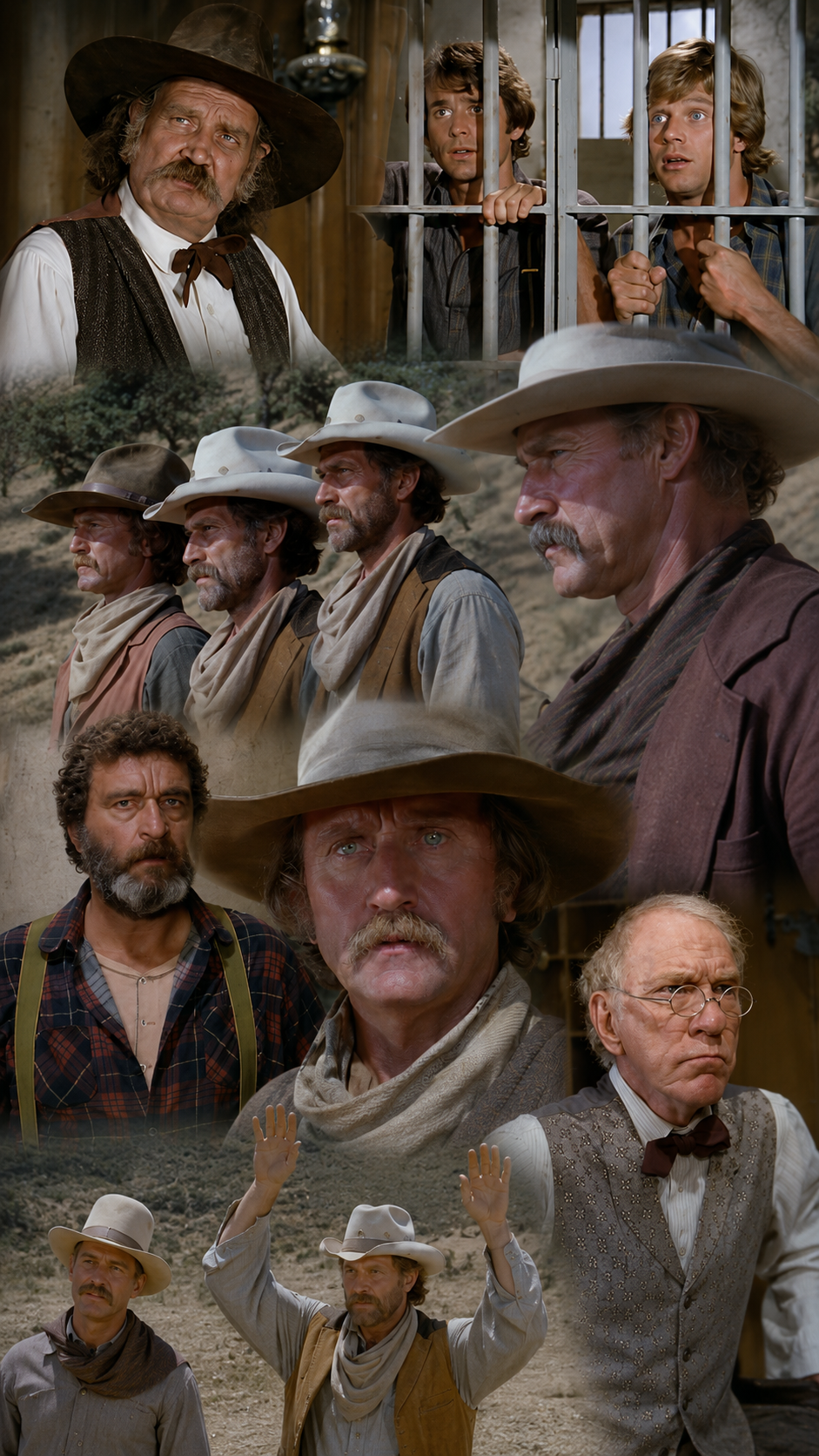
Season 9, Episode 14: “The Older Brothers”
Part 2
The man standing behind the mercantile was older than the three outlaws, but his voice carried authority.
He knew the brothers.
More importantly, they knew him.
For years, the three men had blamed the world for every hardship they had suffered. They believed fear was the only way to earn respect and violence the only way to survive.
But the newcomer reminded them of something they had tried to forget.
They had once been ordinary boys.
“You don’t have to do this,” he said.
The eldest brother tightened his grip on the frightened child.
“You don’t know anything about us.”
“I know enough,” the man replied. “I know what happened to your family. I know you learned to hate before you learned to hope. But that child had nothing to do with your pain.”
John Carter watched carefully.
The townspeople remained still, afraid that any sudden movement would provoke the outlaw.
The boy began to cry.
For one brief moment, the eldest brother looked uncertain.
But his younger brother shouted at him not to weaken.
“They’ll hang us if we surrender!”
“No,” John said. “No one here wants revenge. Let the boy go, put down your weapons, and we will make certain you receive a fair hearing.”
The brothers laughed bitterly.
They had spent years expecting betrayal. They could not believe strangers might show mercy.
Then the boy’s mother stepped into the street.
Her face was pale, but she did not scream.
She looked directly at the man holding her son.
“Please,” she said softly. “Whatever has happened to you, do not make my child carry it for the rest of his life.”
Her words reached him in a way threats never could.
The outlaw looked down at the boy.
The child was not an enemy.
He was simply afraid.
Slowly, the man lowered his pistol.
But before he could release the boy, one of his brothers panicked and fired toward the crowd.
The shot missed.
Chaos erupted.
John rushed forward and pulled the child to safety. Isaiah Edwards tackled one of the brothers. Several townsmen surrounded the others before they could fire again.
Within moments, the three outlaws were disarmed.
The boy ran into his mother’s arms.
No one had been seriously injured.
The eldest brother sat in the dirt, staring at the people around him. He expected them to beat him or shoot him.
Instead, John offered him a hand.
The man refused it at first.
“You should hate us,” he said.
John shook his head.
“I hate what you tried to do. But hatred will not repair anything.”
The brothers were taken into custody and later turned over to the proper authorities. Their crimes could not be ignored, and they would have to face the consequences.
Still, the people of Walnut Grove refused to treat them like animals.
Before they were taken away, Sarah Carter brought them food. Nels gave them clean blankets. Even Harriet, though still deeply suspicious, said that no prisoner should be sent into the cold without a proper coat.
The eldest brother seemed confused by their kindness.
He had expected punishment.
He had not expected compassion.
As the wagon prepared to leave, he looked at John.
“Why did you help us?”
John glanced toward the boy who had been held hostage. The child was now playing near his mother, already beginning to smile again.
“Because every person should have one last chance to choose a better road.”
The outlaw lowered his eyes.
For the first time in many years, he looked ashamed.
Later that evening, Walnut Grove slowly returned to normal. Lamps glowed in the windows, families gathered around their tables, and children played safely near their homes.
But the experience had changed the town.
The residents had learned that courage did not always mean fighting. Sometimes courage meant standing together. Sometimes it meant protecting others without surrendering one’s humanity.
At the Carter home, John sat with his family after supper.
Jeb asked whether the brothers had always been bad men.
John thought carefully before answering.
“No one is born believing the world is cruel,” he said. “But hurt can grow inside people when it is never healed.”
“Does that excuse what they did?” Jeb asked.
“No,” John replied. “Understanding someone’s pain does not excuse the harm they cause. But it can keep us from becoming cruel ourselves.”
Outside, the wind moved gently through the trees.
Walnut Grove had faced danger and survived, not because its people were stronger with weapons, but because they were united by trust, courage, and mercy.
The older brothers had arrived believing they could frighten a small town into submission.
Instead, they discovered something more powerful than fear.
They discovered a community that refused to abandon one another.
And as their wagon disappeared down the road, the eldest brother looked back one final time.
Perhaps, somewhere inside him, the possibility of change had finally begun.


