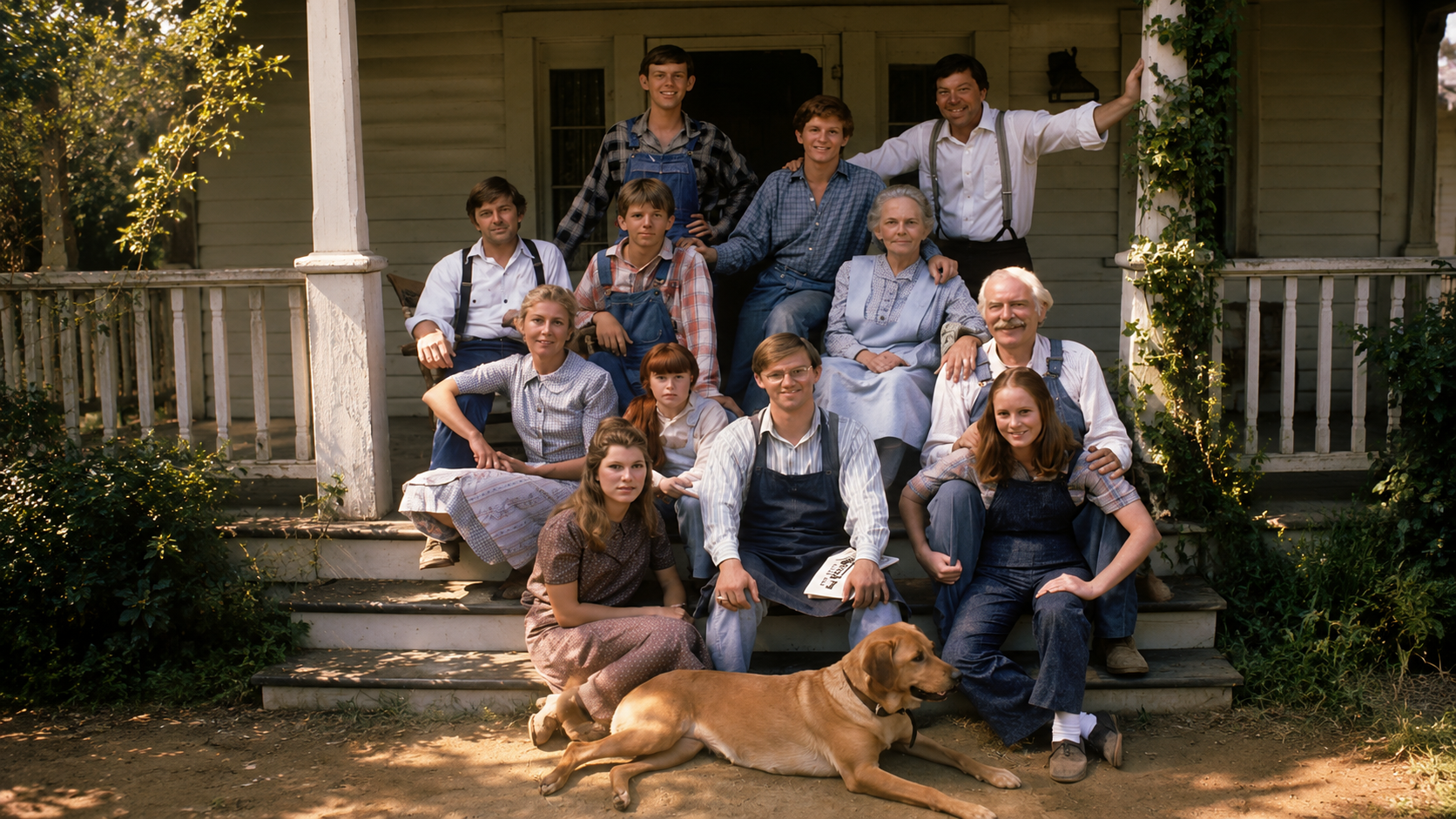
 A Mountain Home Filled with Love, Hope, and Family
Long before smartphones, busy highways, and endless television channels, there was a simple mountain home where love was worth more than money and kindness was the greatest gift anyone could give. That home belonged to the Walton family.
Set in the Blue Ridge Mountains of Virginia during the Great Depression and later through World War II, The Waltons became much more than a television series. It became a story about faith, family, sacrifice, and hope. Week after week, millions of viewers gathered to watch a family face life’s hardships together while never forgetting the importance of love.
Every episode usually ended with the famous exchange of goodnights from the darkened Walton house, a tradition that became one of the most unforgettable moments in television history.
At the center of the story stood John Walton Sr., played by Ralph Waite. John was a hardworking husband, father, and businessman who believed that honesty mattered more than wealth. Whether working long days at the family’s sawmill or helping a struggling neighbor, John always tried to do what was right, even when life made that difficult.
Beside him was Olivia Walton, beautifully portrayed by Michael Learned. Olivia was the heart of the family. Gentle but strong, patient yet determined, she guided her children through every challenge. She comforted them after disappointment, celebrated their successes, and reminded them that every person deserved kindness and respect.
Together, John and Olivia raised a large family whose personalities made every episode feel alive.
Their oldest son, John-Boy Walton, played by Richard Thomas, dreamed of becoming a writer. While his brothers thought about work, adventure, or growing up, John-Boy often found himself sitting quietly with a notebook, writing about the people and moments around him. His love of storytelling would eventually shape his future and also became the voice of the series itself.
That voice belonged to Earl Hamner Jr., the creator of The Waltons. As the narrator, Hamner shared warm reflections that made every story feel like a cherished memory. His gentle narration reminded viewers that even ordinary days could become extraordinary memories.
The Walton children each added something special to the family.
Jason, played by Jon Walmsley, loved music. Whether playing the piano or dreaming of a musical career, Jason often brought warmth to the family’s evenings through song.
Mary Ellen, portrayed by Judy Norton, was intelligent, independent, and determined. Long before it was common for women to pursue medical careers, she dreamed of becoming a nurse and later a doctor. She often challenged traditions while remaining deeply devoted to her family.
Erin, played by Mary Beth McDonough, was gentle, caring, and artistic. Her quiet strength and compassionate nature made her one of the family’s most beloved daughters.
Then came the energetic boys.
Ben, portrayed by Eric Scott, was adventurous and sometimes impulsive. He often found himself in trouble but always learned valuable lessons from his mistakes.
The youngest boys included Jim-Bob, played by David W. Harper, whose curiosity often led him into exciting adventures, and Elizabeth, played by Kami Cotler, the youngest daughter whose innocence brought smiles to everyone around her.
Many viewers also remember the family’s youngest son, Joseph, who sadly died at birth. Though he never grew up with his brothers and sisters, Joseph remained part of the Walton family’s story, reminding viewers that grief and love often exist together.
No Walton family gathering would be complete without the grandparents.
Grandpa Zeb Walton, played by Will Geer, loved telling stories, offering advice, and occasionally causing a little harmless mischief. His humor filled the home with laughter.
Grandma Esther Walton, portrayed by Ellen Corby, balanced Grandpa’s playful personality with wisdom, compassion, and remarkable patience. She cared deeply for every member of the family and quietly held generations together.
What made The Waltons so special wasn’t grand adventures or dramatic action.
Instead, it celebrated ordinary moments.
A family meal after a difficult day.
Neighbors helping rebuild a damaged barn.
Children learning honesty after making mistakes.
Parents sacrificing so their children could dream bigger than they ever had.
The Walton house itself almost became another character. The warm kitchen, the front porch, the shared bedrooms, and the crackling fireplace created a feeling of home that viewers wished they could visit.
Life during the Great Depression was never easy.
Money was scarce.
Jobs were uncertain.
Every dollar mattered.
Yet somehow the Waltons always found ways to help neighbors who had even less than they did. Their generosity showed that kindness doesn’t depend on wealth.
As the years passed and America entered World War II, the challenges facing the Walton family became even greater. Their peaceful mountain community suddenly found itself connected to events happening around the world.
The family’s greatest tests were still ahead.
Through War, Change, and the Memories That Never Fade
As World War II spread across the world, even the peaceful mountains of Walton’s Mountain could not escape its effects. Families worried about loved ones serving overseas, supplies became harder to find, and uncertainty became part of everyday life.
The Waltons faced these changes the same way they faced every challenge—with courage, faith, and love.
The children gradually became adults.
John-Boy continued pursuing his dream of becoming a writer, believing that stories could preserve memories long after moments had passed. His journey reflected the dreams of many young people who hoped to build a better future despite difficult times.
Jason’s love of music never faded. His talent reminded everyone that even during hardship, songs could bring comfort and hope.
Mary Ellen continued proving that determination could overcome expectations. She refused to let anyone tell her what she could or could not achieve, inspiring viewers with her strength and compassion.
Erin grew into a thoughtful young woman whose kindness touched everyone she met.
Ben learned that true courage wasn’t about taking risks—it was about accepting responsibility and protecting the people you love.
Jim-Bob never lost his curiosity, while Elizabeth carried the innocence that reminded the family to keep believing in tomorrow.
Throughout every season, John and Olivia remained the foundation of the household.
They didn’t pretend life was perfect.
Sometimes they disagreed.
Sometimes they worried.
Sometimes they struggled to provide for such a large family.
But every challenge strengthened their commitment to one another.
Grandpa Zeb continued sharing stories that mixed humor with wisdom, while Grandma Esther quietly reminded everyone that love often speaks through simple actions rather than grand speeches.
One of the greatest strengths of The Waltons was its focus on community.
Neighbors celebrated together.
They mourned together.
When one family suffered, everyone helped.
Whether repairing a roof, harvesting crops, or comforting someone during loss, Walton’s Mountain showed the beauty of people standing together.
The series also explored important subjects with honesty and compassion.
Poverty.
Prejudice.
Loss.
Illness.
Growing up.
Forgiveness.
Hope.
Rather than offering easy answers, the stories encouraged understanding, empathy, and kindness.
Even decades after its original broadcast, The Waltons continues to find new audiences around the world.
Many people return to the series because it reminds them of values that never grow old—respect for parents, love between siblings, caring for neighbors, and believing that family is life’s greatest treasure.
The cast helped make these stories unforgettable.
Richard Thomas brought intelligence and warmth to John-Boy.
Michael Learned gave Olivia both quiet grace and incredible strength.
Ralph Waite portrayed John Walton as a father whose integrity inspired generations.
Will Geer and Ellen Corby created one of television’s most beloved grandparent couples.
Jon Walmsley, Judy Norton, Mary Beth McDonough, Eric Scott, David W. Harper, and Kami Cotler each helped create a family that felt real rather than fictional.
Above all, Earl Hamner Jr. transformed his own childhood memories into stories that continue to touch hearts today.
Perhaps that is why millions of viewers still smile whenever they hear the familiar nighttime tradition.
One by one, voices echo through the quiet mountain house.
“Good night, John-Boy.”
“Good night, Daddy.”
“Good night, Mama.”
“Good night, everyone.”
Those simple words became far more than a television ending.
They became a reminder that no matter how difficult life becomes, home is where love waits, family stands together, and tomorrow always brings another chance to begin again.


