The Waltons – S1.E5 “The Typewriter”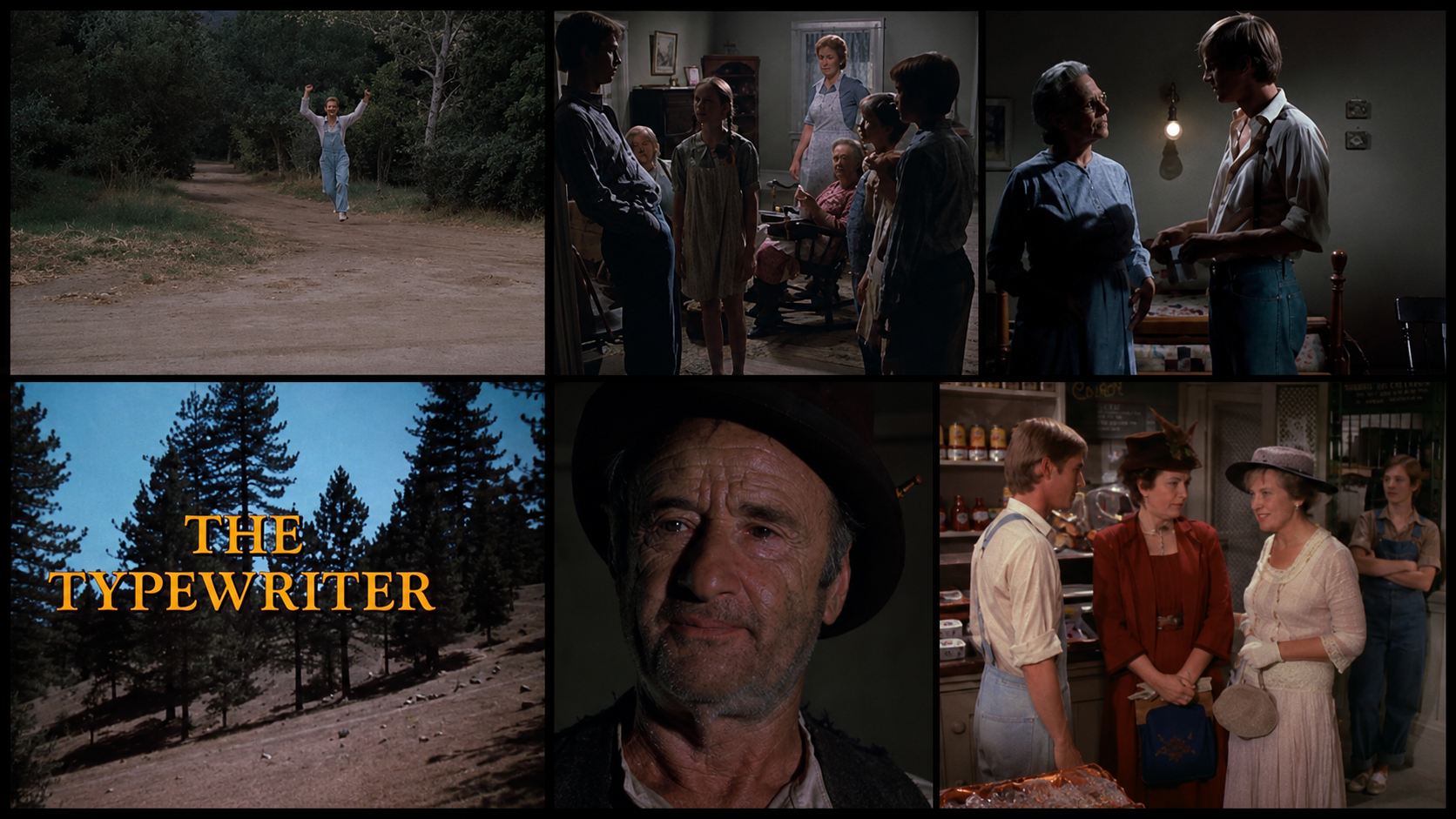
Part 1
John-Boy Walton had always dreamed of becoming a writer.
On Walton’s Mountain, most people thought about crops, firewood, food, and hard work. But John-Boy thought about words.
He wrote in his journal every night, saving little pieces of life before they slipped away.
He wrote about his family, the mountain, the sound of rain on the roof, and the quiet courage of poor people trying to survive the Depression.
One day, John-Boy visited the Baldwin sisters.
Miss Mamie and Miss Emily were kind, gentle women who lived in a world filled with old memories.
Inside their home, John-Boy saw something that caught his eye.
A typewriter.
To him, it looked like magic.
He touched the keys carefully. When the letters struck the paper, his eyes shone with excitement.
With a typewriter, his stories could look real. They could look professional. They could look like they belonged in a newspaper.
The Baldwin sisters saw how much it meant to him. They allowed him to borrow it for a little while.
John-Boy promised to take great care of it.
He carried the heavy machine home like it was treasure.
That night, he typed with joy. The clicking sounds filled the house. He felt closer than ever to his dream.
But the next day, trouble began.
Mary Ellen saw the typewriter in the house and did not know it belonged to John-Boy.
To her, it looked like an old broken machine.
When a junk dealer came by, she gave it away.
By the time John-Boy found out, the typewriter was gone.
His heart dropped.
It was not only important to him.
It was borrowed.
And now he had to face the Baldwin sisters.
Part 2
John-Boy was angry at Mary Ellen, but deep down, he knew she had not meant to hurt him.
Still, the problem was serious.
The typewriter belonged to the Baldwin sisters, and they had trusted him.
John-Boy felt ashamed. He had wanted so badly to use it that he had not told his family clearly enough.
Now he had lost something that was not his.
John-Boy and Mary Ellen tried to find the junk dealer.
They searched everywhere they could. They asked neighbors.
They looked down roads and around town, hoping to find the wagon.
But the typewriter had already been taken away.
John-Boy felt sick with worry.
At home, his father reminded him that being responsible meant more than saying sorry.
If you borrowed something, you had to return it or make it right.
John-Boy knew he had to tell the truth.
So he went to the Baldwin sisters’ house.
His voice was nervous as he explained what happened.
He told them he had borrowed the typewriter, brought it home, and then lost it by mistake.
Miss Mamie and Miss Emily were disappointed, but they were not cruel.
They understood that accidents happened. Still, John-Boy could see the sadness in their faces.
The typewriter had belonged to their father. It was part of their family history.
That made John-Boy feel even worse.
He promised he would find a way to replace it.
But replacing a typewriter was not easy. The Walton family had very little money. Every dollar mattered.
John-Boy began to wonder if his dream of writing was selfish. Maybe he should stop thinking about stories and focus only on work.
But his family did not want him to give up.
They knew writing was part of who he was.
Part 3
John-Boy kept searching for a solution.
He worked, saved, and asked around. Mary Ellen also felt guilty and tried to help.
She had made a mistake, but she loved her brother and wanted to fix it.
The family slowly came together.
That was the way of the Waltons. When one person had trouble, everyone felt it.
When one person needed help, everyone gave what they could.
In time, John-Boy learned an important lesson.
A dream is precious, but trust is even more precious.
He had borrowed something special, and he had learned that responsibility must come with ambition.
The Baldwin sisters, with their gentle hearts, forgave him. They saw that he was truly sorry.
They also saw something else: a young man who loved words deeply and wanted to make something of himself.
John-Boy did not stop writing.
He returned to his journal with a wiser heart.
Maybe he did not always have a typewriter, but he still had his thoughts, his pencil, and his family.
And on Walton’s Mountain, that was enough to begin again.
That night, John-Boy wrote about what had happened.
He wrote about mistakes, forgiveness, family, and the strange way a lost typewriter could teach a boy about honesty.
As the house grew quiet, he closed his journal and listened to the soft sounds of home.
He had lost a typewriter.
But he had gained a lesson he would carry for the rest of his life.
Good night, John-Boy.


