Four Eyes – Part 1: Mary’s World Begins to Blur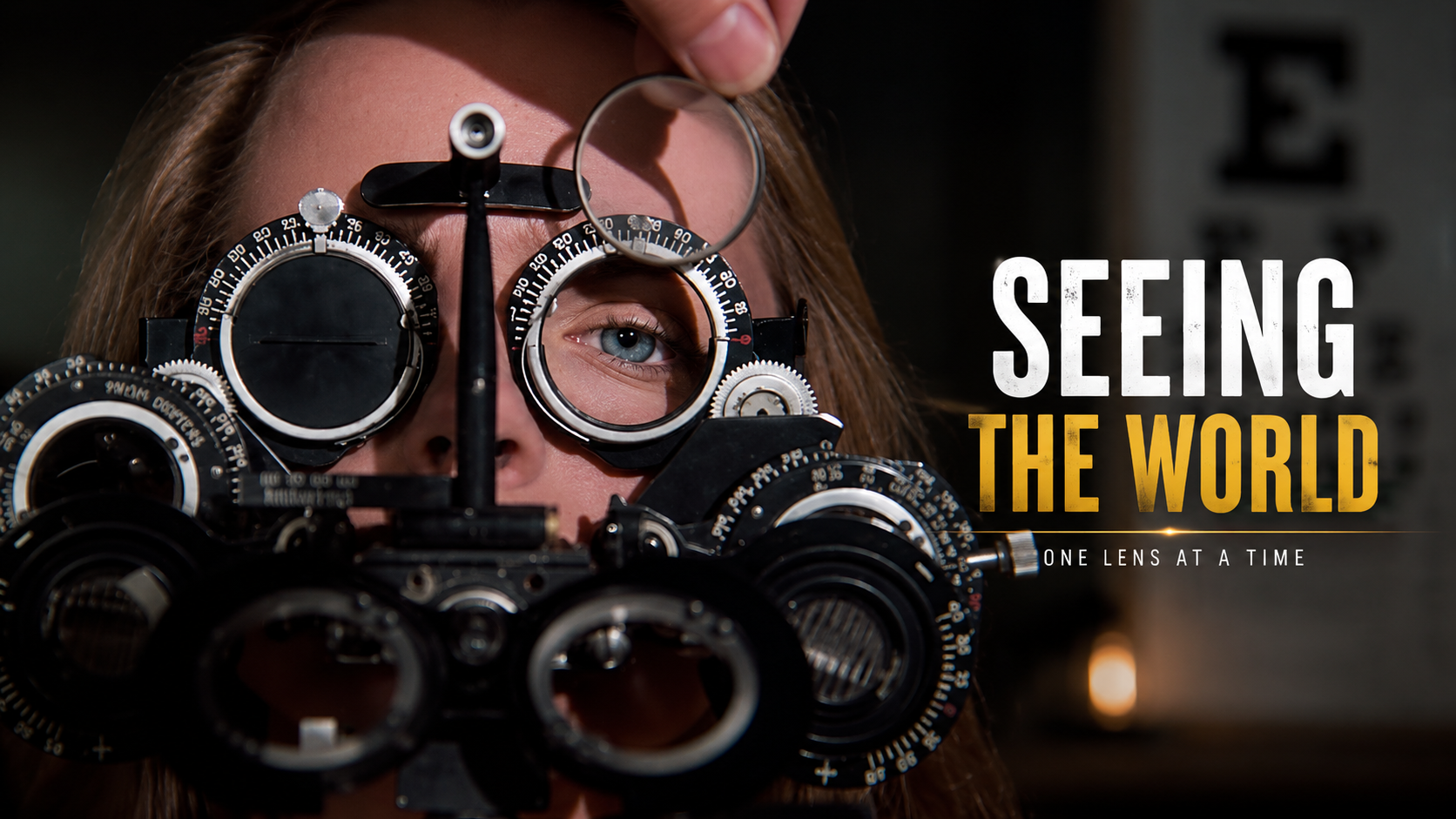
Mary Ingalls had always been one of the best students in Walnut Grove.
She loved reading, worked hard on every assignment, and rarely made mistakes in school.
Miss Beadle often praised her for her dedication, and Charles and Caroline were proud of the young woman she was becoming.
But one autumn morning, something felt different.
As Miss Beadle wrote arithmetic problems on the blackboard, Mary narrowed her eyes.
The white chalk lines looked fuzzy, almost as if someone had smeared them with water.
She blinked several times, hoping her vision would clear, but it only grew worse.
“Mary,” Miss Beadle said with a warm smile, “would you solve the next problem for the class?”
Mary stood up confidently, but the moment she looked toward the board, her heart sank. She couldn’t make out the numbers.
“I’m… I’m sorry, Miss Beadle. I can’t read it.”
The classroom fell silent.
Nellie Oleson raised an eyebrow while Willie tried to hide a laugh.
Mary slowly returned to her seat, embarrassed.
She had studied the lesson the night before. She knew the answers, but she simply couldn’t see them.
Over the following weeks, the problem became impossible to ignore.
She began holding books only inches from her face.
During lessons she guessed at words instead of reading them.
When Laura pointed toward birds flying over Plum Creek, Mary could barely see more than tiny dark shapes.
Laura noticed.
“Mary, don’t you see them?”
“I do… just not very well.”
Laura frowned but didn’t say anything.
That evening, Charles watched Mary struggle to thread a needle while helping Caroline sew.
“You’ve missed the hole three times,” he said gently.
Mary sighed.
“I don’t know what’s wrong with me, Pa.”
Charles walked over and picked up a newspaper from across the room.
“Can you read the headline?”
Mary stared at it.
“No.”
Charles exchanged a worried glance with Caroline.
The next morning he hitched the horses to the wagon and took Mary to see the town doctor.
After carefully examining her eyes, the doctor smiled kindly.
“Mary’s eyes are healthy,” he explained. “She simply can’t focus on distant objects anymore.”
“What does that mean?” Charles asked.
“It means she needs eyeglasses.”
Mary felt her stomach tighten.
“Glasses?”
The doctor nodded.
He selected a pair from a small case and carefully placed them on Mary’s face.
For a moment, she simply stared.
Then her eyes widened.
The room suddenly looked brighter.
She could see every crack in the wooden walls. Every page on the doctor’s desk. Even the tiny clock hanging across the room.
She looked out the window.
Every leaf on the trees seemed sharp and beautiful.
“Pa…”
Charles smiled.
“What is it?”
“I can see everything.”
The ride home was filled with excitement.
Mary pointed out birds, fences, and distant hills she hadn’t noticed in months.
When they reached home, Laura laughed happily.
“Mary, you’re looking at everything!”
Mary grinned.
“I forgot the world looked this beautiful.”
The following Monday she proudly wore her glasses to school.
She could finally read every word Miss Beadle wrote on the blackboard.
Her confidence returned almost immediately.
But across the room, Nellie Oleson stared at Mary’s face with a sly smile.
She leaned toward Willie and whispered something.
Willie burst into laughter.
Then Nellie stood just loud enough for everyone to hear.
“Well… look who’s wearing spectacles.”
She smirked.
“I guess we should call you… Four Eyes.”
The classroom erupted with laughter.
Mary’s smile disappeared.
She slowly reached up and touched her glasses.
She suddenly wished she had never worn them at all.
End of Part 1…
Four Eyes – Part 2: Finding the Courage to Be Herself
The nickname spread through Walnut Grove School faster than Mary could have imagined.
“Four Eyes!”
“Here comes Four Eyes!”
Every morning, someone whispered it before she even reached her desk.
Nellie enjoyed every moment of it.
Whenever Miss Beadle turned her back, Nellie would grin at Willie.
“Careful,” she teased loudly. “Mary might see us twice.”
The children laughed.
Mary tried to ignore them, but every joke felt like another stone on her heart.
One afternoon, Nellie decided to be even crueler.
“You know,” she said, pretending to sound thoughtful, “girls who wear glasses never get married.”
She glanced toward Miss Beadle.
“They end up old and lonely… just like teachers.”
Miss Beadle immediately stopped writing on the board.
“Nellie.”
Her voice was calm but firm.
“That is enough.”
Nellie folded her arms but remained silent.
Even though Miss Beadle defended her, Mary’s confidence had already been shaken.
That afternoon she quietly removed her glasses before walking home.
The next day she left them in her desk.
Without them, the classroom became a blur again.
She guessed at lessons.
She copied the wrong words.
Her grades began slipping once more.
At supper, Caroline noticed Mary wasn’t wearing her glasses.
“Where are they?”
Mary looked down.
“I don’t want people laughing at me.”
Charles gently placed his fork on the table.
“Mary.”
She looked up.
“Do you remember how happy you were when you first put those glasses on?”
She nodded.
“You could see the whole world again.”
Mary’s eyes filled with tears.
“But everyone thinks I look funny.”
Charles smiled softly.
“People sometimes laugh at things they don’t understand.”
Caroline reached across the table and held Mary’s hand.
“What matters isn’t what people say.”
“It’s who you are.”
Later that evening, Charles walked with Mary outside beneath the stars.
“When I was your age,” he said, “I worried about what everyone thought of me.”
“What changed?”
“I realized the people who truly love you don’t care whether you wear glasses, old boots, or patched clothes.”
Mary smiled slightly.
“And the people who judge you?”
“They’re the ones who still have growing up to do.”
The next morning, Mary stood before the mirror.
She picked up her glasses.
For a moment she hesitated.
Then she placed them on her face.
When she entered the classroom, Nellie opened her mouth.
“Four—”
Miss Beadle raised one finger.
“Nellie.”
She immediately fell silent.
Instead of beginning the lesson, Miss Beadle addressed the class.
“Every one of us is different.”
“Some of us wear glasses.”
“Some are taller.”
“Some are better at reading.”
“Some are better at numbers.”
“But kindness is something every one of us can choose.”
The room became completely quiet.
She continued.
“When we laugh at someone’s differences, we reveal our own weakness—not theirs.”
Several students lowered their heads.
Even Willie looked uncomfortable.
Mary realized something important.
There was nothing wrong with her glasses.
They didn’t change who she was.
They helped her learn.
They helped her see.
Most importantly, they helped her become the person she was meant to be.
Over the next several weeks, fewer children joined Nellie in teasing her.
Some even apologized.
Mary once again became one of the best students in Walnut Grove.
She answered questions with confidence, helped Laura with homework, and wore her glasses proudly every single day.
Although Nellie never completely stopped making comments, they no longer hurt the way they once had.
Mary had discovered that real confidence doesn’t come from pleasing everyone.
It comes from accepting yourself exactly as you are.
As Charles often reminded his daughters, true beauty could never be measured by appearance.
It lived in kindness, courage, and the strength to stand tall even when others tried to bring you down.
From that day forward, Mary never hid behind her glasses again.
Instead, she looked through them with pride, knowing they allowed her to see not only the world more clearly—but herself as well.
The End


