Dodo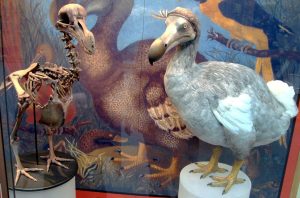
The Famous Extinct Bird
The dodo (Raphus cucullatus) was a flightless bird that once lived only on the island of Mauritius in the Indian Ocean, east of Madagascar. It is now extinct.
The dodo was closely related to the Rodrigues solitaire, another flightless bird that also became extinct.
Both belonged to a group connected to modern pigeons and doves. Today, the dodo’s closest living relative is the Nicobar pigeon.
For many years, people believed a white dodo lived on the nearby island of Réunion, but later studies showed this was a misunderstanding caused by confusion with another extinct bird, the Réunion ibis, and old paintings.
Based on fossil remains, scientists estimate that the dodo stood about 63 to 75 centimeters (2 to 2.5 feet) tall and weighed between 10 and 18 kilograms (23 to 39 pounds).
Since no living dodos were ever photographed, what we know about their appearance comes from old drawings, paintings, and written descriptions from the 1600s.
These sources often differ, so the bird’s exact appearance remains uncertain.
Most descriptions show the dodo with brownish-gray feathers, yellow legs, a small tuft of tail feathers, a bare gray head, and a large curved beak with black, yellow, and green coloring.
The dodo likely ate fruits and other plant materials.
Like many birds, it swallowed small stones, called gizzard stones, to help digest food.
It probably lived in the forests and coastal areas of Mauritius. Some reports suggest that the dodo laid only one egg at a time.
Scientists believe the bird lost the ability to fly because food was plentiful on the island and there were very few natural predators.
Although the dodo has often been portrayed as slow, overweight, and clumsy, researchers now believe it was actually well suited to its environment.
The first known record of the dodo came from Dutch sailors in 1598.
Over the following decades, the bird was heavily hunted by sailors, while introduced animals such as rats, pigs, and monkeys damaged its habitat and ate its eggs.
The last widely accepted sighting of a dodo was in 1662. After it disappeared, many people even doubted it had ever existed and considered it a myth.
In the 1800s, scientists began studying the few dodo remains that had been taken to Europe.
One of the most valuable pieces is a preserved head, which contains the only known soft tissue of the bird still in existence today.
Later discoveries on Mauritius, especially in the Mare aux Songes swamp, uncovered many more fossil remains and helped researchers learn more about the species.
The dodo’s extinction, which happened less than 100 years after humans first recorded it, became one of the earliest examples of how human activity can drive a species to extinction.
The bird later gained worldwide fame through Lewis Carroll’s “Alice’s Adventures in Wonderland” and has since become a powerful symbol of extinction, lost wildlife, and the importance of protecting endangered species.
Taxonomy
Early scientists were unsure how to classify the dodo and suggested it might be a small ostrich, a rail, an albatross, or even a vulture. In 1842, Danish zoologist Johannes Theodor Reinhardt proposed that the dodo was actually a ground-dwelling pigeon after studying a dodo skull in the collection of the Natural History Museum of Denmark. Although his idea was initially mocked, it was later supported by English naturalists Hugh Edwin Strickland and Alexander Gordon Melville in their 1848 book The Dodo and Its Kindred, which aimed to separate fact from fiction about the bird.
After examining the preserved dodo head and foot at the Oxford University Museum and comparing them with the remains of the extinct Rodrigues solitaire, Strickland and Melville concluded that the two birds were closely related. Strickland pointed out that while they were not identical, they shared several unique features in their leg bones, traits that were otherwise known only among pigeons. This helped confirm that the dodo and the Rodrigues solitaire were members of the pigeon family.


Dodo Classification and Relationship to Pigeons
Studies of the dodo’s skull, including specimens in the Zoological Museum of Copenhagen and Oxford University Museum, helped scientists determine in the 1840s that the dodo was closely related to pigeons. Researchers Hugh Edwin Strickland and Alexander Gordon Melville found that the dodo shared many important anatomical features with members of the pigeon family.
They noted that the dodo had a short, curved tip on its beak and a long, bare section near the base, a feature also seen in pigeons. Like pigeons, the dodo had bare skin around its eyes, a high forehead, and nostrils positioned low on the beak. Its legs, scales, and skeletal structure were also more similar to ground-dwelling pigeons than to other birds. The bird’s large crop, used for storing food, further supported this connection. In addition, the dodo reportedly laid only one egg at a time, which is typical of pigeons.
The dodo also shared several internal skeletal features with pigeons, including similarities in the jaw, palate, and foot structure. The main differences were its much smaller wings and its unusually large beak compared to the size of its head.
During the 19th century, scientists often confused the dodo with other extinct birds from nearby islands. The Rodrigues solitaire and Réunion solitaire were at times placed in the same genus as the dodo. Some bones and old descriptions even led researchers to mistakenly create additional dodo species, which were later shown to be misidentified remains of other birds, including the Rodrigues solitaire and the red rail of Mauritius.
For many years, the dodo and the Rodrigues solitaire were placed in their own separate family, called Raphidae, because scientists were uncertain about their exact relationship to other pigeons. Later studies of their bones and DNA revealed that the two birds were closely related and belonged within the pigeon family, Columbidae. Today, both species are classified in the subgroup Raphinae and the tribe Raphini. In 2024, scientists created a new subtribe called Raphina, which includes only the dodo and the Rodrigues solitaire.
Evolution
.jpg)
The Dodo’s Closest Living Relative
The Nicobar pigeon is considered the closest living relative of the dodo. In 2002, American geneticist Beth Shapiro and her research team conducted the first DNA study of the dodo. By examining genetic material taken from a leg bone of the Oxford dodo specimen and a thigh bone of the extinct Rodrigues solitaire, they confirmed that the two birds were closely related and belonged to the pigeon family, Columbidae.
Their research showed that the Nicobar pigeon, which lives in Southeast Asia, is the dodo’s nearest living relative. Other close relatives include the crowned pigeons of New Guinea and the tooth-billed pigeon of Samoa, a bird whose beak resembles that of the dodo. These birds form a group mainly made up of island-dwelling, ground-living pigeons.
A later study published in 2007 produced similar results, although it slightly changed the relationships among some species and included additional pigeons in the family tree. However, because the DNA came from a single preserved dodo specimen and the material was highly degraded, scientists believe more research is needed to fully confirm these findings.
Further support came from studies of the birds’ physical features and behavior. In 2014, scientists also analyzed DNA from the recently extinct spotted green pigeon, discovering that it was closely related to the Nicobar pigeon and therefore also linked to the dodo and Rodrigues solitaire.
Researchers estimate that the ancestors of the dodo and Rodrigues solitaire separated from each other around 23 million years ago. Since the Mascarene Islands, including Mauritius and Rodrigues, are much younger than that, the ancestors of these birds were almost certainly capable of flight when they first arrived. Scientists believe they reached the islands by gradually moving from island to island across the Indian Ocean from South Asia.
Because the islands had abundant food and very few natural predators or competing mammals, the dodo and Rodrigues solitaire evolved into large, flightless birds. Even though the dodo developed a unique skull and grew much larger than most pigeons, many parts of its skeleton remained surprisingly similar to those of its smaller flying relatives.
Another giant flightless pigeon, known as the Viti Levu giant pigeon, once lived in Fiji. Discovered from fossil remains in 2001, it was only slightly smaller than the dodo and Rodrigues solitaire and is also believed to have been related to the crowned pigeons.
Etymology

Origin of the Dodo’s Name
One of the earliest names given to the dodo was the Dutch word “Walghvoghel.” This name was first recorded in 1598 by Dutch Vice Admiral Wybrand van Warwijck during a visit to Mauritius as part of the Second Dutch Expedition to Indonesia. In Dutch, walghe means “disgusting,” “unpleasant,” or “tasteless,” while voghel means “bird.” The name likely reflected the sailors’ opinion of the bird’s meat, which they considered less appealing than other food available on the island.
Although the original Dutch report has been lost, an English translation survives. It describes large birds on Mauritius that were about twice the size of swans. The sailors called them “Wallowbirds” because, despite being edible, they preferred eating the plentiful pigeons and parrots found on the island. As a result, they viewed the larger birds as less desirable and gave them a name meaning “loathsome” or “unpleasant” birds.
Another account from the same voyage, possibly the earliest written reference to the dodo, suggests that Portuguese sailors called the birds “penguins.” This name may not have referred to modern penguins but instead may have been related to the word “pinion,” referring to the dodo’s small, useless wings.
In 1602, the crew of the Dutch ship Gelderland used another name for the bird: “Dronte,” meaning “swollen” or “plump.” This name is still used for the dodo in some languages today. The sailors also referred to the bird as “griff-eendt” and “kermisgans,” comparing it to specially fattened poultry prepared for the annual Kermesse festival in Amsterdam. These names reflected the bird’s large, rounded appearance and its potential value as food.

The Origin of the Name “Dodo”
The exact origin of the word “dodo” remains uncertain. Some researchers believe it comes from the Dutch word “dodoor,” meaning “sluggard,” while others think it is more likely derived from “Dodaars,” a Dutch term meaning “fat backside” or “knot backside.” This name may have referred to the small tuft of feathers at the rear of the bird. The earliest known use of the word Dodaars in connection with the bird appeared in the journal of Dutch captain Willem Van West-Zanen in 1602.
The English writer Sir Thomas Herbert was the first person to use the word “dodo” in print, in his 1634 travel account. He claimed that the name was used by the Portuguese, who had visited Mauritius in 1507. Another English traveler, Emmanuel Altham, had already used the word in a letter written in 1628 and also suggested that it had Portuguese origins. Around the same period, the name “dodar” appeared in English but gradually fell out of use by the 18th century.
Although many sources state that the name came from the Portuguese word “doudo” (now spelled “doido”), meaning “fool” or “crazy,” there is no clear evidence that Portuguese sailors ever used this name for the bird. Another theory suggests that “dodo” may have been an imitation of the bird’s call, which might have sounded like a repeated “doo-doo.”
The dodo’s scientific name also has an interesting history. The species name “cucullatus,” meaning “hooded,” was first used in 1635 by Spanish Jesuit scholar Juan Eusebio Nieremberg. In the 18th century, Swedish naturalist Carl Linnaeus included the dodo in his famous classification system and named it Struthio cucullatus, placing it with ostriches. Later, in 1760, French zoologist Mathurin Jacques Brisson created the genus Raphus, giving the bird the scientific name Raphus cucullatus, which remains its accepted name today.
In 1766, Linnaeus introduced another scientific name, Didus ineptus, meaning “inept dodo.” However, because the name Raphus cucullatus had been established earlier, it takes priority under scientific naming rules, making Didus ineptus a synonym rather than the official name.
Description

Because no complete dodo specimen survives today, its exact appearance, including its feathers and colors, remains uncertain. Most of what scientists know comes from drawings, paintings, and written descriptions created between the bird’s discovery in 1598 and its extinction around 1662. Based on these records, the dodo is generally believed to have had grayish-brown feathers, lighter wing feathers, and a small tuft of curly pale feathers at the end of its tail. Its head was mostly bare and gray, while its large beak was a mix of green, black, and yellow. The bird had strong yellowish legs with black claws.
Research on the few surviving feathers from the Oxford dodo specimen found that they were similar to the feathers of modern pigeons rather than soft, downy feathers. This discovery further supports the close relationship between the dodo and the pigeon family.
Fossil remains and preserved body parts brought to Europe in the 17th century show that the dodo was a large bird, standing about 63 to 75 centimeters (25 to 30 inches) tall. Males were likely larger than females and had longer beaks. Scientists have debated the bird’s weight for many years. Some early estimates suggested that males could weigh around 21 kilograms (46 pounds) and females around 17 kilograms (37 pounds). However, researchers later argued that many dodos kept in captivity were overfed, making them appear much heavier than wild birds.
Modern studies suggest that wild dodos probably weighed between 10 and 18 kilograms (23 to 39 pounds), with some estimates placing the average weight closer to 10–14 kilograms (22–32 pounds). Researchers have also suggested that the bird’s weight may have changed with the seasons, becoming heavier during cooler months when food was plentiful and lighter during warmer periods. Despite continued research, the exact weight of the dodo remains a subject of scientific debate.
Skeleton

The eye sockets were large and occupied much of the back portion of the skull. Inside the eyes were rings made up of eleven small bones, known as scleral ossicles, a feature similar to that found in modern pigeons. The lower jaw was slightly curved and contained a single opening on each side, another characteristic shared with other members of the pigeon family.

Many of the features that set the dodo and the Rodrigues solitaire apart from other pigeons are linked to their evolution as flightless birds. Their pelvises became thicker to support heavier bodies, while their wings and chest structures remained underdeveloped compared to those of flying species. At the same time, their skulls, bodies, and legs changed significantly as they matured.
The dodo shared many characteristics with the Rodrigues solitaire, including similarities in the skull, pelvis, sternum, and overall large size. However, the dodo was generally shorter and more heavily built. It had a larger skull and beak, a more rounded skull shape, and smaller eye sockets. Its neck and legs were proportionally shorter than those of the Rodrigues solitaire, and unlike its relative, it lacked the distinctive knob found on the solitaire’s wrist bones. These differences highlight how the two species evolved separately while adapting to life on their respective islands.
Contemporary descriptions


Historical Descriptions of the Dodo
Some of the most valuable information about the dodo comes from journals and ship logs written by sailors of the Dutch East India Company, whose ships regularly stopped in Mauritius during the period of Dutch rule. These records were mainly intended to guide future voyages rather than provide scientific observations. As a result, many descriptions repeated earlier reports, and only a few are considered truly reliable today.
One of the earliest descriptions appeared in the journal of Dutch Vice Admiral Wybrand van Warwijck in 1598. He described the dodo as a very large bird, bigger than a swan, with a huge head partly covered by bare skin that looked like a hood. He noted that the bird had very small wings with only a few dark feathers and a tail made up of several curled, ash-colored feathers. The sailors called it “Walghvogel” because they found its meat less appealing the longer it was cooked, although they considered the breast and belly fairly tasty and easy to eat.
A more detailed description was written by English traveler Sir Thomas Herbert in 1634. He described the dodo as a large, round, and heavy bird, saying some individuals weighed nearly fifty pounds. Herbert noted that people valued the bird more as a curiosity than as food. He wrote that its appearance seemed almost sad, as if nature had given it a large body but only tiny wings that were too small for flight.
According to Herbert, the dodo had a partly bare head, a downward-curving beak colored light green and pale yellow, and small, bright eyes. Its body was covered with soft feathers, and its tail consisted of only a few short plumes. He described its legs as strong and suited to its size, with sharp claws and a powerful appetite. Herbert even repeated the popular belief that the bird could digest stones and pieces of iron, though this was likely an exaggeration.
These early accounts, along with a handful of paintings and sketches, provide some of the best evidence available for understanding what the dodo looked like and how it lived before disappearing forever.
Contemporary depictions
.jpg)
Drawings and Paintings of the Dodo
One of the most important sources of information about the dodo comes from the travel journal of the Dutch ship Gelderland, which sailed between 1601 and 1603. Rediscovered in the 1860s, the journal contains the only known sketches of living or recently killed dodos made on Mauritius. These drawings are believed to have been created by the professional artist Joris Joostensz Laerle, who also illustrated other now-extinct birds from the island, although some sketches may have been made by a second, less skilled artist.
Because only a few physical remains of the dodo survive today, these early drawings and paintings are extremely important for understanding what the bird looked like. However, it is often difficult to know whether many of the illustrations created during the 17th century were drawn from living birds, dead specimens, or stuffed examples. This uncertainty affects how reliable the images are. Even today, previously unknown dodo illustrations are occasionally discovered, adding new pieces to the puzzle of the bird’s appearance.
For many years, the dodo was commonly portrayed as a very fat, slow, and clumsy bird. Modern scientists, however, believe this image may be misleading. Many old European paintings were likely based on captive dodos that had been overfed or on poorly preserved stuffed specimens. Some researchers have also suggested that the birds in these paintings may have been puffing up their feathers as part of natural display behavior, making them appear larger than they really were.
The Dutch painter Roelant Savery played a major role in shaping the public image of the dodo. He created at least twelve paintings featuring the bird, often placing it in the corners of larger scenes. His most famous work, painted in 1626 and now known as “Edwards’s Dodo,” became the standard image of the species. The painting, currently housed in the Natural History Museum in London, shows a particularly large and plump dodo and served as the model for many later illustrations. As a result, the popular image of the dodo as an overweight and awkward bird may owe more to artistic interpretation than to reality.

Famous Paintings and Artistic Depictions of the Dodo
One of the most well-known images of the dodo is “Edwards’s Dodo,” painted by Dutch artist Roelant Savery in 1626. This painting became the standard representation of the bird and greatly influenced how people imagined the dodo for centuries. However, many scientists now believe that the bird shown in the painting appears much heavier than a wild dodo would have been.
In 1955, researchers rediscovered an important Mughal painting in the Hermitage Museum in St. Petersburg. The artwork shows a dodo standing among several native Indian birds. Unlike many European paintings, this dodo appears slimmer and more natural in shape. The birds surrounding it are accurately identified and realistically colored, leading experts to consider it one of the most reliable depictions of a living dodo.
The painting is believed to date from the 17th century and is generally attributed to the famous Mughal artist Ustad Mansur. Scientists think the bird may have lived in the animal collection of the Mughal Emperor Jahangir in Surat, India. English traveler Peter Mundy also reported seeing two dodos in Surat sometime between 1628 and 1633, which supports the possibility that the artist painted a real, living bird.
Another Indian illustration claimed to depict a dodo was reported in 2014, but researchers later determined that it was copied from a German illustration created in 1836 and was not an original historical source.
Most dodo images created after 1638 appear to have been based on earlier artworks rather than direct observation. As sightings of the bird became increasingly rare, artists often copied existing pictures. Differences among these illustrations led some scientists to suggest that the variations might represent males and females, young and adult birds, seasonal changes, or even different species. However, these ideas are not widely accepted today.
Because historical drawings differ in details such as beak shape, tail feathers, and coloration, scientists cannot be completely certain what the dodo actually looked like. Some researchers believe that paintings showing large open nostrils were likely based on stuffed museum specimens rather than living birds. Evidence from the earliest sketches suggests that the dodo’s nostrils were probably narrow slits. Many paintings also show the wings held away from the body, a posture more similar to flightless birds like ostriches and kiwis than to modern flying pigeons. These artistic details continue to help scientists piece together the appearance of one of history’s most famous extinct animals.
Behaviour and ecology

Behavior and Lifestyle of the Dodo
Very little is known about the dodo’s behavior because most historical descriptions were short and lacked detail. However, scientists have been able to make educated estimates based on the bird’s bones and comparisons with its closest relatives.
Studies suggest that male dodos may have lived up to about 21 years, while females may have reached around 17 years of age. Although the dodo is often portrayed as slow and awkward, research indicates that it may actually have been a fairly active bird. Its strong, sturdy legs were built to support its large body and would have allowed it to move quickly and easily through the dense forests of Mauritius.
Even though the dodo’s wings were too small for flight, they were not completely useless. The bones show signs of well-developed muscles, suggesting that the wings may have been used for balance, communication, or display behavior, much like modern pigeons use their wings today. Unlike its close relative, the Rodrigues solitaire, there is no evidence that the dodo used its wings during fights with other members of its species.
Some dodo bones show healed injuries, suggesting that occasional conflicts occurred. However, scientists believe the dodo was probably less aggressive than the Rodrigues solitaire. Mauritius had a more stable climate and a more reliable food supply than Rodrigues Island, reducing competition for resources and making territorial behavior less necessary. Instead of fighting with its wings, the dodo may have used its large hooked beak to defend territory or settle disputes.
In 2016, researchers created the first three-dimensional model of a dodo brain using modern scanning technology. They discovered that the dodo’s brain-to-body ratio was similar to that of living pigeons. This suggests that the dodo was likely just as intelligent as modern pigeons and was not the foolish or unintelligent bird it has often been portrayed to be. Rather than being a clumsy and simple creature, the dodo appears to have been a well-adapted animal suited to its island environment.

Habitat of the Dodo
The exact habitat of the dodo is not known, but historical records suggest that it mainly lived in the forests along the drier coastal regions of southern and western Mauritius. This idea is supported by the discovery of many dodo remains in the Mare aux Songes swamp, a site located near the southeastern coast of the island. Because the dodo may have been concentrated in certain parts of Mauritius rather than spread across the entire island, its limited range could have made it more vulnerable to extinction.
A map created in 1601 during the voyage of the Dutch ship Gelderland shows a small island near Mauritius where dodos were reportedly captured. Some researchers believe this island was Île aux Bénitiers, located in Tamarin Bay on the west coast. In addition to coastal areas, fossil remains found in caves in the island’s highlands suggest that dodos also lived in mountainous regions.
Studies of the Mare aux Songes site reveal that the area was once covered with native plants, including tambalacoque trees, Pandanus trees, and several species of endemic palm trees. The wet conditions near the swamp supported a rich variety of plant life, while nearby areas were generally much drier.
Mauritius has changed dramatically since humans first arrived. Before settlement, the island was covered almost entirely by forests, but much of this natural habitat was later destroyed through deforestation. As a result, many unique plants and animals disappeared. The dodo shared Mauritius with several other species that are now extinct, including the red rail, broad-billed parrot, Mascarene grey parakeet, Mauritius blue pigeon, Mauritius scops owl, Mascarene coot, Mauritian shelduck, Mauritian duck, and Mauritius night heron.
The island also lost several reptiles, such as the Mauritius giant tortoises, the Mauritian giant skink, and the Round Island burrowing boa. Other extinct species include the small Mauritian flying fox, the snail Tropidophora carinata, and rare plants such as Casearia tinifolia and the palm orchid.
The disappearance of the dodo and many other native species highlights the dramatic impact that human settlement, habitat destruction, and introduced animals had on the unique ecosystem of Mauritius.

Diet and Feeding Habits of the Dodo
One of the most important discoveries about the dodo’s diet comes from a Dutch letter written in 1631. Long believed to be lost, the document was rediscovered in 2017 and contains the only known firsthand description of what the bird ate. The letter explains that dodos fed on raw fruits and also notes that they used their powerful beaks as a means of defense. The writer described the birds as bold and fearless, refusing to move aside when approached and capable of delivering strong bites with their beaks.
Scientists believe that the dodo’s diet likely included much more than fruit. In addition to fallen fruits, it probably ate nuts, seeds, roots, bulbs, and other plant material. Some researchers have even suggested that it may have occasionally consumed crabs and shellfish, similar to the feeding habits of some of its closest living relatives, such as crowned pigeons. Since captive dodos survived long sea voyages and were likely fed many different foods, the species was probably adaptable in its eating habits.
Because Mauritius experiences distinct wet and dry seasons, some scientists think the dodo may have built up fat reserves during times of plenty. By feeding heavily on ripe fruits at the end of the wet season, the bird could have stored energy to survive periods when food became scarce. Historical reports describing the dodo as having a “greedy” appetite may support this idea. Mauritian ornithologist France Staub later suggested that palm fruits were one of the bird’s most important food sources and that its seasonal weight changes may have been linked to the fruiting cycles of native palm trees.
The structure of the dodo’s beak also provides clues about its diet. Parts of the upper beak appear to have been movable, a feature that would have helped the bird handle and swallow large food items. Studies of the skull suggest that the beak was strong enough to crack or process hard foods such as nuts and seeds.
Research on the dodo’s brain has revealed another interesting adaptation. Although its brain was similar to that of modern pigeons, it had a relatively large olfactory bulb, the area responsible for processing smells. This suggests that the dodo had a well-developed sense of smell, which may have helped it locate ripe fruits, seeds, and possibly small animals hidden on the forest floor. Together, these features indicate that the dodo was a versatile and efficient forager, well adapted to the unique environment of Mauritius.

Around 1638, while walking through the streets of London, Sir Hamon L’Estrange noticed a painting of a strange bird displayed outside a building. Curious, he and a few companions went inside to see it. The bird was being kept in a room and was larger than the biggest turkey he had ever seen. It had strong, thick legs, a sturdy body, and stood upright. The feathers on its chest resembled those of a young pheasant, while its back was a dull brownish-gray color.
The keeper identified the bird as a dodo. L’Estrange also observed a pile of large pebbles near the fireplace in the room. The keeper fed several of these stones to the bird in front of the visitors. Some of the stones were as large as nutmegs. According to the keeper, the dodo swallowed the stones to help digest its food. Although L’Estrange could not recall all the details of the discussion that followed, he remembered that the bird later regurgitated the stones.
It is not known exactly how dodo chicks were fed, but their closest relatives, the pigeons, feed their young with a nutrient-rich substance called crop milk. Scientists believe the dodo likely did the same. Historical illustrations show that the dodo had a large crop, a pouch in the throat used for storing food and producing crop milk. Some researchers have suggested that the size of the dodo and the Rodrigues solitaire may have been limited by how much crop milk the parents could produce for their growing chicks.
In 1973, the tambalacoque tree, often called the dodo tree, became the focus of a famous scientific theory. Researcher Stanley Temple believed that the tree depended on the dodo for survival. He noted that only 13 old trees were known to remain on Mauritius and suggested that their seeds could germinate only after passing through the digestive system of a dodo. According to his theory, the extinction of the dodo had nearly caused the extinction of the tree as well.
However, later studies challenged this idea. Researchers pointed out that tambalacoque seeds had been observed germinating naturally, although at low rates, without passing through a dodo. Other scientists suggested that several extinct animals, including giant tortoises, fruit bats, and the broad-billed parrot, may also have helped spread the tree’s seeds.
In 1991, ecologists Wendy Strahm and Anthony Cheke reported that the tambalacoque tree was not as rare as originally believed. They found that hundreds of trees still existed and that the species had continued to reproduce after the dodo’s extinction. Their findings weakened the idea that the tree depended solely on the dodo for survival, although the dodo may still have played a role in spreading its seeds.

Fruit-Eating Birds and Seed Dispersal in Mauritius
Research comparing the mouth size of fruit-eating animals in Mauritius with the size of native fruits and seeds has highlighted the important role that extinct species once played in the island’s ecosystem.
In 1997, Brazilian ornithologist Carlos Yamashita suggested that the extinct broad-billed parrot may have relied on dodos and giant Cylindraspis tortoises to eat palm fruits and pass the seeds through their digestive systems. These processed seeds may then have become an important food source for the parrots. He compared this relationship to that of Anodorhynchus macaws in South America, which once depended on large extinct mammals for seed dispersal and now rely on cattle to perform a similar role.
In 2020, biologist Joanna K. Carpenter and her colleagues proposed that extinct Mascarene birds such as the dodo, Rodrigues solitaire, and broad-billed parrot were likely important seed dispersers. These birds fed close to the ground and were capable of handling some of the largest seeds produced by native plants, helping to spread them throughout the environment.
A 2023 study by biologist Julia H. Heinen and her team found that the extinction of the dodo, which likely preferred large fruits and seeds, along with other native fruit-eating animals, had a negative effect on the dispersal of many native plant species. The researchers noted that no living species on Mauritius has the same mouth size and feeding behavior as these extinct animals. Although introduced species now consume some of the fruits, they handle and spread seeds differently, meaning they cannot fully replace the ecological role once performed by the dodo and other native fruit-eaters.
Reproduction and development
Because the dodo could not fly and there were no mammal predators on Mauritius, scientists believe it most likely built its nests on the ground. The island’s safe environment allowed the bird to live and reproduce without many natural threats. A report written by François Cauche in 1651 provides the only known description of a dodo egg and the bird’s call, making it an important historical record for understanding the species.
:
During my time in Mauritius, I saw birds larger than swans. Their bodies were covered with black, downy feathers rather than regular plumage. The back end of the bird was rounded and decorated with several curled feathers. Instead of true wings, they had a few curved black feathers without the broad feather structure seen in flying birds.
Their beaks were large and slightly hooked downward, and they had long, scaly legs with only three toes on each foot. The bird’s call sounded similar to that of a young goose. Although they could be eaten, their meat was considered less tasty than that of flamingos or ducks.
The birds laid only one white egg, about the size of a small bread roll. Near the egg, they placed a white stone roughly the size of a hen’s egg. They built their nests on the ground using gathered grass and usually nested in forested areas. It was said that when a young bird was opened, a gray stone could be found in its gizzard.
The local people called these birds “Oiseaux de Nazaret” (Birds of Nazareth). Their fat was believed to have medicinal value and was thought to help soothe muscles and nerves.
,_egg_model.jpg)
Another possible reference to a young dodo comes from a 1617 report that mentioned a “young ostrich” being taken aboard a ship. This is the only other historical record that may describe a juvenile dodo.
A famous egg claimed to belong to a dodo is housed in the East London Museum in South Africa. The egg was donated by museum official Marjorie Courtenay-Latimer, whose great-aunt had received it from a ship captain who said he found it in a swamp on Mauritius. In 2010, museum staff suggested that DNA testing could help determine whether the egg is truly from a dodo. However, some researchers believe it may actually be an unusual or abnormal ostrich egg rather than a genuine dodo egg.


Growth and Life Cycle of the Dodo
Because the dodo was a large bird that likely laid only a single egg at a time, scientists believe it followed a reproductive strategy known as K-selection. This means it probably produced only a few offspring, but invested a great deal of care and energy into raising them until they were mature. Like many large tropical fruit-eating birds, the dodo may have grown more slowly and taken longer to reach adulthood than smaller bird species.
Interestingly, no juvenile dodo remains have been found in the famous Mare aux Songes fossil site. This may mean that young dodos were relatively rare, that they matured quickly, that their nesting areas were located elsewhere, or that seasonal conditions affected where their remains were preserved.
In 2017, researchers studied the microscopic structure of dodo bones and compared them with modern Mauritian birds, historical records, and environmental evidence. Their findings provided new insights into the bird’s life cycle. The study suggested that dodos likely bred around August, after building up fat reserves during periods of abundant food. This pattern matches the seasonal cycles seen in many other animals on Mauritius.
The research also indicated that dodo chicks grew rapidly, reaching nearly adult size and becoming sexually mature before the arrival of the austral summer and cyclone season. After breeding, adult dodos likely began moulting, or replacing their feathers, around March. The wing and tail feathers were probably shed first, and the moulting process may have continued until July, just before the next breeding season began.
Scientists believe that different stages of moulting could explain why historical descriptions and paintings of the dodo often show variations in feather appearance. Some of the differences seen in old illustrations may simply reflect birds observed at different times of the year rather than major differences in their actual appearance.
Relationship with humans

Human Arrival and the First Encounters with the Dodo
Mauritius was visited by Arab sailors during the Middle Ages and later by Portuguese ships between 1507 and 1513, but neither group established a settlement on the island. No known records from these visitors mention the dodo, although the Portuguese name for Mauritius, “Cerne Island” or “Swan Island,” may have referred to the bird.
In 1598, the Dutch claimed Mauritius for the Dutch Empire and named it after Prince Maurice of Nassau. The island soon became an important stop for ships of the Dutch East India Company, which used it as a supply station during long trading voyages.
The first confirmed descriptions of the dodo came from Dutch sailors who arrived during the Second Dutch Expedition to Indonesia in 1598, led by Admiral Jacob van Neck. These reports were published in 1601 and included the first known printed illustration of the bird.
Having spent months at sea, many sailors were interested in the dodo mainly as a source of food. A journal written in 1602 by Willem Van West-Zanen, captain of the ship Bruin-Vis, recorded that between 24 and 25 dodos were hunted for meat. He noted that the birds were so large that two of them were enough to feed an entire group, with any leftovers preserved by salting.
A later illustration published in 1648 showed sailors hunting dodos alongside other animals that are now extinct in Mauritius, including a dugong and possibly Mascarene grey parakeets. The image reflects the intense hunting pressure placed on the island’s wildlife after human arrival, a factor that would eventually contribute to the dodo’s extinction.
For food, the sailors hunted birds for their meat. They collected sap from palm trees and killed the round-bodied dodos. The parrots were often left alive so they could call out and attract other parrots, making it easier for the sailors to capture them as well.
Some early travelers reported that dodo meat was not very tasty and preferred eating parrots or pigeons instead. Others described the meat as tough but still good to eat. In some cases, hunters valued only the dodo’s gizzard, which was considered the most flavorful part of the bird. Because dodos were flightless and unafraid of humans, they were easy to catch. However, hunters still had to be cautious, as the birds could deliver a strong bite with their large, powerful beaks.
The unusual appearance of the dodo and the red rail even led the English traveler Peter Mundy to make observations that anticipated ideas later associated with Charles Darwin’s theory of evolution, more than two centuries before Darwin published his work.
Regarding these two kinds of birds mentioned earlier, as far as we know, they are found only on this island, which lies about 100 leagues from Madagascar. One might wonder how such birds came to exist here and nowhere else, especially since they can neither fly nor swim and live so far from any other land. It raises the question of whether they developed through the mixing of different species, creating unusual forms, or whether the climate, air, and environment gradually changed their original shape over a long period of time.
Dodos transported abroad


Painting of a possible stuffed dodo from the collection of Emperor Rudolph II in Prague by Jacob Hoefnagel in the early 1600s (left), and a dodo illustrated by Adriaen van de Venne in 1626 after he claimed to have seen one in Amsterdam.
The dodo attracted great interest among people in Europe and Asia, and several live birds were transported overseas. Exactly how many survived the long journeys is unknown, and it is unclear how these birds relate to historical paintings and the few preserved remains that still exist in museums today. Based on available records, artwork, and specimens, researcher Julian Hume estimated that at least eleven live dodos successfully reached destinations outside Mauritius.
The only detailed account of a live dodo in Europe comes from Hamon L’Estrange, who saw one in London in 1638. Earlier, in 1626, Dutch artist Adriaen van de Venne drew a dodo that he claimed to have seen in Amsterdam, although he did not say whether the bird was alive. His illustration closely resembles the famous dodos painted by Roelant Savery.
English traveler Peter Mundy also reported seeing two live dodos in Surat, India, between 1628 and 1634. One of these birds may have been the same dodo depicted by the Mughal artist Ustad Mansur around 1625. In 1628, Emmanuel Altham visited Mauritius and later wrote a letter to his brother in England describing the birds he had seen there.
Dear and loving brother,
We were instructed by the council to travel to an island called Mauritius, located at about 20 degrees south latitude, where we arrived on May 28. The island is home to many goats, pigs, and cattle, as well as some very unusual birds called dodos by the Portuguese. Because these birds are so rare and are found nowhere else in the world, I have sent one to you with Mr. Perce, who arrived at the island aboard the ship William on June 10.
[Written in the margin of the letter]
From Mr. Perce, you will also receive a jar of ginger for my sister, some beads for your daughters, my cousins, and a bird called a dodo, provided it survives the journey.


Roelant Savery painted several works featuring dodos between about 1625 and 1629, often placing the birds in the corners of larger scenes. In one painting, a dodo-like creature even appears with the body of a lobster.
It is unknown whether the dodo mentioned in Emmanuel Altham’s letter survived the long sea voyage to Europe. Unfortunately, the original letter was destroyed in a fire during the 19th century. The earliest known image of a dodo in Europe comes from around 1610, appearing in a collection of animal paintings from the royal menagerie of Emperor Rudolph II in Prague. The collection also included other animals from Mauritius, such as the extinct red rail.
The dodo shown in the painting may have been a young bird. It appears to have been preserved after death, possibly by drying or embalming, and may have lived in the emperor’s zoo before it died. The existence of preserved dodos in Europe suggests that some birds were transported alive from Mauritius and died after arrival. At that time, preserving whole animals was difficult, as modern preservation methods had not yet been developed. Most tropical specimens were typically kept only as dried heads and feet.
Historical records also indicate that a dodo was sent to Nagasaki, Japan, in 1647. For many years, historians were unsure whether the bird ever reached its destination. However, documents published in 2014 confirmed that the dodo did arrive alive. It had been presented as a rare gift and was considered as valuable as a white deer or a bezoar stone, both highly prized items at the time. This bird is believed to be the last recorded live dodo kept in captivity.
Extinction

_(14576727409).jpg)
The Extinction of the Dodo
Illustrations from the late 19th and early 20th centuries often showed sailors hunting dodos in large numbers, creating the popular belief that human hunting alone caused the bird’s extinction. Modern research, however, suggests that the story was much more complex.
Because the dodo evolved on an island with few natural predators, it had little fear of humans. Its flightlessness and trusting nature made it easy to catch. Even so, scientists now believe that hunting was not the main reason the species disappeared.
Archaeological evidence has uncovered surprisingly few signs of large-scale hunting. While some historical accounts mention sailors killing dodos for food, the human population on Mauritius remained very small during the 17th century, rarely exceeding fifty people. The greater threat came from the animals humans brought with them, including pigs, dogs, cats, rats, and crab-eating macaques.
These introduced animals raided dodo nests, ate eggs and chicks, competed for food, and disrupted the island’s natural balance. At the same time, people cleared forests, destroying important habitat. Today, many researchers believe that habitat loss and invasive species had a far greater impact on the dodo than direct hunting.
Some scientists have even suggested that the dodo may have already been uncommon before humans arrived. If the bird had existed in large numbers across the entire island, it would be difficult to explain how it vanished so quickly. A 2005 expedition discovered fossil remains of dodos and other animals that appear to have died in a sudden flash flood, showing that natural disasters may also have affected their population.
Despite these challenges, the dodo had survived centuries of volcanic activity and environmental changes before humans arrived, suggesting that it was well adapted to its natural ecosystem.
There is still some debate about the exact date of the dodo’s extinction. The last widely accepted sighting comes from 1662, when Dutch sailor Volkert Evertsz, a survivor of the ship Arnhem, reported seeing and capturing several unusual birds on a small island near Mauritius, now believed to be Amber Island. This account is generally considered the final reliable record of the dodo before it disappeared forever.
When we approached these animals, they simply stood and looked at us without showing any fear. They did not seem to know whether to fly away or run, allowing us to come very close. Among them were birds known in India as Dod-aersen, a type of very large goose. These birds could not fly and had only a few small feathers where wings would normally be.
Although they were flightless, they could run surprisingly fast. We managed to herd them into one area where they were easy to catch by hand. When one bird was grabbed by the leg, it made a loud call. Hearing this, the others quickly ran toward it, apparently trying to help. This behavior made them even easier to capture, and many were taken prisoner as well.
The dodos seen on the small islet in 1662 were not necessarily the last surviving members of the species. Another possible sighting was recorded in the hunting records of Isaac Johannes Lamotius in 1688. Although this report remains debated, it suggests that dodos may have survived longer than traditionally believed.
In 2003, biologists David L. Roberts and Andrew R. Solow analyzed all known dodo sighting records using statistical methods. Their study estimated that the species likely became extinct around 1693, with a probable extinction range between 1688 and 1715.
The researchers also noted that the last widely accepted sighting before 1662 had occurred in 1638. This large gap suggests that dodos had already become very rare by the middle of the 17th century. Because of this rarity, the scientists argued that a disputed report from 1674, made by an escaped slave who claimed to have seen dodos, should not be automatically rejected and may represent a genuine late sighting of the species.


Confusion Between the Dodo and the Red Rail
In 1868, British ornithologist Alfred Newton suggested that after the dodo became extinct, its name may have been mistakenly applied to another flightless bird from Mauritius, the red rail. Later researchers found evidence supporting this idea. Historical records written after 1662 sometimes used the names “Dodo” and “Dodaers” when clearly describing the red rail rather than the actual dodo.
Researcher Anthony Cheke argued that the 1662 observation should be considered the last reliable sighting of a true dodo. He noted that later accounts, including one written by English traveler John Marshall in 1668, used the names “Dodo” and “Red Hen” interchangeably for the red rail. Marshall also described the bird’s meat as tough, a detail similar to earlier descriptions of dodo meat. Even the famous 1662 account has been questioned because the birds’ response to distress calls closely resembles behavior known in red rails.
For many years, a report from 1681 was considered the last record of the dodo, and some researchers still support that date. However, evidence gathered from Dutch documents suggests that settlers living on Mauritius between 1664 and 1674 did not report seeing any dodos at all.
In 2020, Anthony Cheke and researcher Jolyon C. Parish proposed that all references to dodos after the mid-1600s actually referred to red rails. They suggested that the dodo may have disappeared during a period when Mauritius was temporarily abandoned by settlers between 1658 and 1664. During this time, populations of feral pigs likely increased and preyed heavily on dodo eggs and chicks. When settlers later returned, they expected to find dodos and mistakenly applied the old name to the surviving red rail.
The red rail may have been better able to survive because it likely laid more eggs, reproduced more quickly, and may have hidden its nests more effectively. These traits would have made it less vulnerable to introduced predators.
Although the exact date of the dodo’s extinction remains uncertain, it is unlikely that the debate will ever be fully settled unless new historical records are discovered. The IUCN Red List accepts 1662 as the last reliable dodo sighting and treats later reports as references to red rails. Most researchers agree that the dodo was extinct by 1700, roughly one hundred years after it was first recorded by Europeans in 1598.
Despite becoming rare during the 1600s, the dodo’s extinction was not widely recognized until the 19th century. At the time, many people believed extinction was impossible for religious reasons, while others doubted that such an unusual bird had ever existed. As scientific understanding grew, the dodo became one of the earliest and most famous examples of a species driven to extinction by human activity. Since then, it has become a worldwide symbol of extinction and the importance of wildlife conservation.
Physical remains
17th-century specimens


Surviving Dodo Remains
The only known remains of dodos brought to Europe during the 17th century are a dried head and foot preserved at the Oxford University Museum of Natural History, a foot once kept at the British Museum but now lost, a skull in the Zoological Museum of the University of Copenhagen, and an upper jaw housed in the National Museum in Prague. The skull and jaw were rediscovered and correctly identified as dodo remains during the mid-1800s.
Historical museum records also mention several stuffed dodos, but none of these specimens are known to have survived to the present day. Another dried dodo foot was described by the botanist Carolus Clusius in 1605 and belonged to Dutch professor Pieter Pauw. Its origin is uncertain, and the specimen has since disappeared, though it may have been collected during one of the early Dutch voyages to Mauritius.
Many supposed stuffed dodos displayed in museums around the world today are not genuine. Most were created later using feathers from other bird species, often by the famous British taxidermy company founded by Rowland Ward. As a result, the authentic physical remains of the dodo are extremely rare and limited to only a handful of specimens.


The Oxford Dodo Specimen
The only known surviving soft tissue from a dodo consists of a dried head and foot preserved at the Oxford University Museum of Natural History. These remains belonged to what is believed to have been the last stuffed dodo specimen. It was first recorded in the famous Tradescant Collection in 1656 and later transferred to the Ashmolean Museum in 1659.
Researchers have suggested several possible origins for this bird. It may have been the same dodo seen in London by Hamon L’Estrange, the bird sent to England by Emanuel Altham, or a specimen donated by Sir Thomas Herbert. Because there is no evidence that it was ever mounted for display, some scientists believe it may have been preserved as a study specimen instead.
In 2018, scans of the Oxford dodo’s head revealed something unexpected: small lead shot pellets embedded in the skin and bone. These pellets were commonly used for hunting birds during the 17th century. This discovery suggests that the dodo was shot either before being transported to England or sometime after arriving there. Researchers continue to study the pellets in hopes of learning where the lead originated.
For many years, people believed that the Ashmolean Museum deliberately burned the stuffed dodo around 1755 because it had badly decayed, saving only the head and foot. Modern research, however, indicates that this story is likely a myth. Instead, the specimen was probably removed from public display to protect what remained of it.
Over time, the surviving parts continued to deteriorate. In the 1840s, researchers Hugh Edwin Strickland and Alexander Gordon Melville dissected the head, separating the skin from the skull for scientific study. Today, the foot is mostly skeletal, with only small traces of skin and tendons remaining, and only a few feathers survive on the head.
Scientists believe the specimen was probably a female dodo because its foot is smaller and more slender than another known dodo foot that once existed in London, while still showing signs of full maturity.
The Oxford specimen was displayed in the museum from at least the 1860s until 1998. Since then, it has been kept mostly in storage to protect it from further damage. Replicas and casts of the famous dodo head can now be found in museums around the world, helping preserve the image of one of history’s most famous extinct birds.


Other Important Dodo Remains
The London dodo foot was first recorded in 1665 and was later transferred to the British Museum during the 18th century. For many years, it was displayed alongside Roelant Savery’s famous painting, Edwards’s Dodo. In the 1840s, researchers Hugh Edwin Strickland and Alexander Gordon Melville examined and dissected the specimen for scientific study. Because the foot was not mounted in a standing position, scientists believe it was removed from a freshly dead bird rather than from a stuffed display specimen. By 1896, the skin and other soft tissues had disappeared, leaving only the bones. Today, the specimen’s exact location is unknown and it is considered lost.
The Copenhagen dodo skull (specimen ZMUC 90-806) has a long history. It was once part of the collection of Bernardus Paludanus in the Dutch town of Enkhuizen before being moved to Gottorf Castle in Schleswig in 1651. When Danish forces took control of the castle in 1702, the collection became part of the Danish royal collection. The skull was rediscovered in 1840 by zoologist Johannes Theodor Reinhardt, whose studies helped establish the dodo’s relationship to pigeons. Based on its documented history, this skull may be the oldest surviving dodo remain brought to Europe during the 17th century. It is slightly smaller than the Oxford skull and may have belonged to a female bird. Although the specimen was once naturally mummified, its skin has not survived.
Another important specimen is the front portion of a dodo skull preserved in the National Museum in Prague. It was discovered in 1850 among the collections of the former Böhmisches Museum. Although other bones were once thought to belong to the same specimen, later research suggests that only the partial skull is truly from a dodo. A limb once associated with it is now believed to belong to a Rodrigues solitaire, the dodo’s closest extinct relative.
Some researchers believe the Prague skull may be the remains of one of the stuffed dodos once kept in the animal collection of Emperor Rudolph II. If true, it could even be connected to one of the birds painted by artists such as Jacob Hoefnagel or Roelant Savery, making it one of the most historically significant dodo specimens known today.
Subfossil specimens


Discovery of the Dodo’s Fossil Remains
Until 1860, the only known dodo remains were a few incomplete specimens that had been brought to Europe during the 17th century. That changed when Philip Burnard Ayres discovered the first subfossil dodo bones in Mauritius and sent them to Richard Owen at the British Museum. Although Owen examined the material, he did not immediately publish his findings.
In 1863, Owen asked Bishop Vincent Ryan of Mauritius to encourage people to report any discoveries of dodo bones. Two years later, in 1865, government schoolmaster George Clark made a major breakthrough. After a search that had lasted nearly thirty years, he discovered a large concentration of dodo bones in the Mare aux Songes swamp in southern Mauritius. Inspired by earlier research on the bird, Clark organized workers to search the swamp by feeling for bones with their feet beneath the mud. Once they cleared away thick vegetation covering the deepest areas, they uncovered a remarkable collection of fossils.
At around the same time, railway engineer Harry Pasley Higginson also claimed to have discovered dodo remains at Mare aux Songes, leading to a long-running debate over who deserved credit for the find. Higginson later sent boxes of bones to museums in Liverpool, Leeds, and York.
The swamp produced the remains of more than 300 dodos, although skulls and wing bones were relatively rare. Scientists believe that many upper-body bones may have been washed away or eaten by scavengers while the heavier lower parts remained trapped in the mud. The fossils were generally dark brown in color due to long exposure to the swamp environment.
The discovery sparked renewed scientific interest in the dodo. Richard Owen and fellow scientist Alfred Newton became rivals as they raced to be the first to fully describe the bird’s skeleton. Owen obtained many of the newly discovered bones and published a detailed study in 1866. However, his first reconstruction was based heavily on Roelant Savery’s famous painting of the dodo, causing him to portray the bird as short, round, and overweight. After obtaining more fossils, Owen revised the reconstruction in 1869, giving the dodo a more upright and realistic posture.
The remaining bones were sold, donated, or distributed to museums around the world. Interest in the dodo continued to grow, and in 1889 Théodor Sauzier was commissioned to search for more remains at Mare aux Songes. His work uncovered additional dodo fossils as well as bones from several other extinct Mauritian species, helping scientists gain a much clearer understanding of the island’s lost wildlife.

Complete Dodo Skeletons
Around 1900, amateur naturalist Louis Étienne Thirioux discovered many important dodo remains at several locations across Mauritius. Among his finds was the first articulated dodo skeleton, meaning the bones were found together in their natural positions. This was the first dodo skeleton discovered outside the Mare aux Songes swamp. He also found the only known remains of a juvenile dodo, a leg bone called a tarsometatarsus, although that specimen has since been lost.
In 1904, Thirioux uncovered a nearly complete dodo skeleton in a cave near Le Pouce Mountain. It remains the only known complete skeleton of a single dodo ever found. He donated the specimen to the Museum Desjardins, now known as the Natural History Museum in Port Louis, Mauritius.
Later, Thirioux’s family sold a second mounted dodo skeleton to the Durban Museum of Natural Science in South Africa. This skeleton was assembled from the remains of at least two different birds and included a reconstructed skull. Together, the Mauritius and Durban skeletons provide the most complete record of dodo anatomy available. They contain several bones that had not previously been documented, including kneecaps and wing bones.
Although some scientists recognized the importance of Thirioux’s discoveries at the time, the specimens received little scientific attention and were largely forgotten for many years. Interest was renewed in 2011 when researchers reexamined the skeletons. Both specimens were scanned using laser technology, allowing scientists to create detailed 3D models. These models became the foundation for a major 2016 study of dodo anatomy and skeletal structure.
In 2006, explorers made another remarkable discovery when they found a complete dodo skeleton inside a lava cave in Mauritius. This was only the second time that an associated skeleton from a single individual had ever been found and the first such discovery in modern times. The find provided valuable new information about one of the world’s most famous extinct birds.


Modern Discoveries of Dodo Fossils
In 2005, an international team of researchers began a major excavation of the Mare aux Songes swamp in Mauritius, a site that had been largely ignored for nearly a century. During British colonial rule, much of the swamp had been covered with stone and rubble to help control malaria, so these layers first had to be removed before excavation could begin.
The project uncovered a remarkable number of fossils, including the remains of at least 17 dodos at different stages of life. Researchers also found several bones belonging to a single individual that were still preserved in their natural positions. The discoveries were announced later that year at the Naturalis Museum in Leiden, Netherlands.
Analysis of the fossils showed that about 63 percent of the remains belonged to extinct Cylindraspis giant tortoises, while about 7 percent were from dodos. Scientists determined that these animals had accumulated in the swamp over a period of several centuries approximately 4,000 years ago.
Further research suggested that many dodos and other animals became trapped in the muddy swamp while searching for water during a prolonged drought. Large numbers of animals gathered around the remaining water source, where some died from dehydration, poisoning caused by toxic cyanobacteria, trampling by other animals, or becoming stuck in the mud.
The modern excavation recovered many small bones that had been overlooked during 19th-century digs, largely because earlier collectors used less careful methods. These findings have provided scientists with a much more complete picture of the dodo’s anatomy and environment.
Today, 26 museums worldwide hold significant collections of dodo remains, most of which originated from the Mare aux Songes site. Institutions such as the Natural History Museum in London, the American Museum of Natural History, the Cambridge University Museum of Zoology, and the Senckenberg Museum display nearly complete dodo skeletons assembled from bones belonging to multiple individuals.
In 2011, another important discovery was made at the Grant Museum of University College London. During preparations for a museum move, staff rediscovered a wooden box containing dodo bones that had been stored since the Edwardian era. The remains had been forgotten for decades and were found among collections of crocodile bones, adding yet another chapter to the fascinating history of dodo research.
The white dodo


The Mystery of the “White Dodo”
The so-called “white dodo” of Réunion Island is now believed to have never existed. Scientists consider it to be the result of a historical misunderstanding based on early reports of the Réunion ibis and several 17th-century paintings that showed white birds resembling dodos.
The confusion began with Dutch sailor Willem Ysbrandtszoon Bontekoe, who visited Réunion around 1619. In his journal, he mentioned large, fat, flightless birds that he called “Dod-eersen.” However, he did not describe their color. When his journal was published in 1646, it included an illustration of a dodo copied from an earlier painting by Roelant Savery, which may have contributed to later misunderstandings.
A white, heavy-bodied, flightless bird was first described on Réunion in 1625 by a man named J. Tatton. Similar reports appeared in later writings by Sieur Dubois and other travelers. In 1848, French zoologist Baron Edmond de Sélys Longchamps gave these birds the scientific name Raphus solitarius, believing they represented a species of dodo.
During the 19th century, naturalists discovered several paintings by artists Pieter Withoos and Pieter Holsteyn II that showed white dodo-like birds. Because of these artworks, many researchers assumed the paintings represented the mysterious birds reported from Réunion.
Some scientists attempted to explain the differences between the paintings and historical descriptions by suggesting that the white birds were females and the darker birds were males, making the species sexually dimorphic. Others believed the birds described on Réunion were actually related to the Rodrigues solitaire, since both were sometimes called by similar names. A few even proposed that white forms of both the dodo and the solitaire once existed.
Modern research, however, has shown that these theories were incorrect. The birds described on Réunion are now understood to have been the Réunion ibis, an extinct species unrelated to the dodo. As a result, the idea of a separate white dodo species has been abandoned by scientists.

The Pieter Withoos painting, which was discovered first, appears to be based on an earlier painting by Pieter Holsteyn, three versions of which are known to have existed. According to Hume, Cheke, and Valledor de Lozoya, it appears that all depictions of white dodos were based on Roelant Savery’s painting Landscape with Orpheus and the animals, or on copies of it. The painting has generally been dated to 1611, though a post-1614, or even post-1626, date has also been proposed. The painting shows a whitish specimen and was apparently based on a stuffed specimen then in Prague; a walghvogel described as having a “dirty off-white colouring” was mentioned in an inventory of specimens in the Prague collection of the Holy Roman Emperor Rudolf II, to whom Savery was contracted at the time (1607–1611). Savery’s several later images all show greyish birds, possibly because he had by then seen another specimen. Cheke and Hume believe the painted specimen was white, owing to albinism.[128][56] Valledor de Lozoya has instead suggested that the light plumage was a juvenile trait, a result of bleaching of old taxidermy specimens, or simply artistic license.[148]
In 1987, scientists described fossils of a recently extinct species of ibis from Réunion with a relatively short beak, Borbonibis latipes, before a connection to the solitaire reports had been made.[149] Cheke suggested to one of the authors, Francois Moutou, that the fossils may have been of the Réunion solitaire, and this suggestion was published in 1995. The ibis was reassigned to the genus Threskiornis, now combined with the specific epithet solitarius from the binomial R. solitarius.[150] Birds of this genus are also white and black with slender beaks, fitting the old descriptions of the Réunion solitaire. No fossil remains of dodo-like birds have ever been found on the island.[128]
Cultural significance


The Dodo in Popular Culture
The dodo is one of the most famous extinct animals in history. Because of its unusual appearance and extinction, it has become a powerful symbol of things that are outdated, obsolete, or no longer exist. This is reflected in the expression “dead as a dodo,” which means something is completely gone or no longer useful. Another common phrase, “to go the way of the dodo,” means to become extinct, disappear, or fall out of use. The word “dodo” has also sometimes been used as slang for a foolish or slow-witted person because the bird was long believed to have been easy to catch.
Even before its extinction, the dodo appeared in European literature as a symbol of distant and exotic lands. Because it was often portrayed as plump and overweight, it also became associated with gluttony and excess.
The bird’s most famous appearance came in 1865, when Lewis Carroll included the dodo as a character in his classic novel Alice’s Adventures in Wonderland. Many scholars believe Carroll chose the dodo because he identified with it personally. Due to a stammer, he sometimes introduced himself as “Do-do-Dodgson,” a repetition of his surname, Charles Dodgson. The dodo may have been a playful reference to himself.
Carroll and Alice Liddell, the young girl who inspired the character of Alice, were known to visit the Oxford museum where dodo remains were displayed. These visits may have helped inspire the bird’s inclusion in the story.
The enormous success of Alice’s Adventures in Wonderland made the dodo famous around the world and helped establish it as the most recognizable symbol of extinction. After the book’s publication, artistic depictions of the bird often became more exaggerated and cartoon-like. Many illustrations portrayed the dodo as clumsy, comical, and helpless, reinforcing the popular but inaccurate belief that it was a foolish creature destined to disappear. Today, scientists recognize that the dodo was actually a well-adapted island bird whose extinction was largely the result of human activity and introduced animals rather than stupidity.

-4042.jpg)
The Dodo as a National and Cultural Symbol
Today, the dodo remains one of the most important symbols of Mauritius. The bird appears on the country’s coat of arms as one of its supporting figures and has been featured on Mauritian coins and banknotes. It is also used as a watermark on Mauritian currency and appears on official immigration documents, reflecting its status as a national icon.
The dodo is widely used as a mascot and symbol for businesses and organizations, especially in Mauritius and nearby Réunion Island. For example, the brewery Brasseries de Bourbon uses a smiling dodo as its logo, featuring the white dodo-like bird that people once mistakenly believed had lived on Réunion.
Conservation organizations have also adopted the dodo as a symbol of wildlife protection and extinction awareness. Groups such as the Durrell Wildlife Conservation Trust and Durrell Wildlife Park use the bird to highlight the importance of protecting endangered species. The Center for Biological Diversity even presents an annual “Rubber Dodo Award” to individuals or organizations considered responsible for causing significant environmental damage or loss of biodiversity.
Scientists continue to honor the dodo through the naming of newly discovered species. In 2011, a spider found in the forests of Mauritius, Nephilengys dodo, was named after the bird to draw attention to the need for conservation of the island’s unique wildlife. Several ants, including Pseudolasius dodo and Pheidole dodo, have also been named in its honor. In 1991, a species of marine isopod discovered near Réunion received the scientific name Hansenium dodo.
The dodo’s influence even extends into genetics. Scientists have named certain genes and genetic elements after the bird. One fruit fly gene involved in flight ability was named “dodo” as a reference to the bird’s inability to fly. Likewise, a defective genetic element discovered in the plant pathogen Phytophthora infestans was named DodoPi because mutations had removed its ability to move within a chromosome, much as the dodo had lost the ability to fly.
Centuries after its extinction, the dodo remains one of the world’s most recognizable symbols of extinction, conservation, and the importance of protecting unique species before they disappear forever.


A Rare Dodo Illustration and a Famous Poem
In 2009, a previously unknown Dutch illustration of a dodo from the 17th century was offered for sale at Christie’s auction house. Experts originally estimated it would sell for around £6,000, but it eventually sold for £44,450. The identity of the artist remains unknown, and it is unclear whether the drawing was made from a living bird, a preserved specimen, or copied from an earlier image. Researcher Jolyon Parish suggested that the illustration likely depicts a stuffed dodo because the legs appear dry and stiff.
The dodo has also inspired writers and poets. In 1896, poet Hilaire Belloc included a humorous poem about the bird in his book The Bad Child’s Book of Beasts, helping to keep the dodo alive in popular culture long after its extinction.
The dodo once wandered freely, enjoying the sunshine and fresh air on its native island. Although the sun still shines on the land where it once lived, the bird itself is gone.
The calls it once made have fallen silent forever. Yet its bones and beak remain, preserved in museums, where people can still see the traces of this remarkable bird long after its extinction.