The Long Road Home – Part 1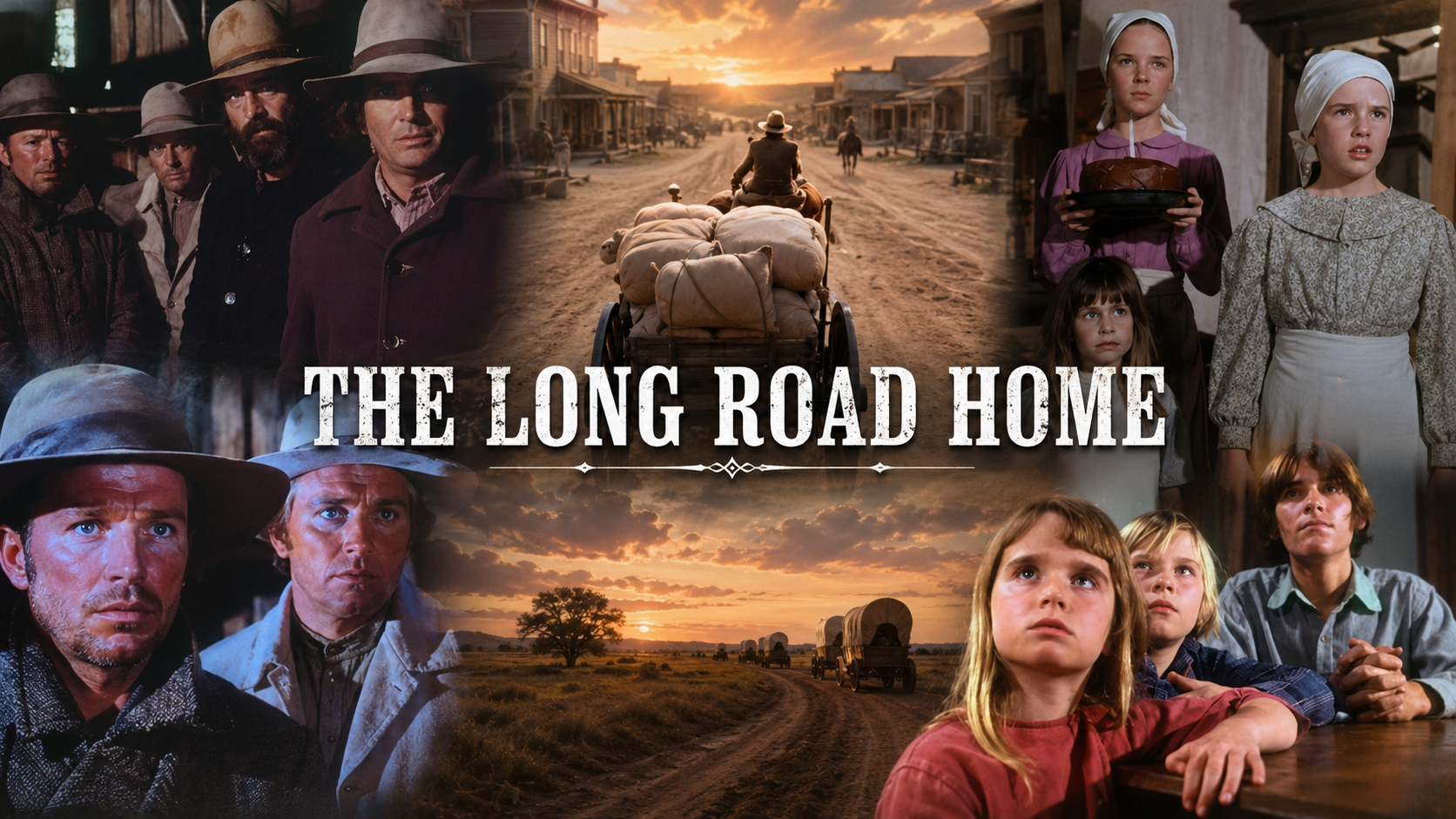
Winter was coming to Walnut Grove, and every farmer could feel it.
The air had turned sharp in the mornings.
Frost touched the grass before sunrise, and the trees had begun to lose their leaves.
The harvest was finished, but there was no joy in it this year.
Charles Ingalls stood with other farmers outside the grain office, waiting for the buyer to name the final price.
Everyone hoped the news would be good.
It was not.
The price of grain had fallen so low that many families would barely have enough money to last through winter.
Charles walked home slowly, his boots dragging through the dirt road. He had worked hard. Caroline had worked hard.
Even Mary and Laura had helped where they could. But all that work had brought back far less than they needed.
When he entered the little house, Caroline saw the answer on his face before he spoke.
“It didn’t sell well?” she asked.
Charles took off his hat.
“No,” he said quietly. “Not nearly enough.”
Laura looked up from the table.
“Does that mean we’ll be poor again, Pa?”
Charles gave her a small smile.
“We’ve never been rich, Half-Pint.”
Laura did not smile back.
“But will we be all right?”
Charles looked at Caroline, then back at his daughters.
“We’ll find a way.”
That night, Charles could not sleep.
He lay awake listening to the wind outside, thinking about flour, firewood, winter coats, and bills that could not wait.
The next morning, he went to see Isaiah Edwards.
Isaiah was outside his place chopping wood. He did not look surprised when Charles arrived.
“Grain price got you too?” Isaiah asked.
Charles nodded.
“Got all of us.”
Isaiah leaned on his axe and sighed.
“I heard the railroad is hiring men. Hard work, but good pay.”
“What kind of work?”
“Huling freight through the mountains.”
Charles thought about it.
“That sounds better than sitting around worrying.”
Isaiah looked uncomfortable.
“There’s one job paying more than the rest.”
Charles studied his face.
“What are they hauling?”
Isaiah paused.
“Nitroglycerin.”
The word hung in the cold air.
Charles knew what it meant. Nitroglycerin was used for blasting rock, but it was deadly.
One sharp bump could make it explode. A man could be there one second and gone the next.
Charles looked toward the distant fields.
“How much are they paying?”
Isaiah told him.
It was enough to keep both families fed through winter.
Charles did not answer right away. He thought of Caroline.
He thought of Mary, Laura, and Carrie.
He thought of the little house and the empty months ahead.
Finally, he said, “Let’s go talk to them.”
At the railroad camp, the foreman looked both men over.
“You two know horses?”
Charles nodded.
“We’ve handled teams all our lives.”
The foreman pointed to a wagon covered with heavy blankets and straw-packed crates.
“That freight has to reach the blasting camp across the mountain. Nobody else wants the job.”
Isaiah gave a dry laugh.
“Can’t say I blame them.”
The foreman’s face stayed serious.
“This is not ordinary hauling. You drive slow. You avoid every hard rut. You do not smoke.
You do not make a fire near the wagon. If the horses spook, you stop. If a wheel breaks, you pray.”
Charles looked at the crates.
Inside them were glass bottles filled with liquid powerful enough to tear apart half a mountainside.
The foreman spoke again.
“Once you start, you don’t turn back unless the road is gone.”
Charles took a deep breath.
“We’ll do it.”
When Charles told Caroline, she tried to be brave.
But her hands froze over the bread dough.
“Nitroglycerin?” she whispered.
“It pays well.”
“It pays well because men can die doing it.”
Charles stepped closer.
“I know.”
Caroline’s eyes filled with fear, but she did not beg him to stay.
She knew why he was going. She knew a father sometimes carried danger because his family needed him to.
Laura stood near the doorway, listening.
“Pa, please don’t go.”
Charles knelt before her.
“I’ll be careful.”
“That doesn’t mean nothing bad will happen.”
“No,” he said gently. “It doesn’t. But I promise I’ll do everything I can to come home.”
Laura threw her arms around him.
Carrie cried when he kissed her goodbye.
Mary stood quietly, trying to be strong, but her eyes were wet too.
The next morning, Charles and Isaiah climbed onto the wagon seat.
The horses moved slowly, pulling the dangerous load away from the railroad camp and toward the mountains.
At first, the road was easy. The wagon rolled across open land, and the men barely spoke.
Every creak of wood made them listen. Every small stone under the wheels made their hearts jump.
Isaiah finally said, “I’ve hauled a lot of things in my life. Never hauled something I was afraid to look at.”
Charles smiled faintly.
“Then don’t look at it.”
“That don’t make me feel better.”
By afternoon, the prairie gave way to hills.
The road climbed higher, twisting between rocks and trees.
Clouds gathered above them. Soon rain began to fall.
The dirt road turned slick.
Charles held the reins carefully.
“Easy,” he whispered to the horses. “Nice and easy.”
Thunder rolled across the sky.
Isaiah looked upward.
“Of all the days for a storm.”
The wagon hit a rut.
The crates shook.
Both men froze.
Nothing happened.
Isaiah breathed out slowly.
“I believe my heart just stopped.”
Charles did not laugh.
They kept moving.
By evening, they reached a small mountain station.
They had planned to rest there for the night, but the station master came running outside.
“You can’t stop here with that wagon!”
Charles frowned.
“We were told this was a safe place.”
“It was. Not anymore. The bridge ahead washed out in the storm.”
Isaiah stared at him.
“Then we wait.”
The station master shook his head.
“You can’t.
The railroad needs that powder at the blasting camp by tomorrow, or the whole crew will be trapped without supplies.”
Charles looked at the dark mountain road ahead.
“Is there another way?”
The station master pointed toward a narrow trail between the trees.
“The old pass.”
Isaiah’s face changed.
“Devil’s Pass?”
The man nodded.
Charles looked at Isaiah.
Isaiah swallowed hard.
“That road is bad in dry weather.”
The station master said, “In this rain, it’s worse.”
Charles looked back at the wagon. Then he thought of home.
He thought of Caroline waiting by the window.
He thought of Laura asking him to come back.
The road ahead was dangerous.
But turning back meant failing the job, losing the pay, and leaving two families with almost nothing for winter.
Charles picked up the reins.
“Then we take it slow.”
Isaiah climbed beside him.
The wagon rolled toward Devil’s Pass.
The long road home had become a road where one mistake could end everything.
The Long Road Home – Part 2
Devil’s Pass was narrow, steep, and unforgiving.
The road curved along the side of the mountain, with rock on one side and a deep drop on the other. Rain ran down the trail in small muddy streams.
The wagon wheels slipped more than once, and each time Charles pulled the horses to a stop until the ground felt steady again.
Isaiah sat stiffly beside him.
“I don’t mind telling you, Charles. I do not like this road.”
Charles kept his eyes forward.
“Neither do I.”
They moved so slowly that night seemed to follow them.
The trees bent in the wind.
Water dripped from their hats and coats.
The horses snorted nervously, sensing the fear of the men behind them.
Suddenly, one horse stumbled.
The wagon jerked.
Charles pulled hard on the reins.
“Whoa!”
The team stopped inches from a large rock half-buried in the road.
Isaiah jumped down carefully and moved toward the wheel.
“Don’t shake anything,” Charles warned.
Isaiah gave him a sharp look.
“I wasn’t planning to dance.”
Together they guided the horses around the rock, one inch at a time.
After nearly an hour, they reached a wider place in the road.
Charles stopped to rest the horses.
Isaiah looked back at the crates.
“You know, I used to think being poor was the worst thing that could happen to a man.”
Charles looked at him.
“And now?”
Isaiah wiped rain from his face.
“Now I think being poor enough to carry that stuff might be worse.”
Charles understood.
He had always believed hard work could solve almost anything. But this journey made him feel small. A man could work honestly, love his family, do everything right, and still find himself risking his life because the world gave him no better choice.
They started again.
Near midnight, they saw a lantern waving ahead.
A man stood in the road beside a broken wagon. His wife and two children huddled under a wet blanket nearby.
“Please!” the man shouted. “Our wheel broke. We need help.”
Charles stopped at once.
Isaiah whispered, “We can’t get close to them with this load.”
Charles called out, “Stay back from the wagon!”
The man looked confused.
“What are you carrying?”
“Nitroglycerin.”
The family’s faces filled with fear.
Charles and Isaiah climbed down carefully.
They could not fix the family’s wagon, but they gave them food, blankets, and directions back to the station.
The little boy looked at Charles and asked, “Mister, are you scared?”
Charles smiled sadly.
“Yes.”
The boy seemed surprised.
“My pa says brave men aren’t scared.”
Charles looked at the child’s father, then back at the boy.
“Brave men get scared too. They just keep doing what needs to be done.”
Those words stayed with Charles when they moved on.
By dawn, the rain finally stopped.
Mist covered the mountains, and the road ahead looked pale and ghostly in the morning light.
They were tired, cold, and hungry, but they were closer to the blasting camp.
Then they heard shouting.
Around the next bend, several angry railroad workers blocked the road.
Their tools were in their hands. Their faces were dirty and hard.
One man stepped forward.
“You the ones hauling the nitro?”
Charles nodded.
“Then hand it over.”
Isaiah stiffened.
“That freight belongs to the railroad.”
The man laughed bitterly.
“The railroad owes us pay.
They haven’t paid us in weeks. If they want their blasting powder, they can pay us first.”
Charles understood the anger.
These men had families too. They were hungry too
. But the way they stood around the wagon made his blood run cold.
“Move away from the crates,” Charles said firmly.
The leader stepped closer.
“Don’t tell me what to do.”
Charles did not raise his voice.
“I’m telling you because if one of those bottles breaks, none of us will live long enough to argue.”
The men grew quiet.
Isaiah added, “You want your pay? Fine. Fight the railroad.
But don’t fight it standing beside enough powder to blow this whole pass into the sky.”
For a moment, no one moved.
Then one of the workers lowered his tool.
“He’s right.”
The leader looked angry, but fear had entered his eyes.
Slowly, the men stepped away.
Charles guided the horses forward.
As they passed, he said, “I hope you get what you’re owed.”
The leader looked at him and said nothing.
The wagon continued up the road.
By late morning, the trail began to descend. That should have been good news, but going downhill with nitroglycerin was even worse than climbing. If the wagon gained too much speed, it could overturn.
Charles and Isaiah tied ropes to the back and used all their strength to hold it steady while the horses moved down.
The wheels groaned.
Mud slid under their boots.
Isaiah nearly fell, but Charles grabbed him.
“Easy!”
Isaiah breathed hard.
“I’m getting too old for this.”
Charles smiled through his exhaustion.
“You said that five years ago.”
“And I was right then too.”
At last, the road leveled out.
Ahead, they saw smoke rising from the blasting camp.
They had made it.
But just as relief washed over them, one of the horses suddenly reared.
A snake slipped across the road.
The team panicked.
The wagon lurched to the side.
Charles shouted and pulled the reins with all his strength.
Isaiah jumped down and grabbed the lead horse’s bridle.
“Easy! Easy now!”
The horses fought against him.
The wagon rolled closer to the edge.
Charles could see the drop beside him.
If the wagon went over, the explosion would be heard for miles.
Isaiah held on, boots sliding in the mud.
Charles spoke softly to the horses, fighting his own fear.
“Easy, boys. Easy.”
At last, the lead horse stopped shaking.
The others calmed.
The wagon stood half-turned, one wheel close to the edge.
Nobody moved.
Then Isaiah slowly looked at Charles.
“Next time,” he said, breathing hard, “we sell eggs.”
Charles laughed for the first time in days.
Carefully, slowly, they pulled the wagon back onto the road and made the final stretch to camp.
When the railroad foreman saw them arrive, he could hardly believe it.
“You came through Devil’s Pass?”
Charles climbed down stiffly.
“The bridge was out.”
The foreman stared at the wagon.
“And the nitro?”
“Still here.”
Workers unloaded the crates like they were carrying sleeping babies.
Only when the last crate was safely away did Charles let himself breathe fully.
The foreman paid them.
Charles held the money in his hand. It felt heavy, but not as heavy as the fear he had carried through the mountains.
Isaiah looked at his share.
“That’s the prettiest money I ever hated earning.”
Charles nodded.
“I know what you mean.”
They rested only a short while before starting back toward Walnut Grove with an empty wagon.
The return road felt different. The mountains were still steep. The air was still cold. But the deadly freight was gone.
For the first time in days, Charles allowed himself to think of home without fear.
When they finally reached Walnut Grove, Laura saw the wagon first.
“Pa!”
She ran across the yard as fast as she could.
Charles climbed down and caught her in his arms.
Caroline came out next, holding Carrie’s hand. Mary followed close behind.
Caroline looked at Charles, her eyes full of relief.
“You’re home.”
Charles hugged her tightly.
“I told you I’d do everything I could.”
Isaiah stood nearby, smiling tiredly.
Laura looked at him.
“Mr. Edwards, were you scared too?”
Isaiah took off his hat.
“Half the time? No.”
Laura stared at him.
“Really?”
Isaiah grinned.
“All the time.”
Everyone laughed.
That night, the Ingalls home felt warmer than it had in weeks. There was still winter ahead. There would still be hard days, careful meals, and long cold nights.
But there would be food.
There would be firewood.
And most of all, Charles was home.
Later, after the girls had gone to bed, Caroline sat beside Charles.
“Was it as dangerous as I feared?”
Charles looked into the fire.
“Yes.”
Caroline took his hand.
“Then promise me something.”
“What?”
“Next time, we find another way.”
Charles smiled softly.
“I promise.”
Outside, the wind blew across Walnut Grove.
Inside, the little house was safe and warm.
Charles had traveled a long road through fear, danger, and doubt.
But the road had brought him home.
And for Charles Ingalls, that was worth more than any money in the world.


