The Deadly Epidemic That Nearly Destroyed Walnut Grove
Little House on the Prairie told many powerful stories throughout its run, but few episodes were as intense, emotional, and unforgettable as “Plague.” 
is dramatic story showed the people of Walnut Grove facing one of the most terrifying threats imaginable—a deadly epidemic that spread through the town with frightening speed.
The episode reminded viewers that life on the frontier was filled with dangers that modern communities rarely experience.
A simple illness could quickly become a disaster, and without modern medicine, entire towns could be wiped out.
Through courage, sacrifice, and determination, the people of Walnut Grove fought against a deadly enemy that could not be seen.
A Normal Day Turns Into a Nightmare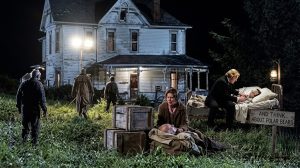
Life in Walnut Grove seemed ordinary when the story began. Families were busy with their daily routines. Farmers worked in their fields, merchants served customers, and children attended school.
It was another peaceful chapter in the lives of the hardworking pioneers.
Then the first signs of trouble appeared.
A local resident became seriously ill with a high fever and severe weakness. At first, no one thought much about it. Illness was common on the prairie, and most people expected the patient to recover after a few days of rest.
But then another person became sick.
And then another.
Soon, Doc Baker began noticing a disturbing pattern.
The patients all suffered from similar symptoms. High fevers, headaches, weakness, and exhaustion affected nearly everyone who became infected.
As more cases appeared, concern spread throughout the community.
Doc Baker realized he was no longer dealing with a routine illness.
Something much more dangerous had arrived in Walnut Grove.
Fear Begins to Spread 
The disease moved quickly through the town.
Families who had been healthy one day found themselves bedridden the next. Parents worried about their children. Husbands feared for their wives.
Entire households became trapped inside their homes as sickness spread from person to person.
The cheerful atmosphere of Walnut Grove slowly disappeared.
The streets became quieter.
Businesses saw fewer customers.
Children stopped playing outside.
People who normally gathered together began avoiding one another out of fear.
Rumors spread almost as quickly as the disease itself.
Some believed the illness had come from neighboring towns. Others thought contaminated food was responsible.
Many simply prayed that their families would be spared.
No one knew exactly what they were facing.
All they knew was that people were getting sick.
And some were dying.
Doc Baker Faces His Greatest Challenge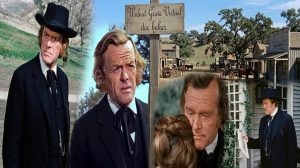
For Doc Baker, the epidemic became the greatest challenge of his medical career.
The town doctor worked around the clock trying to care for every patient who needed help. He visited homes throughout Walnut Grove and the surrounding countryside.
His horse barely had time to rest as he traveled from one emergency to another.
Every day brought new cases.
Every day brought new worries.
Doc Baker did everything he could, but he often felt helpless.
Medicine during that time was limited. There were no modern hospitals, no advanced treatments, and no quick cures.
Doctors relied on experience, determination, and whatever resources they could find.
The workload became overwhelming.
Some days, Doc Baker barely slept.
Meals were skipped.
Rest became impossible.
Yet he continued because he knew the town depended on him.
The emotional burden was just as heavy as the physical exhaustion. Every patient represented a family member, a friend, or a neighbor.
Every loss weighed heavily on his heart.
Still, he refused to give up.
Charles Ingalls Steps Forward
Charles Ingalls could not stand by and watch his community suffer alone.
When Doc Baker needed help, Charles immediately volunteered.
He delivered medicine to isolated families.
He transported supplies.
He helped care for sick neighbors.
He carried water and food to households that could no longer care for themselves.
Charles became one of Doc Baker’s most trusted helpers.
His courage inspired others to do the same.
Despite knowing the risks, Charles continued helping wherever he was needed. He understood that fear would not save Walnut Grove. Action was necessary.
Many people admired Charles throughout the series because of his willingness to help others, and this episode highlighted those qualities perfectly.
Even when exhausted, he kept going.
Even when afraid, he kept helping.
His determination became a source of strength for the entire town.
Reverend Alden Provides Hope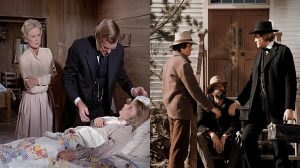
While Doc Baker fought the disease and Charles helped care for the sick, Reverend Alden provided emotional and spiritual support.
The epidemic created fear unlike anything Walnut Grove had experienced before.
People needed more than medicine.
They needed hope.
Reverend Alden spent countless hours visiting homes, offering prayers, and comforting frightened families.
He listened to worried parents.
He encouraged those who were losing faith.
He helped families cope with grief when loved ones passed away.
The minister often found himself standing beside hospital beds and gravesites in the same day.
The emotional toll was enormous.
Yet he remained committed to serving the community.
His presence reminded people that they were not facing the crisis alone.
The Disease Reaches Beyond Walnut Grove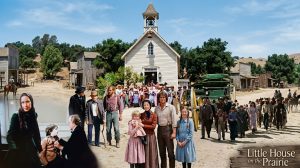
As terrible as conditions were inside Walnut Grove, the situation became even worse when victims began arriving from neighboring farms and settlements.
Word spread that Doc Baker was treating patients.
Desperate families traveled long distances seeking help.
Wagons carrying sick children rolled into town.
Farmers arrived barely able to stand.
Entire families came searching for medicine and hope.
The epidemic was no longer confined to Walnut Grove.
It had become a regional crisis.
The growing number of patients stretched resources to the limit.
Food supplies became strained.
Medical supplies ran low.
Exhaustion affected everyone involved in the response.
Still, Charles, Doc Baker, and Reverend Alden continued working.
They understood that quitting was not an option.
Searching for Answers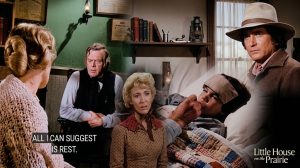
After weeks of battling the epidemic, one fact became painfully clear.
Treating the sick was not enough.
Unless they discovered the source of the disease, new cases would continue appearing.
One evening, after another exhausting day, Charles, Doc Baker, and Reverend Alden discussed the situation.
They knew they had to think differently.
Instead of reacting to the epidemic, they needed to stop it.
Charles volunteered to investigate.
He visited farms where the first victims had become ill.
He interviewed families.
He looked for connections between the cases.
The task was difficult.
At first, nothing seemed related.
The victims came from different backgrounds and different parts of the community.
Yet Charles continued searching.
Eventually, a pattern emerged.
Many of the earliest victims had received grain from the same source.
The discovery provided the first real clue.
The Shocking Discovery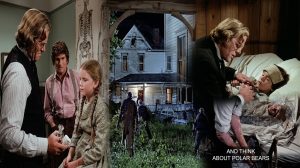
Charles and Doc Baker followed the trail to a grain storage facility.
What they found was horrifying.
The warehouse had become heavily infested with rats.
The rodents carried infected lice, which were responsible for spreading typhus.
The disease had quietly entered the community through contaminated areas connected to the grain supply.
Finally, the mystery was solved.
They had found the source of the epidemic.
The discovery brought both relief and urgency.
Relief because they finally understood what they were fighting.
Urgency because they knew immediate action was required.
The Town Unites
Once the source was identified, the people of Walnut Grove came together.
Farmers, merchants, laborers, and families all joined the effort.
Contaminated supplies were destroyed.
Buildings were cleaned.
Storage areas were disinfected.
Precautions were introduced throughout the community.
Everyone played a role.
The crisis reminded residents that survival depended on cooperation.
No single person could defeat the epidemic alone.
Only by working together could they protect their town.
The spirit of unity became one of the episode’s most powerful themes.
Even during the darkest moments, neighbors continued helping neighbors.
Fear never completely disappeared, but compassion proved stronger.
Hope Returns to Walnut Grove
The changes did not produce immediate results.
People continued to suffer.
Some patients remained critically ill.
Sadly, some families still experienced heartbreaking losses.
But gradually, the number of new infections began to decline.
Doc Baker noticed fewer patients arriving.
Families began recovering.
Children returned to playing outdoors.
Businesses reopened.
The atmosphere slowly changed.
For the first time in weeks, people felt hope.
The epidemic was finally losing its grip on Walnut Grove.
The town had endured one of the greatest challenges in its history.
And it had survived.
A Lasting Lesson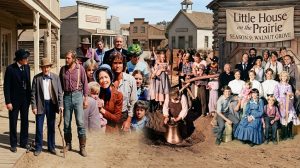
The story of “Plague” remains one of the most memorable episodes of Little House on the Prairie because it showcased both the vulnerability and strength of the frontier community.
The episode demonstrated how quickly life could change.
A peaceful town became a place of fear almost overnight.
Yet it also showed the power of courage, faith, and community.
Doc Baker represented dedication and sacrifice.
Charles Ingalls represented courage and leadership.
Reverend Alden represented hope and compassion.
Together, they helped guide Walnut Grove through a crisis that seemed impossible to overcome.
The epidemic left scars.
Some families lost loved ones.
Others carried memories that would never fade.
But the town emerged stronger than before.
The people learned that even in the darkest times, they could depend on one another.
That lesson became the true victory.
Years later, residents would remember the fear of the plague.
But they would also remember the bravery, kindness, and determination that carried Walnut Grove through the storm.
And in the end, that spirit of unity proved stronger than any disease.