Part 1: The Letter Written in the Dark
The rain had been falling for three days when sixteen-year-old Sophie Carter sat at the kitchen table and began writing a letter.
The house around her was nearly empty.
There were no family photographs on the walls. No curtains on the windows. No warm lamps glowing in the corners.
Only a borrowed table, four mismatched chairs, and several cardboard boxes filled with the few things her family had managed to save.
Three months earlier, the Carters had lost almost everything.
A fire had destroyed their small family bakery and the apartment above it. The flames had spread so quickly that Sophie, her younger brother Ben, and their parents escaped with only the clothes they were wearing.
The bakery had been in their family for two generations.
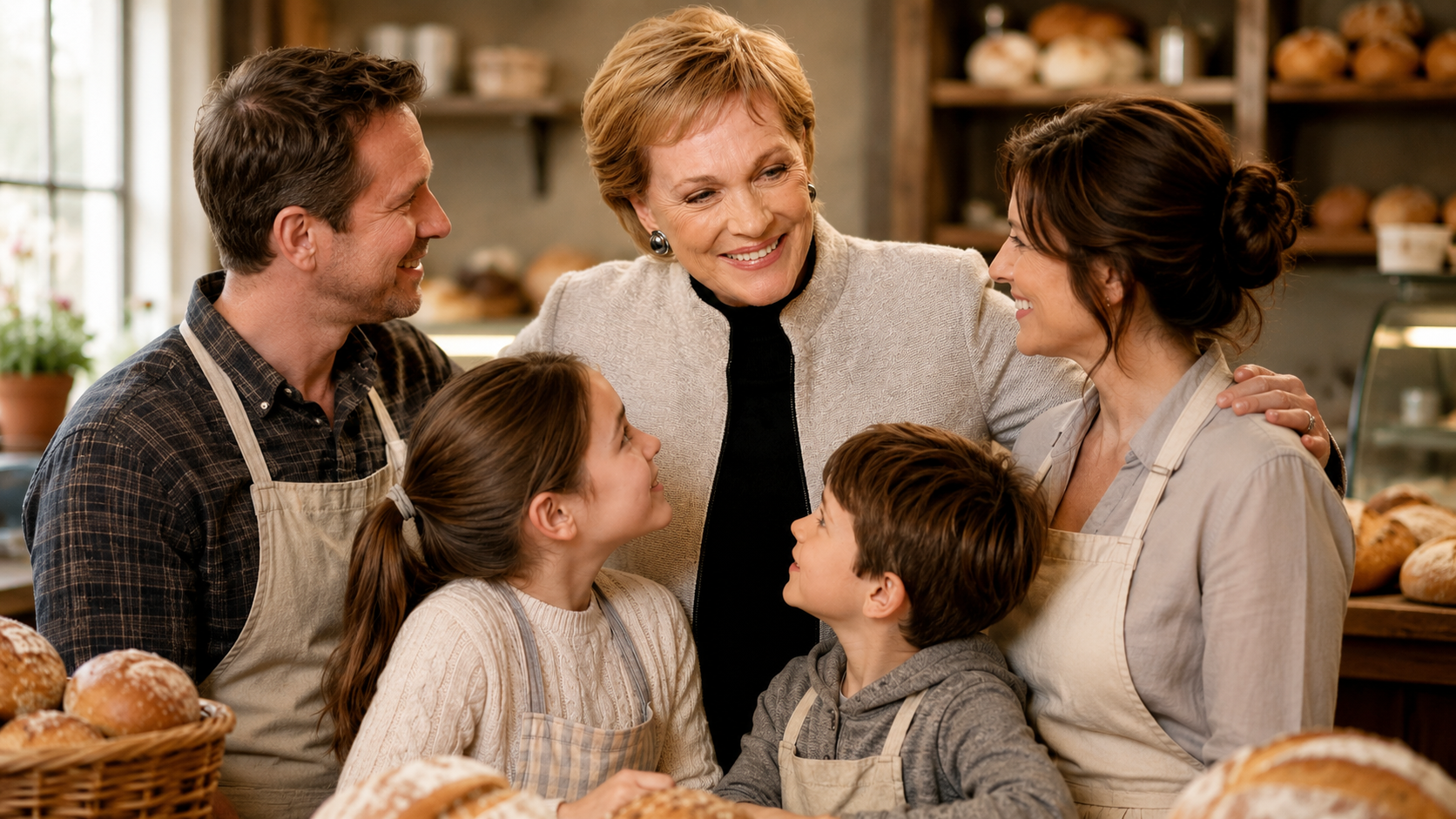
Sophie’s father, Daniel, had learned to bake there beside his own father. Her mother, Rachel, decorated cakes and greeted every customer by name.
The bakery had never made them wealthy, but it had given them a home, a purpose, and a place in the community.
Now it was gone.
At first, neighbors brought meals and clothes. Friends collected money. The local church helped the family rent a small house at the edge of town.
But as the weeks passed, the visits became less frequent.
Life moved forward for everyone else.
For the Carters, time seemed to stop.
Daniel rarely spoke about rebuilding the bakery. He spent his days searching for work and his nights studying unpaid bills.
Rachel tried to remain cheerful, but Sophie often heard her crying quietly after everyone had gone to bed.
Ben, who was only nine, kept asking when they could go home.
No one knew how to answer him.
One evening, Sophie found her father sitting alone in the dark kitchen.
He was holding the bakery’s old wooden sign, which had somehow survived the fire.
The words were blackened around the edges.
“Carter Family Bakery,” Sophie read softly.
Daniel looked down at the sign.
“I promised your grandfather I would keep it going,” he said. “I failed him.”
Sophie sat beside him.
“You didn’t fail,” she whispered. “It was a fire.”
But her father shook his head.
“Some things don’t come back.”
Those words stayed with Sophie.
The next morning, she noticed an old Julie Andrews film playing on television. Rachel had always loved Julie’s movies. When Sophie was small, her mother often sang “A Spoonful of Sugar” while they cleaned the bakery before sunrise.
For the first time in weeks, Sophie saw her mother smile.
It was only a small smile.
But it gave Sophie an idea.
That night, she took out a sheet of paper and began writing.
Dear Ms. Andrews,
My name is Sophie Carter. I know you receive many letters, and you may never see this one. But my mother has loved your voice and your films for as long as I can remember.
Three months ago, my family lost our bakery and our home in a fire.
Since then, my father has stopped believing we can begin again.
My mother tries to be strong, but I know she is tired.
My little brother keeps asking when we are going home, and I do not know what to tell him.
I am not writing to ask for money.
I only want to ask you something.
How do people find hope when everything familiar is gone?
Sophie paused.
She did not know whether the letter sounded foolish.
Why would Julie Andrews answer a teenager she had never met?
Still, Sophie continued.
My mother once told me that your stories made her believe difficult days could still lead somewhere beautiful.
Right now, I think my family needs to believe that again.
If you have any words for us, I promise we will keep them.
Sincerely,
Sophie Carter
She folded the letter carefully and placed it in an envelope.
The next morning, she mailed it without telling anyone.
Then she waited.
One week passed.
Then two.
No reply came.
Sophie told herself she had expected nothing.
By the fourth week, she had almost forgotten about it.
Then, on a cold Tuesday afternoon, a large cream-colored envelope arrived.
Her name was written across the front in neat handwriting.
In the upper corner was a return address from London.
Sophie’s hands began to tremble.
She called her family into the kitchen.
Daniel stood near the doorway. Rachel sat beside Ben. No one spoke as Sophie opened the envelope.
Inside was a handwritten letter.
Dear Sophie,
Thank you for trusting me with your family’s story.
I am deeply sorry for all you have lost.
Sometimes, when a familiar chapter ends suddenly, we mistake the empty page for the end of the story.
It is not the end.
It is simply a page that has not yet been written.
Your father did not fail his family. He carried them safely through the worst night of their lives.
Your mother has not lost her strength. Strength is not the absence of tears. Sometimes, strength is waking up the next morning and preparing breakfast when your heart is tired.
And you, Sophie, have already given your family something precious.
You reminded them that hope can begin with one person refusing to let the story end.
Julie had written several more paragraphs, but Rachel was already crying.
Daniel turned away and covered his face with one hand.
Sophie kept reading.
You asked how people find hope when everything familiar is gone.
Perhaps they do not find it all at once.
Perhaps they build it.
One small action.
One brave conversation.
One new beginning at a time.
At the bottom of the letter, Julie had added one final line.
Please tell your family this for me:
The fire may have taken your building, but it did not take your hands, your knowledge, your love for one another, or the recipes inside your hearts.
Those things can still create something beautiful.
For several moments, the kitchen was silent.
Then Ben looked at his father.
“Dad,” he said, “do you still remember Grandpa’s bread recipe?”
Daniel slowly lowered his hand.
“Every word of it.”
Ben smiled.
“Then we didn’t lose everything.”
Daniel looked at the old bakery sign leaning against the wall.
Something in his expression changed.
The next morning, he woke before sunrise.
For the first time since the fire, he began mixing dough.
They had no bakery oven, so he used the small oven in the rented kitchen.
The first loaves were uneven.
One burned.
Another sank in the middle.
But the smell of warm bread filled the house.
Rachel stood in the doorway with tears in her eyes.
Sophie helped wrap the good loaves in brown paper.
Daniel carried them to a small weekend market downtown.
He expected to sell only a few.
Instead, former customers recognized him.
By noon, every loaf was gone.
The following week, the family returned with twice as much bread.
A retired teacher asked for Rachel’s cinnamon rolls.
A nurse ordered a birthday cake for her daughter.
A local café owner offered to let Daniel use his kitchen after closing.
Slowly, the family began working together again.
Ben drew a new bakery logo.
Sophie created a simple page online and shared the story of Julie’s letter.
She never expected many people to notice.
But one person shared it.
Then another.
Soon, hundreds of messages began arriving.
Some were from people who had lost homes.
Others had lost jobs, businesses, or loved ones.
They all said the same thing.
The letter had given them hope too.
One evening, Sophie showed her father the growing number of orders.
“We may need a bigger oven,” she said.
Daniel smiled for the first time in months.
But just as the family began believing they could truly rebuild, a letter arrived from the owner of their rented house.
They had thirty days to leave.
And the small savings they had earned would not be enough for another home and a new bakery.
Daniel placed the notice on the table.
The hope Julie’s letter had awakened suddenly felt fragile again.
Then Sophie’s phone rang.
The caller introduced herself as the director of a local community center.
She had read Sophie’s story.
And she had an offer that could change everything.
Part 2: The Hope They Built Together
Sophie held the phone tightly as the director of the community center explained her offer.
Her name was Maria Alvarez.
The center had an old commercial kitchen that had not been used in nearly two years. The ovens still worked, but the room needed cleaning, painting, and several repairs.
“We cannot offer you money,” Maria said. “But we can offer your family the kitchen for six months without rent.”
Sophie could hardly speak.
Maria continued.
“In return, we would ask your family to provide bread once a week for our meal program. We serve elderly residents, struggling families, and people living alone.”
Sophie looked across the kitchen at her parents.
Her father was still holding the notice telling them they had thirty days to leave.
“We would love to see the space,” Sophie said.
The next morning, the entire family visited the community center.
The kitchen was larger than they expected.
Dust covered the counters. One wall needed repainting. Several shelves were broken, and the old sign above the serving window was hanging crookedly.
But Daniel did not see the damage.
He saw two large ovens.
He saw long preparation tables.
He saw a place where dough could rise again.
Rachel walked slowly through the room, touching the counters with her fingertips.
“It needs work,” she said.
Daniel nodded.
“So do we.”
Maria smiled.
“Then perhaps you can rebuild together.”
The family accepted the offer that same day.
They spent the next two weeks cleaning the kitchen.
At first, they worked alone.
Then Sophie posted a message online asking whether anyone had spare paint or unused baking equipment.
By the following morning, six people had replied.
A local hardware store donated paint.
A restaurant owner gave them two metal shelves.
A retired carpenter repaired the cabinets.
Former customers arrived with mixing bowls, trays, aprons, and handwritten recipe cards.
Even people who had never met the Carters came to help.
One woman brought an old wooden rolling pin.
“My mother used this for forty years,” she told Rachel. “She would want it to be used again.”
Rachel accepted it with tears in her eyes.
Ben painted a new sign for the kitchen.
He carefully wrote:
Carter Family Bakery—A New Beginning
Beneath it, he added smaller words:
Built with Hope
On the first morning they opened, Daniel arrived before sunrise.
He stood in front of the empty ovens with Julie’s letter folded inside his shirt pocket.
For several moments, he said nothing.
Then he turned on the lights.
Rachel began preparing cinnamon rolls.
Sophie arranged bread on the shelves.
Ben carried paper bags to the front counter.
By eight o’clock, a line had formed outside the community center.
Old customers came first.
Then neighbors.
Then strangers who had read Sophie’s post.
Some bought one loaf.
Others bought ten and asked the family to give the extras to anyone in need.
At noon, the bakery closed its counter and prepared food for the community center’s meal program.
The family baked soft rolls, vegetable pies, and apple cakes.
Together, they served nearly one hundred people.
An elderly man named Arthur sat alone at the final table.
He ate slowly and kept looking toward the kitchen.
When Daniel approached, Arthur held up a piece of bread.
“This tastes like the bread my wife used to make,” he said.
Daniel sat beside him.
Arthur explained that his wife had died the previous year. Since then, he had lost interest in cooking and rarely left his apartment.
“But today,” he said quietly, “this bread reminded me of home.”
Daniel looked toward his family working behind the counter.
For the first time since the fire, he understood that the bakery had never been only a building.
It was the feeling people carried away with them.
Warmth.
Memory.
Belonging.
That evening, Daniel gathered his family in the kitchen.
“I thought rebuilding meant creating exactly what we had before,” he said. “But maybe rebuilding means making something new from what remains.”
Rachel reached for his hand.
“And making room for others.”
Over the next several weeks, the bakery grew.
Sophie’s online page reached thousands of people.
Orders arrived from nearby towns.
A local newspaper published the story of Julie’s letter and the family’s new beginning.
But the family still had one serious problem.
They needed a home.
The free kitchen allowed them to work, but their housing deadline was approaching quickly.
Every affordable rental they visited was either too small, too far away, or already taken.
Daniel tried not to show his worry.
He worked longer hours and saved every possible dollar.
Then, one Saturday afternoon, Maria asked the family to come into the community hall.
When they entered, nearly one hundred people were waiting.
Former customers stood beside volunteers.
The retired carpenter was there.
So was the woman who had donated the rolling pin.
Arthur sat in the front row wearing his best jacket.
At the center of the room stood a large wooden box.
Maria stepped forward.
“When Sophie shared Julie Andrews’ letter, people were moved by the message,” she said. “But they were also moved by what your family did next.”
She looked around the room.
“You did not wait for hope to arrive. You began building it.”
Maria opened the wooden box.
Inside were envelopes, checks, and handwritten notes.
The community had raised enough money to cover the deposit and first six months of rent on a small house near the community center.
Rachel covered her mouth.
Ben began crying.
Daniel stood frozen.
He had no words.
Sophie wrapped her arms around him.
“You didn’t fail us,” she whispered.
Daniel held his family close as the room filled with applause.
A week later, the Carters moved into their new home.
It was modest, with faded floors and a small garden behind it.
But it belonged to their future.
They hung the blackened bakery sign in the living room.
They did not repair the burned edges.
Daniel said they were part of the story now.
Months passed.
The bakery became successful enough for the family to hire two local parents who had been struggling to find work.
They also began offering free Saturday baking lessons for teenagers.
Sophie taught them how to create simple online business pages.
Rachel taught cake decorating.
Daniel taught bread-making.
Ben mostly taught everyone how to laugh when something went wrong.
Every week, the family continued providing food for the community center.
They had promised to do it for six months.
They continued long after the agreement ended.
One rainy afternoon, almost a year after Sophie sent her first letter, another cream-colored envelope arrived.
This time, the whole family recognized the handwriting.
Sophie opened it at the bakery counter.
Dear Sophie and the Carter family,
I recently received a photograph of your new bakery and heard about the work you are doing for your community.
I hope you understand that the beautiful thing was never my letter.
It was what your family chose to do with it.
Words may open a door, but courage is what carries us through.
You rebuilt more than a business.
You rebuilt trust in one another.
You created work for people who needed it.
You fed those who were lonely.
And you reminded many strangers that loss does not have to be the final chapter.
Julie ended the letter with one final message.
Please keep the burned sign.
Not because it represents what the fire took, but because it proves what the fire could not destroy.
Sophie read the words aloud.
When she finished, the family stood quietly beneath the old sign.
The edges were still dark.
The wood was still cracked.
But below it were shelves filled with warm bread.
People were laughing at the tables.
Children were learning to bake in the kitchen.
Arthur was drinking tea by the window.
Daniel placed Julie’s new letter beside the first one in a simple wooden frame.
Customers often stopped to read them.
Some arrived carrying their own stories of loss.
A failed business.
A broken marriage.
A difficult illness.
A dream abandoned years before.
The Carters never promised that everything would become easy.
They simply offered what had once been offered to them.
A warm meal.
A listening ear.
And a reminder that an empty page was not the end.
Years later, Sophie would describe that first letter as the moment her family’s life changed.
But she also understood something deeper.
Julie Andrews had not rescued them.
She had reminded them that they still had the power to begin.
The true miracle happened afterward.
It happened when Daniel mixed the first bowl of dough.
When Rachel opened her heart again.
When Ben said they had not lost everything.
When neighbors brought paint, shelves, and old baking tools.
When strangers became helpers.
When a frightened family chose to believe that one small step could lead to another.
And that was how one hopeful letter inspired an entire family to rebuild their lives.
Not all at once.
Not without fear.
But together.
One loaf.
One act of kindness.
One new beginning at a time.
THE END


