Part 1: The Girl Who Forgot How to Smile
The first time Julie Andrews saw eleven-year-old Lily Bennett, the little girl was sitting alone on a wooden bench behind a children’s community center.
Around her, other children chased one another across the grass. Their laughter floated through the warm spring air, but Lily did not look up.
She held a small packet of sunflower seeds in both hands.
The packet was faded and bent at the corners, as though she had carried it everywhere.
Julie had come to the center to read stories and meet the families. After the event, she noticed Lily slipping quietly through the back door.
Something about the child’s silence touched her.
Julie walked toward the bench and sat a respectful distance away.
“That looks like something very precious,” she said gently.
Lily stared at the seeds.
“They belonged to my dad.”
Her voice was barely louder than the wind.
Julie did not ask too many questions. She simply waited.
After a long silence, Lily continued.
“My father used to plant sunflowers every spring. He said they were brave because they always turned toward the light.”
Six months earlier, Lily’s father had died after a sudden illness.
Since then, her mother said Lily had stopped singing, playing with friends, and smiling. She attended school and answered questions when asked, but it seemed as though part of her had disappeared with him.
“I wanted to plant these,” Lily whispered. “But I’m afraid they won’t grow.”
Julie looked at the empty patch of land behind the center. It was covered in weeds, stones, and dry soil.
“Perhaps they need a little help,” she said. “Most living things do.”
Lily finally looked at her.
“Would you help me?”
Julie smiled.
“Yes. I would be honored.”
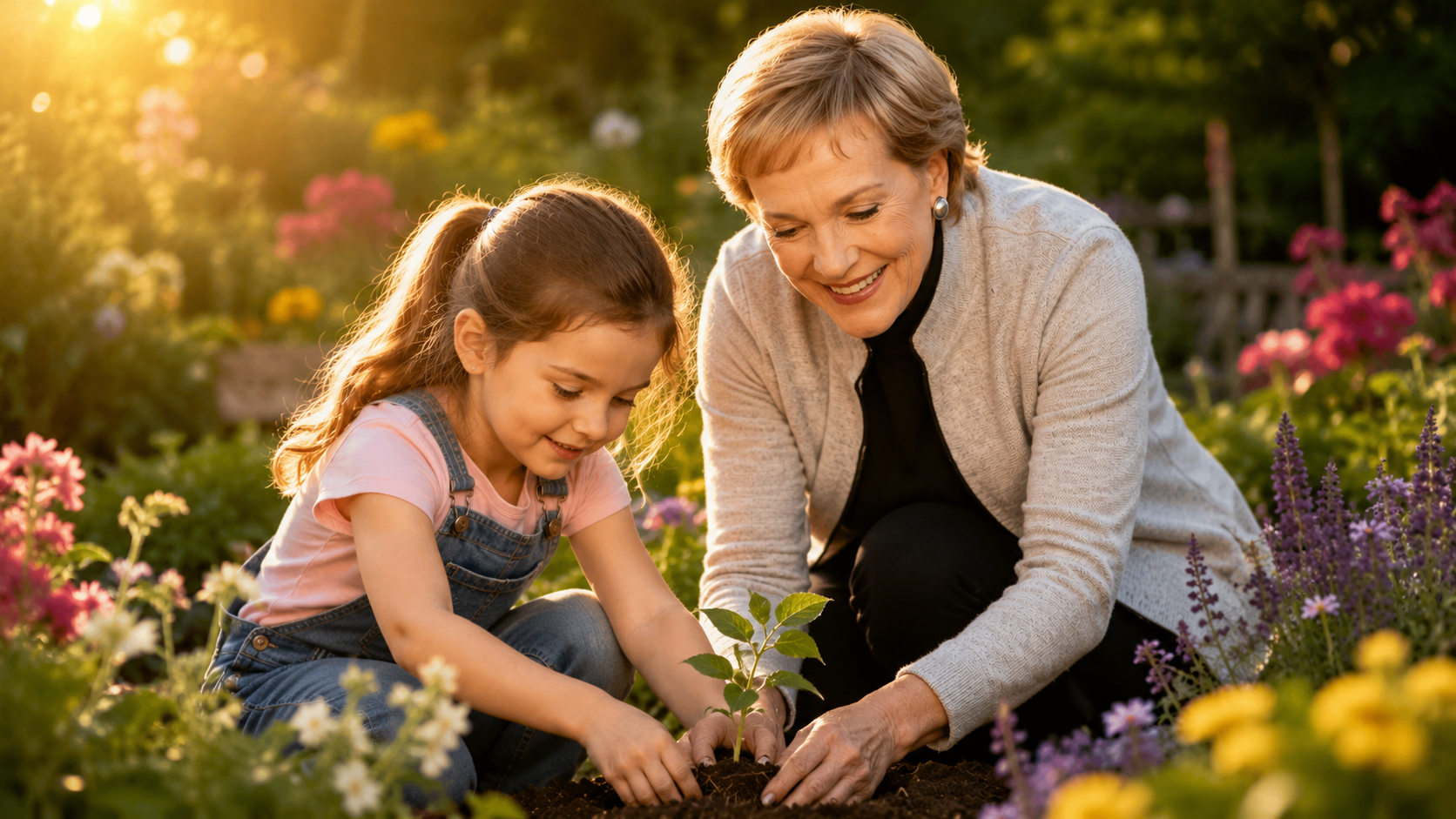
The next morning, Julie returned wearing gardening gloves and carrying two small shovels.
Lily was waiting beside the bench.
Together, they chose a sunny corner near the old fence. They pulled weeds, cleared away stones, and loosened the hard soil.
At first, Lily worked without speaking.
Then Julie began telling her about gardens she had known as a child. She described flowers growing beside old houses, birds singing in the mornings, and rainy days when the earth smelled fresh and hopeful.
Slowly, Lily began to talk too.
She told Julie that her father had loved terrible jokes. He sang loudly while washing dishes and always burned the first pancake on Sunday mornings.
“He said the first pancake was a sacrifice to the breakfast gods,” Lily remembered.
A tiny smile appeared on her face.
It lasted only a second, but Julie saw it.
They planted the sunflower seeds in a neat row.
Before covering the last one, Lily placed her fingers against the soil.
“This one is for Dad,” she whispered.
They watered the ground and made a small wooden sign.
On it, Lily wrote:
For those we love and never stop missing.
Julie visited whenever she could. When she was away, she sent Lily short letters.
“How are our brave sunflowers?” one note asked.
Another said, “Remember, roots grow quietly before flowers appear.”
For several weeks, nothing happened.
Lily checked the soil every day.
Then, one bright morning, a tiny green shoot pushed through the earth.
Lily ran into the center shouting for her mother.
“It grew! Dad’s flower grew!”
Her mother hurried outside and found Lily kneeling beside the fragile plant, laughing and crying at the same time.
It was the first true smile she had seen on her daughter’s face since the funeral.
More shoots appeared over the following days.
Children from the center began gathering around them. Some wanted to help water. Others brought seeds from home.
One boy planted marigolds for his grandmother.
A little girl planted lavender for a brother she had lost.
A widowed mother brought roses in memory of her husband.
The small sunflower patch slowly became something larger.
Julie and Lily added a narrow stone path. Parents donated benches. Local shopkeepers provided soil, tools, and young trees.
People began calling it the Garden of Light.
But the garden was still unfinished.
At the far end stood an old oak tree. Beneath it, Lily asked for a special place where visitors could leave letters to the people they missed.
Julie helped her place a weatherproof wooden box beside the trunk.
The first letter Lily placed inside was addressed to her father.
That afternoon, she sat beneath the oak and read it aloud.
“Dear Dad,” she began, her voice trembling, “I thought smiling meant I was forgetting you. But Julie told me love does not disappear when happiness returns.”
Julie’s eyes filled with tears.
Lily continued.
“Our sunflowers are growing. I am growing too. I still miss you every day, but I am trying to turn toward the light.”
When she finished, Julie wrapped her arms around her.
Around them, the young garden moved gently in the breeze.
Neither of them knew that Lily’s simple letter would soon be shared far beyond their small town—or that thousands of grieving people would come looking for the same light she had finally found.
Part 2: The Garden That Healed Thousands
A volunteer at the community center shared a photograph of Lily standing beside the first blooming sunflower.
The story beneath it was simple.
It explained how a grieving child and Julie Andrews had transformed an abandoned patch of land into a garden where people could remember those they loved.
Within days, the photograph traveled across the country.
Letters began arriving at the center.
Some came from children who had lost parents. Others came from elderly people grieving lifelong partners. Nurses wrote about patients they could not forget. Soldiers wrote the names of friends who had never returned home.
Many included seeds.
“Please plant these for my mother.”
“These were my brother’s favorite flowers.”
“My daughter loved daisies. Could one grow in your garden?”
Lily read every message.
She carefully organized the seeds into small boxes and made a list of every name.
The garden soon expanded beyond the fence. Volunteers cleared another field. Local builders created raised flower beds so elderly visitors and people using wheelchairs could plant easily.
Julie returned for the official opening that summer.
By then, the sunflowers stood taller than Lily.
Hundreds of people gathered beside the garden path, but Julie made sure Lily remained at the heart of the celebration.
“This garden began because one brave girl decided to plant love inside her sadness,” Julie told the crowd. “She has reminded us that grief and hope can live in the same heart.”
Lily stepped forward nervously.
She looked at the many faces waiting for her words.
A year earlier, she would have hidden behind her mother.
Now she held her father’s old packet of sunflower seeds against her chest.
“My dad taught me that sunflowers turn toward the light,” she said. “But sometimes people need help finding the light again. This garden is here so nobody has to search alone.”
The crowd grew silent.
Then an elderly man near the front began clapping.
Others joined him until the entire garden filled with applause.
After the ceremony, visitors walked along the paths.
They tied handwritten messages to small ribbons. They placed photographs beneath the oak tree. They sat quietly on the benches and shared stories with strangers.
A young boy named Daniel arrived with his grandmother. His mother had recently died, and he had not spoken about her for months.
Lily found him standing near the sunflowers.
“You don’t have to say anything,” she told him. “You can just plant something.”
Together, they planted a small white flower.
Before leaving, Daniel whispered, “Her name was Anna.”
It was the beginning of his healing.
Stories like his became common.
Teachers brought students to learn about kindness and remembrance. Grief counselors held gentle outdoor meetings beneath the oak tree. Hospitals created smaller gardens inspired by Lily’s idea.
Soon, Gardens of Light appeared in dozens of towns.
Each one followed the same simple promise: anyone carrying sorrow would be welcome.
Julie continued supporting the project quietly. She helped raise funds, wrote letters to volunteers, and visited whenever her schedule allowed.
But she always reminded reporters that the garden belonged to Lily and the community.
Years passed.
Lily grew into a confident young woman and studied child counseling. She wanted to help other children understand that grief was not something to hide.
On the tenth anniversary of the garden, thousands of people gathered to celebrate.
The original sunflower patch had become a wide, beautiful sanctuary filled with flowers, walking paths, fountains, and shaded places for reflection.
The letter box beneath the oak tree had been replaced many times, because it was always full.
Julie, now older, returned and walked slowly through the garden beside Lily.
“Do you remember the first day?” Julie asked.
Lily smiled.
“I remember being afraid the seeds wouldn’t grow.”
“And now?”
Lily looked across the garden.
Children were watering flowers. Families were reading letters. A woman sat beside a stranger, holding her hand as she cried.
“Now I understand that growing doesn’t mean leaving someone behind,” Lily said. “It means carrying their love forward.”
They reached the first sunflower bed.
A small bronze plaque had been placed there.
It read:
Planted by Lily Bennett and Julie Andrews.
For every heart learning to face the light again.
Lily knelt and touched the soil.
She still missed her father.
There were still moments when his absence felt sharp and heavy. But she no longer feared happiness.
She understood that every smile carried something he had given her.
Before the anniversary ceremony ended, Lily stood before the crowd with Julie beside her.
She held up a fresh packet of sunflower seeds.
“These are for the next garden,” she said. “Somewhere, another person may believe their happiness is gone forever. We are going to help them plant it again.”
People rose to their feet.
Julie looked at the young woman Lily had become and remembered the silent child on the wooden bench.
One small act had not erased Lily’s pain.
It had given her pain somewhere beautiful to grow.
And from one packet of seeds, one forgotten piece of land, and one gentle promise between a grieving girl and a compassionate stranger, thousands of people discovered that healing rarely begins with something grand.
Sometimes, it begins with two hands in the soil.
Sometimes, it begins with someone sitting beside you in your silence.
And sometimes, it begins with one brave flower turning toward the light.
THE END


