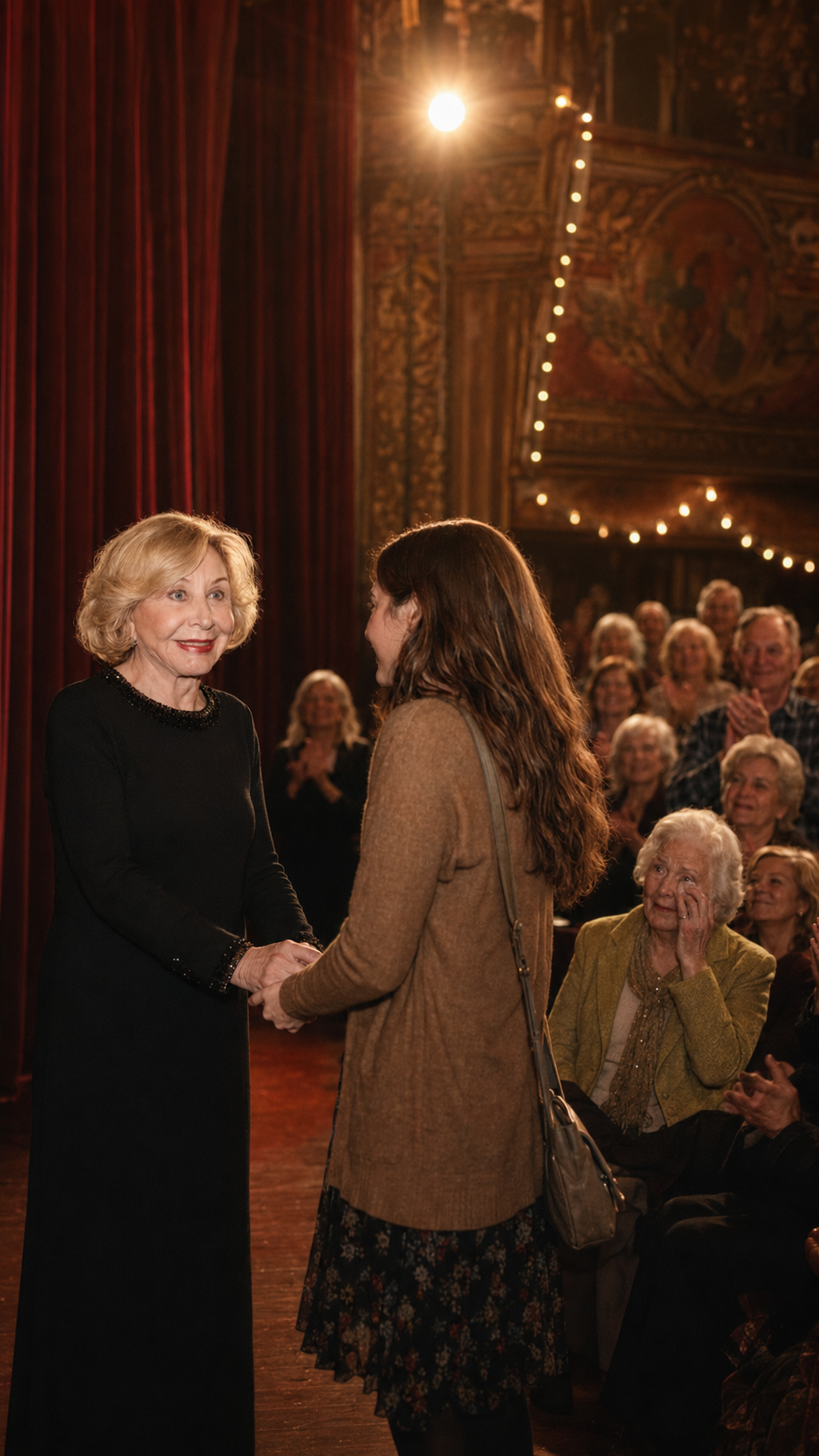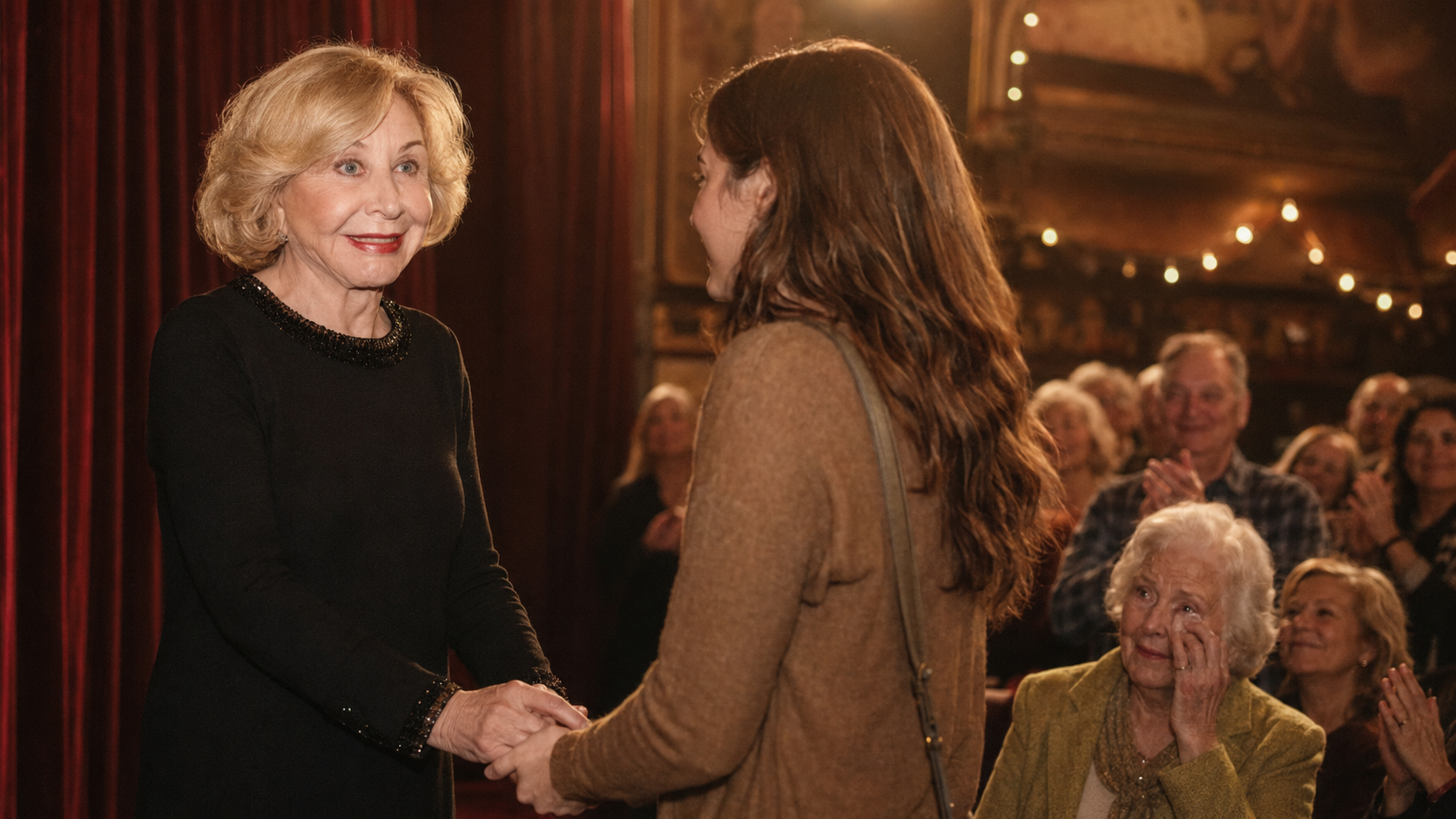
The Maplewood Theater had been standing on the corner of Main Street for almost a hundred years. Its red velvet curtains were faded, its golden lights were a little dim, and the old marquee needed a fresh coat of paint. But to the people of the town, it was still a place full of magic. It was where couples had gone on their first dates, where children had watched their first films, and where families had gathered when they needed something warm to hold on to.
On a cool Saturday afternoon, the theater was hosting a special community event: a screening of beloved episodes from *The Waltons*. The idea had come from the theater’s new manager, a kind young woman named Emily, whose grandmother had loved the show. Emily had found a box of old letters after her grandmother passed away. In nearly every letter, there was a mention of the Walton family, of the lessons they shared, and of the comfort the show brought during lonely evenings.
So Emily decided to invite the whole town.
By noon, the theater was filled with people of every age. Elderly couples sat together in the front rows, their hands folded gently in their laps. Parents arrived with children and grandchildren. A few fans wore simple shirts with the words “Goodnight, John-Boy” printed across the front. Near the entrance, a table displayed old photographs, newspaper clippings, and handwritten notes from people who wanted to share what the show had meant to them.
One note came from a woman named Ruth, who had lost her husband many years earlier. She wrote that after he died, she could not bear the silence of her home. Every evening, she turned on reruns of *The Waltons* because the voices around the family table made her feel less alone.
Another came from a retired teacher named Mr. Carter. He wrote that he used episodes from the series to speak with his students about honesty, forgiveness, and helping neighbors. “Children remember lessons when they see kindness in action,” he had written in careful blue ink.
There was also a photo from a young man named Daniel. It showed him as a small boy sitting beside his grandmother on a worn brown sofa. She had one arm around him, and they were both smiling toward the television. Daniel had brought the picture with him that day, tucked safely inside the pocket of his jacket.
The crowd settled into their seats as Emily stepped onto the stage. She welcomed everyone and thanked them for keeping the theater alive. She spoke about her grandmother and how some stories become part of a family’s life. Then she smiled, looked toward the back of the room, and said, “Before we begin, there is someone here who would like to say hello.”
At first, people thought it might be the mayor or a local musician. The back doors opened quietly. A woman in a soft blue coat stepped inside, walking slowly down the aisle with a gentle smile on her face.
For a few seconds, no one recognized her.
Then an elderly woman near the front stood up so quickly that her cane nearly fell to the floor. Her eyes widened. Her hand rose to her mouth.
“Oh my goodness,” she whispered. “It’s Olivia.”
The room went still.
Michael Learned had walked into the Maplewood Theater without an announcement, without bright cameras, and without a grand entrance. She simply looked around at the people who had come to remember a show they loved. Her eyes moved from the old couples to the children, from the framed photographs to the handmade signs. Then she stepped onto the stage.
The audience rose to their feet.
The applause began softly, almost uncertainly, and then it grew louder. People clapped until their hands hurt. Some cried openly. Others stood frozen, unable to believe that the woman they had welcomed into their homes for so many years was now standing only a few feet away.
Michael waited until the applause faded. Her eyes were shining.
“I did not come here to make a speech,” she said quietly. “I came because I heard this theater was showing *The Waltons*, and I wanted to see the people who still carry that family in their hearts.”
The room fell silent again.
She told them that when the show first began, no one could have imagined how deeply it would touch people. It was not a story about perfect people, she said. It was about a family that struggled, worried, disagreed, made mistakes, and still found its way back to one another. It was about a home where there was always room for one more chair at the table.
Michael looked toward the old photographs near the entrance.
“Over the years, I have met fans who watched the show with a parent they later lost,” she continued. “I have met people who watched it while they were sick, lonely, far from home, or trying to stay hopeful. They tell me the same thing: that the family in that little house reminded them that they were not alone.”
Ruth, the widow sitting in the second row, lowered her head and wiped her tears. Her daughter reached over and held her hand.
Michael then spoke about the quiet acts of kindness that people often forget. She said that a cup of coffee shared with a neighbor, a phone call to an old friend, a meal delivered to someone in need, or simply listening when a person is hurting can change a life more than anyone realizes.
“Sometimes,” she said, “we believe we need to do something grand to make a difference. But most of the time, love arrives in small ways. It comes through a door held open. A seat saved for someone. A hand reached out when another person feels they have nowhere else to go.”
Then Michael noticed Daniel standing near the aisle. He had been trying not to cry, but the old photograph of his grandmother was still clutched in his hand.
She gently asked him to come forward.
Daniel hesitated, but the audience encouraged him with soft applause. He walked slowly toward the stage and handed Michael the photograph. She studied it for a moment, then looked at him with deep kindness.
“Who is this beautiful woman?” she asked.
“My grandmother,” Daniel said. His voice shook. “She raised me after my parents died. We watched *The Waltons* every night. She always told me that family is not only the people you are born with. It is the people who stay.”
The theater became so quiet that people could hear the old projector humming in the booth above them.
Daniel explained that his grandmother had passed away the previous winter. Since then, he had found it hard to return to the theater, because it was the last place they had visited together. But when he heard about the screening, he felt he had to come.
Michael reached for his hand.
“Your grandmother gave you something precious,” she said. “She gave you a home inside your heart. And every time you choose kindness, every time you help someone feel seen, she will still be with you.”
Daniel began to cry. Michael held him for a long moment, and then the audience began to clap. It was not loud applause this time. It was slow, loving, and full of understanding.
Michael asked everyone in the theater to look around.
“There may be someone sitting beside you who is carrying a loss you cannot see,” she said. “There may be someone who came here today because they needed to remember what it feels like to belong. So before you leave tonight, speak to someone. Tell them you are glad they came. Ask them how they are doing. Make room for them.”
Emily stood at the side of the stage, crying quietly. She thought of her grandmother’s letters and wished she could have seen this moment. But then she realized something beautiful: in a way, her grandmother was there. She was present in every memory shared, every hand held, and every person who had found comfort in a story about love.
Before the screening began, Michael gave the town one last surprise. She asked the theater staff to bring out the long wooden table that had been placed in the lobby for refreshments. Then she invited everyone to stay after the show for coffee, pie, and conversation.
“No one should leave here feeling alone,” she said.
The simple gathering lasted long after the final credits ended. People who had never met before sat together and traded stories. Ruth told a young mother about the first time she watched the show with her late husband. Mr. Carter spoke with several teenagers about the importance of being kind even when no one is watching. Daniel placed his grandmother’s photograph on the memory table, beside Emily’s letters.
As the evening came to an end, Michael stood near the theater doors, greeting every person who passed by. She hugged some, shook hands with others, and listened carefully as fans shared their memories. There were no rushed cameras, no loud announcements, and no need for anything grand.
At last, Michael looked back at the theater one more time.
“I hope you remember this,” she said. “Not because I came here, but because you came here for one another. Keep your doors open. Keep a chair at the table. Keep making room for kindness. That is how families are built.”
Then she walked quietly out into the cool night air.
For a long time, nobody moved.
The Maplewood Theater had hosted many films, many celebrations, and many unforgettable evenings. But those who were there that night would always remember something more than a surprise visit. They would remember the feeling of being seen. They would remember strangers becoming friends. And they would remember that even in a small town, inside an old theater with faded curtains, one gentle message could bring an entire community back to the meaning of home.