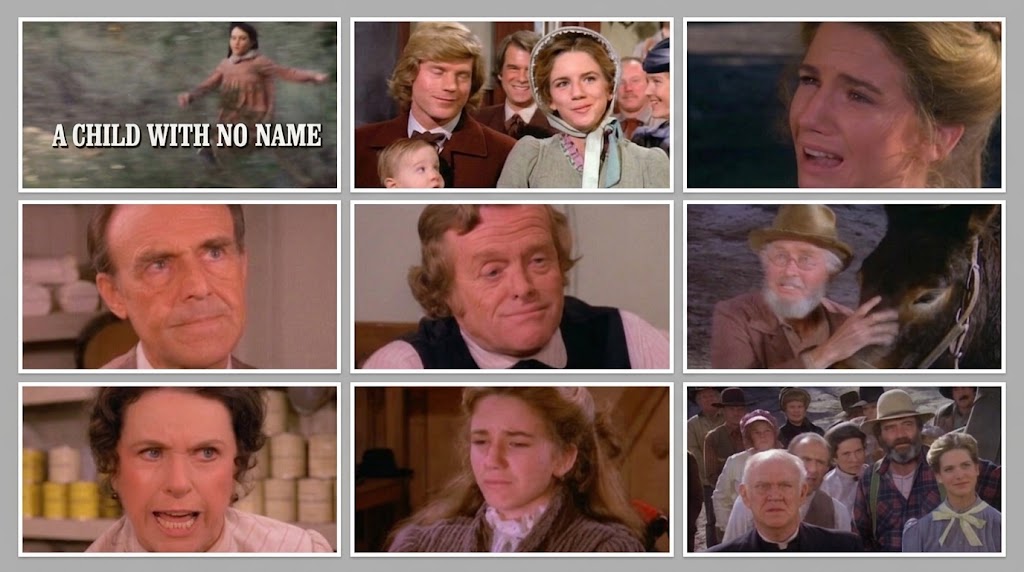
The Wilder home had never felt so full of hope.
Laura and Almanzo were preparing to welcome their second child, and their little daughter, Rose, was excited about becoming an older sister. Laura spent her days making tiny clothes, arranging the cradle, and imagining the baby who would soon complete their family.
After everything Laura and Almanzo had endured together, this pregnancy felt like a blessing. Laura spoke warmly about the future, while Almanzo watched over her with quiet pride. They did not know whether the baby would be a boy or a girl. They only knew the child was already deeply loved.
When Laura’s labor began, Almanzo hurried to find Dr. Hiram Baker.
Dr. Baker had delivered many children in Walnut Grove. He had treated nearly every family in town and had stood beside them through sickness, injury, birth, and death. The people trusted him, and Laura had known him since childhood.
Everyone believed she was in safe hands.
But during the delivery, something went terribly wrong.
Laura gave birth to a baby boy. For one brief, beautiful moment, she believed her son had arrived safely. Then the room became painfully quiet.
The baby was not breathing.
Dr. Baker tried everything he could, but nothing helped. Laura’s newborn son died before she and Almanzo could even give him a name.
The joy that had filled the house vanished in an instant.
Laura lay frozen with grief. She had carried the child, dreamed about him, and imagined the life he would have. Now she was being told that he was gone.
Almanzo was devastated, but he tried to remain strong for Laura. He held her hand and reminded her that they still had each other and Rose. Yet Laura could not hear comfort in his words. All she could feel was the unbearable emptiness where her child should have been.
The tiny cradle remained unused.
The clothes Laura had sewn were folded away.
And the baby was buried without a name.
In the days that followed, Laura’s sadness turned into anger.
She needed someone to blame.
Dr. Baker tried to explain that the child’s death could not have been prevented. He had done everything possible, but some tragedies were beyond the power of any doctor.
Laura refused to accept that.
In her pain, she became convinced that Dr. Baker had failed her son. She believed he had made a mistake during the delivery and that her baby might still be alive if another doctor had been there.
When Dr. Baker came to check on her, Laura could barely look at him.
“You killed my baby,” she told him.
The words struck him harder than any physical blow.
Dr. Baker had spent his life caring for the people of Walnut Grove. He had worked through sleepless nights, crossed dangerous roads in storms, and often accepted food or gratitude instead of payment. He knew that he could not save everyone, but every loss remained with him.
The death of Laura’s baby had already broken his heart.
Now Laura’s accusation made him question whether he had the right to continue practicing medicine at all.
News of the tragedy spread through Walnut Grove. The townspeople mourned with the Wilders, but Laura’s anger toward Dr. Baker also created doubt. Some people began to wonder whether she might be right.
Whispers followed the doctor wherever he went.
Patients became uncertain when he entered their homes.
For the first time, Dr. Baker felt that the people he had served for years no longer trusted him.
He began packing his medical instruments.
If the town had lost faith in him, he believed there was no reason for him to stay.
Almanzo understood that Laura was speaking from grief, but he also knew Dr. Baker had not intentionally harmed their son. He gently tried to tell Laura that blaming the doctor would not bring their baby back.
Laura became angry with him too.
She felt as though no one understood the depth of her loss. Almanzo had lost a son, but Laura had carried the baby inside her. She had felt every movement and had believed she was protecting him.
Now she felt that she had failed.
Behind her accusation against Dr. Baker was a deeper fear—perhaps she was really blaming herself.
Almanzo carried his own grief quietly. He missed the son he would never teach to farm, ride a horse, or care for the land. But he also feared he was losing Laura. She was becoming distant from him and from Rose, trapped inside a sorrow no one could reach.
Then another crisis struck.
Rose became dangerously ill.
At first, Laura hoped it was only a minor sickness. But the little girl’s fever rose quickly. Her breathing became weak, and she could barely remain awake.
Laura was terrified.
She had already lost one child. Now she feared she might lose another.
Almanzo knew they needed a doctor immediately.
But Dr. Baker was preparing to leave Walnut Grove. After Laura’s accusation and the town’s growing suspicion, he no longer believed anyone wanted his help.
Almanzo went to him anyway.
He pleaded with Dr. Baker to come.
For a moment, the doctor hesitated. The Wilder home was the place where his confidence had been destroyed. Laura believed he was responsible for her baby’s death. If Rose died under his care, the entire town might turn against him completely.
But Dr. Baker could not ignore a sick child.
Whatever Laura thought of him, Rose needed help.
He gathered his medical bag and rushed to the Wilder home.
When Laura saw him enter, her emotions collided. This was the man she blamed for her son’s death, but he was also the only person who might save her daughter.
There was no time for anger.
Dr. Baker examined Rose and realized her condition was extremely serious. He worked through the night, refusing to leave her bedside. He cooled her fever, watched her breathing, and gave her the medicine and care she needed.
Laura stayed nearby, holding Rose’s hand and praying.
Hour after hour passed.
Dr. Baker did not rest. Despite the cruel words Laura had spoken to him, he treated Rose with the same dedication he had always shown every patient.
Slowly, the child’s fever began to break.
Her breathing became steadier.
Then Rose opened her eyes.
Laura’s relief overwhelmed her. She pulled her daughter close and wept, thanking God that Rose was alive.
Across the room stood Dr. Baker, exhausted and silent.
He had saved her child.
In that moment, Laura finally saw the truth.
Dr. Baker had not been careless with her son. He had not caused the baby’s death. He had carried the loss too, and Laura’s accusation had wounded a good man who had spent his life helping others.
Laura approached him with tears in her eyes.
She apologized.
She admitted that her grief had made her search for someone to blame. Accepting that her baby’s death had no simple explanation had been too painful, so she had placed all her anger on him.
Dr. Baker understood.
He knew Laura had spoken as a grieving mother, not as a cruel person. Yet her apology restored something he had nearly lost—his belief that he could still serve the people of Walnut Grove.
Laura also began to understand that healing did not mean forgetting her son.
The baby had lived only briefly, but he had been real. He had been wanted, cherished, and loved. Even though he had died before receiving a name, he would always remain part of their family.
Laura and Almanzo stood together at their child’s grave.
There was no easy ending to their sorrow. Nothing could replace the son they had lost. The empty cradle would still hurt, and there would always be moments when they wondered what kind of boy he might have become.
But they still had Rose.
They still had each other.
And they still had a life that needed their love.
Laura placed flowers near the small grave and quietly said goodbye—not because she would forget her child, but because she was finally ready to continue living.
The baby had no name carved into memory for the world to see.
But in the hearts of his mother and father, he would never be nameless.
He was their son.
And he would always be loved.
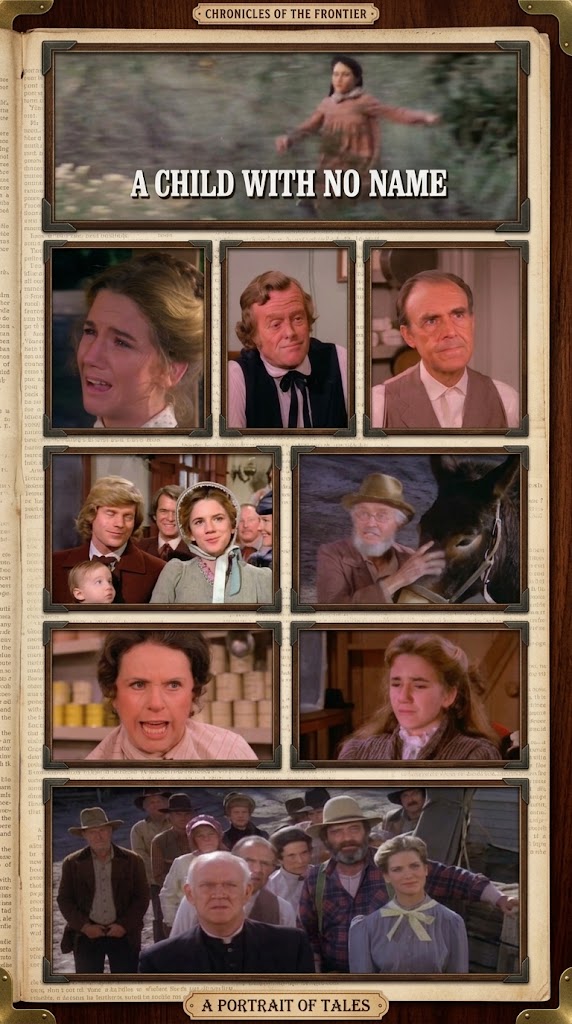 A Child with No Name” (Part 2)
The morning after Rose’s fever finally broke, the Wilder home felt different.
The silence was still there, but it no longer felt hopeless.
Laura sat beside Rose’s bed, gently brushing a strand of hair from her daughter’s face. For the first time in many days, she smiled. It was small and fragile, but it was real.
Almanzo watched from the doorway.
He knew Laura’s pain had not disappeared. The loss of their baby would stay with them forever. But he also saw something returning to her eyes—hope.
Later that afternoon, Laura quietly walked to Dr. Baker’s office.
The doctor looked surprised when she entered.
For several moments, neither of them spoke.
Finally, Laura broke the silence.
“I came to tell you I’m sorry.”
Her voice trembled.
“I wanted someone to blame because I couldn’t bear the truth. I couldn’t accept that my son was simply gone.”
Dr. Baker lowered his eyes.
“I’ve delivered hundreds of babies,” he said softly. “Most of them came into the world healthy. But every doctor remembers the ones he couldn’t save.”
Laura realized that while she had mourned her son, Dr. Baker had also carried the weight of that heartbreaking day.
“He wasn’t just my patient,” the doctor continued. “He was your child. And I prayed harder than you’ll ever know.”
Tears filled Laura’s eyes.
She reached for his hand.
“I know that now.”
The apology lifted a burden from both of them.
Word quickly spread through Walnut Grove that Laura had publicly apologized to Dr. Baker.
The whispers stopped.
Families who had begun to doubt him once again welcomed him into their homes.
One by one, patients returned to his office.
The town realized that even the best doctor could not prevent every tragedy.
Charles Ingalls was especially relieved.
He had watched both Laura and Dr. Baker suffer in different ways. Now he saw healing beginning for each of them.
That evening, Charles visited the Wilders.
Without saying much, he sat beside Laura on the porch as the sun dipped below the horizon.
“You know,” he said gently, “love doesn’t end because someone leaves this world.”
Laura looked toward the small hill where her baby rested.
“I was afraid I’d forget him if I started smiling again.”
Charles shook his head.
“You honor the people we lose by living the life they would have wanted for us.”
Those words stayed with Laura.
Days later, she walked to the little grave carrying fresh wildflowers.
She knelt beside it, not with anger this time, but with peace.
“My sweet little boy,” she whispered, “you were here for only a moment, but you’ll always be part of our family.”
The breeze rustled through the prairie grass as if nature itself were listening.
Laura no longer asked why the tragedy had happened.
Some questions would never have answers.
But she understood something important.
Grief and love could exist together.
She could miss her son every day while still laughing with Rose.
She could cry and still find joy.
She could remember without remaining trapped in sorrow.
When she returned home, Rose ran into her arms.
Almanzo wrapped them both in a warm embrace.
For the first time since the baby’s death, the house felt like a home again.
The empty cradle remained tucked away in the corner of the room, a quiet reminder of the child they had lost.
Laura chose not to hide it.
It represented both heartbreak and love—a love that would never disappear simply because their son had lived such a short life.
As the seasons slowly changed across Walnut Grove, life continued.
Children laughed in the schoolyard.
Farmers worked their fields.
Families gathered for church each Sunday.
And Dr. Baker once again answered every call for help, carrying his medical bag with the same compassion he had always shown.
Laura often thought of her baby.
Some days the memories brought tears.
Other days they brought gratitude.
She had learned that healing was not about forgetting.
It was about carrying the memory of someone you loved while finding the strength to keep moving forward.
On the wide, peaceful prairie, where so many joys and sorrows had shaped the Ingalls family, Laura looked toward the future with renewed faith.
Her son had entered the world without a name.
But he would never be forgotten.
He would always live in the hearts of those who had loved him from the very beginning.


