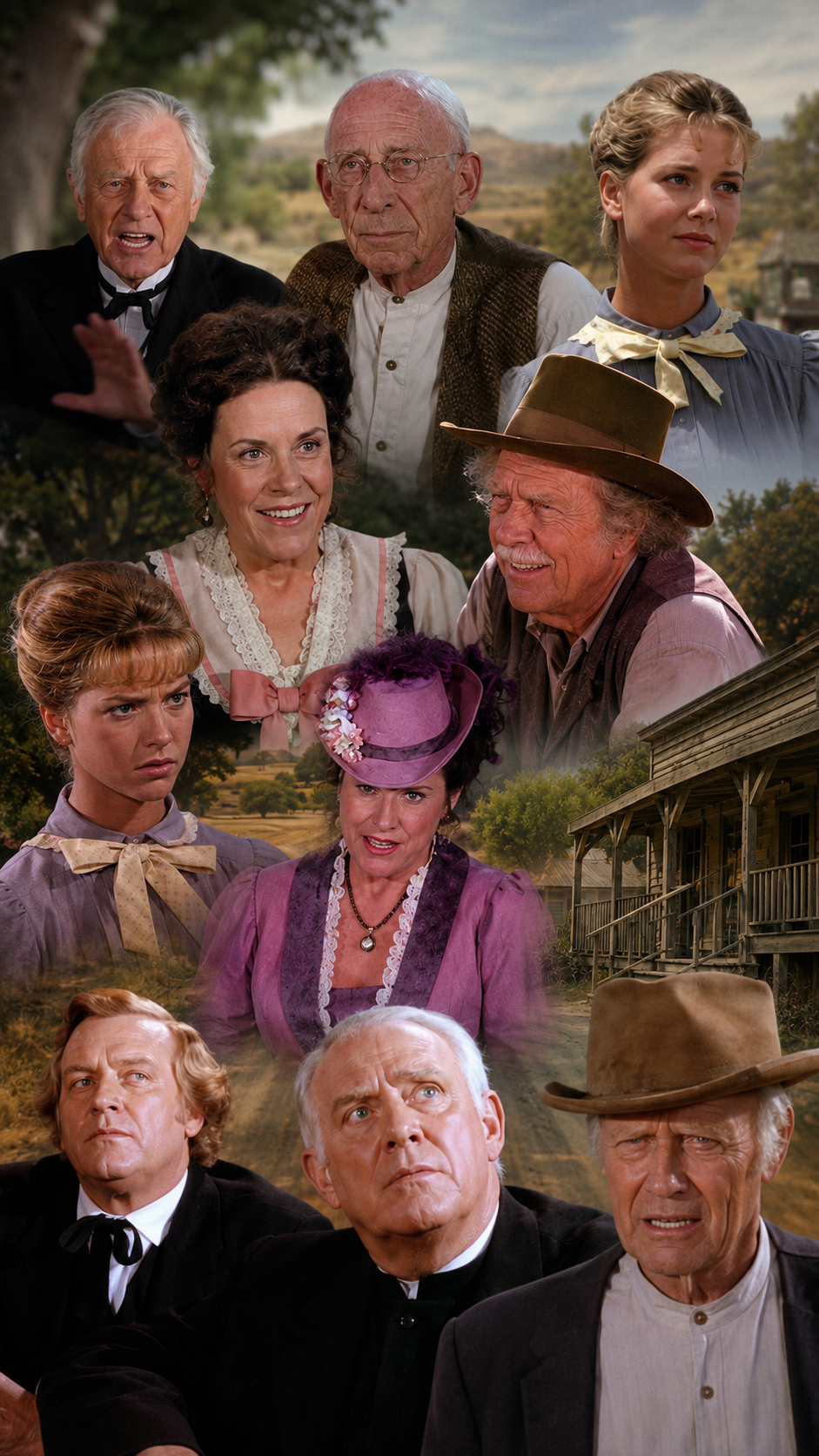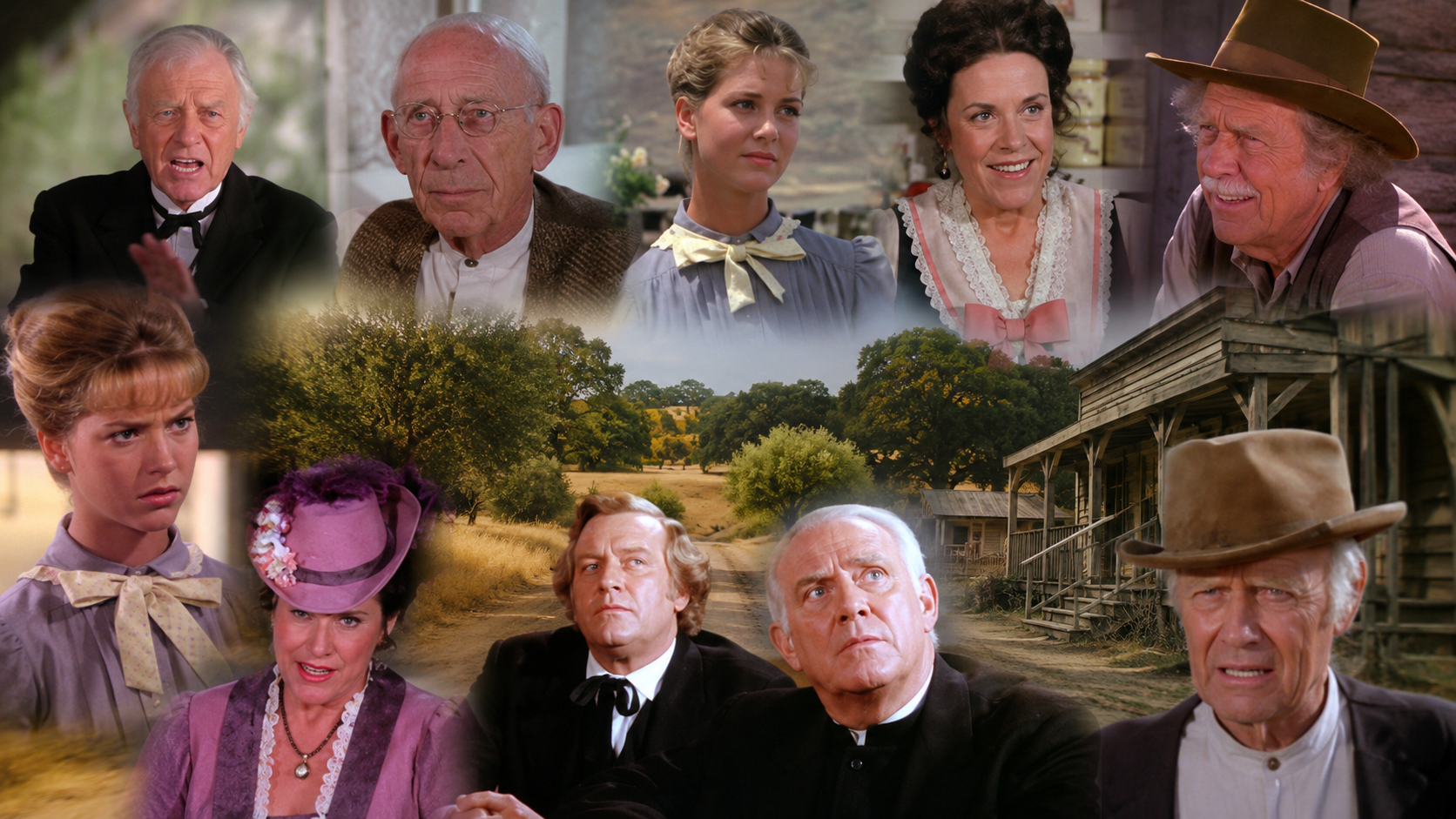
Walnut Grove had always been a quiet farming community where neighbors depended on one another. The town did not have much wealth, but it had something more valuable—friendship, honesty, and a strong sense of belonging.
That peaceful spirit began to change when Harriet Oleson made an astonishing discovery.
While looking through old family papers, Harriet found a document connected to the early history of Walnut Grove. According to the papers, one of her ancestors had contributed land and support when the town was first established.
Harriet immediately became excited.
In her mind, this discovery proved that the Oleson family was not simply part of Walnut Grove. She believed they were the most important family in its history.
Before long, Harriet began telling everyone that the town should recognize the Oleson family’s contribution.
She went even further.
Harriet suggested that Walnut Grove should be renamed Olesonville.
Most of the townspeople thought the idea was ridiculous. Walnut Grove had carried its name for years. It represented the community’s shared history, not the pride of one family.
But Harriet refused to listen.
She imagined signs bearing the name Olesonville. She pictured visitors arriving and learning about the famous Oleson family. She even began acting as though the town already belonged to her.
Nels Oleson felt deeply embarrassed.
He knew Harriet could become carried away when she wanted attention, but this time her ambition affected the entire community. He tried to reason with her, gently reminding her that one old document did not give her the right to rename the town.
Harriet dismissed his concerns.
She believed Nels lacked vision.
Meanwhile, Willie watched the argument with confusion, while Nancy eagerly supported the idea. Nancy loved the thought of living in a town named after her family. She began behaving as though everyone should admire her simply because she was an Oleson.
The disagreement soon divided Walnut Grove.
Some residents wanted to ignore Harriet and allow the excitement to pass. Others feared she might find a legal way to force the name change.
A town meeting was called.
Inside the schoolhouse, Harriet stood proudly before her neighbors. She presented the old papers and gave an emotional speech about her family’s place in history.
She claimed that without the Olesons, Walnut Grove might never have existed.
The townspeople listened patiently, but many were unconvinced.
John Carter spoke about what Walnut Grove meant to ordinary families. It was a place built by farmers, teachers, merchants, craftsmen, and parents who had sacrificed for their children.
Almanzo Wilder agreed.
He reminded everyone that a town’s history belonged to all the people who had lived, worked, struggled, and helped one another there.
Harriet became angry.
She accused the community of refusing to give her family the respect it deserved.
Then she announced that if the town would not honor the Olesons willingly, she would search for another way to make it happen.
The situation became even more serious when Harriet began making plans for a grand celebration. She ordered decorations, discussed a new town sign, and prepared to welcome important visitors.
For Harriet, the decision had already been made.
For everyone else, Walnut Grove was in danger of losing part of its identity.
Nels finally reached his limit.
He loved Harriet, but he could no longer support her behavior. He told her that the Oleson family had been fortunate because Walnut Grove had welcomed them, supported their store, and treated them as neighbors.
The town did not owe them its name.
Instead, the Olesons owed the town their gratitude.
Harriet was hurt by his words.
She believed even her own husband had turned against her.
Determined to prove herself right, Harriet continued investigating the old documents. But as more records were examined, an important truth came to light.
The papers did show that one of Harriet’s ancestors had been involved in the town’s early development. However, his role was not as heroic or important as Harriet had believed.
The land had not simply been donated as a generous gift. The arrangement had included personal benefits, business interests, and conditions that Harriet had ignored.
Even worse, another historical record showed that the town’s original name had been chosen by several founding families together.
The Olesons had never owned Walnut Grove.
They had simply been one part of its beginning.
When the truth was revealed at another town gathering, Harriet was humiliated.
The decorations she had ordered suddenly looked foolish. Nancy was disappointed that she would not become the most important girl in “Olesonville.”
Some townspeople laughed, but others remained quiet. They knew Harriet’s pride had caused trouble, yet they did not want to destroy her completely.
Nels stood beside her.
Although he disagreed with everything she had done, he did not abandon her in her embarrassment.
Harriet finally looked around the room and saw the people she had offended.
These were the same neighbors who had helped her family during difficult times. They had supported the mercantile, cared for her children, and forgiven many of her mistakes.
For once, Harriet had no grand speech.
She admitted that perhaps she had allowed her excitement to go too far.
The people of Walnut Grove accepted her reluctant apology.
The town kept its familiar name.
The sign still read Walnut Grove, just as it always had.
Life slowly returned to normal.
The children returned to school. Farmers went back to their fields. Customers once again gathered inside the Oleson mercantile.
Harriet still believed the Oleson family deserved an honored place in local history, but she had learned that history could not belong to one person.
Walnut Grove was special because it belonged to everyone.
It was built not by a single wealthy family, but by generations of ordinary people who shared their burdens, celebrated their joys, and stood together when times were hard.
And that was something no new name could ever improve.
“Welcome to Olesonville” is a lighthearted episode about pride, family reputation, and community identity. Beneath the humor, it reminds us that a town’s true legacy is not found in one name written on a sign. It lives in the people who care for one another and call that place home.
“Welcome to Olesonville” (Part 2)
After the heated town meeting, Walnut Grove was more divided than it had been in years. Harriet Oleson refused to accept defeat. Certain that history was on her side, she ordered a large wooden sign to be built. Before sunrise the next morning, travelers approaching town were greeted by bold new words:
WELCOME TO OLESONVILLE
The sight stunned everyone.
Children stopped to stare. Farmers shook their heads in disbelief. Even Isaiah Edwards burst into laughter before saying, “Harriet’s finally gone and renamed the whole town without asking anybody.”
At the mercantile, Harriet greeted every customer with a bright smile.
“Welcome to Olesonville!” she proudly announced.
Most people ignored her greeting.
Others quietly corrected her.
“It’s still Walnut Grove.”
Harriet simply smiled and insisted they would all get used to the new name.
Nancy enjoyed every minute of the attention. She strutted through town acting as though she were the daughter of royalty. Willie, however, felt embarrassed. He wished his mother would stop before she made the entire family a laughingstock.
Meanwhile, Nels could barely hide his frustration.
Everywhere he looked were campaign posters Harriet had secretly ordered.
“Elect Nels Oleson for Mayor.”
Nels hadn’t agreed to run.
He hadn’t even known about the campaign.
“Harriet,” he sighed, “I don’t want to be mayor.”
“Nonsense!” Harriet replied. “The mayor of Olesonville should naturally be an Oleson.”
“But there isn’t any Olesonville.”
“There soon will be.”
The argument grew louder each day.
At school, the children even began teasing one another over the town’s name. Laura Ingalls Wilder, now teaching once again, reminded her students that a community wasn’t built by signs or speeches.
“It is built by the people who help one another,” she told them.
Those words spread quickly around town.
A few days later another public meeting was called.
This time nearly everyone attended.
Reverend Alden spoke first.
He reminded everyone that pride was dangerous when it placed one family above another.
Doctor Baker added that Walnut Grove had survived sickness, fires, crop failures, and hard winters because everyone worked together.
No single person deserved all the credit.
Harriet listened with folded arms.
She still refused to change her mind.
Then Lars Hanson’s old business records were brought forward, along with other documents from the town’s earliest years.
Together they painted a much clearer picture.
The founders had worked side by side.
Families donated land.
Neighbors built roads together.
Merchants supplied materials.
Farmers cleared fields.
Everyone had sacrificed.
No one family could honestly claim ownership of Walnut Grove.
The room grew quiet.
For the first time Harriet realized she had only wanted to hear the part of history that made her family look important.
Nels gently took her hand.
“Harriet,” he said softly, “there’s nothing wrong with being proud of your family. But Walnut Grove belongs to everyone.”
She looked around the room.
The Carters.
The Wilders.
The Edwards family.
The Garveys’ old friends.
Neighbors who had celebrated weddings together, mourned losses together, and rebuilt homes after disasters.
Slowly, Harriet’s confident smile faded.
“I suppose…” she admitted reluctantly, “…perhaps I became just a little carried away.”
The room erupted with laughter.
Even Harriet couldn’t help smiling.
The next morning Nels, Willie, Isaiah Edwards, and several townsfolk removed the “Welcome to Olesonville” sign.
In its place stood the familiar marker everyone loved.
WELCOME TO WALNUT GROVE
Harriet watched from the mercantile porch.
She sighed dramatically.
“Well… I suppose Walnut Grove isn’t such a terrible name.”
Nels chuckled.
“No, Harriet.”
“It never was.”
Life quickly returned to normal.
The campaign posters disappeared.
Customers once again filled the mercantile.
Children laughed in the streets as though nothing had happened.
Harriet remained as outspoken and ambitious as ever, but she had learned an important lesson.
A community is never defined by one person’s pride.
It is shaped by kindness, hard work, friendship, and the people who stand together through every challenge.
That evening, as the sun set over Walnut Grove, the familiar town sign stood proudly beside the road.
Travelers passing by saw the same welcoming name generations had known.
And the people who called it home wouldn’t have wanted it any other way.
Episode Message
“Welcome to Olesonville” is a humorous episode that showcases Harriet Oleson’s oversized ambition while celebrating the true spirit of Walnut Grove. Beneath the comedy is a timeless reminder that a community’s greatest strength comes not from one influential family, but from neighbors who work together, care for one another, and share both triumphs and hardships.