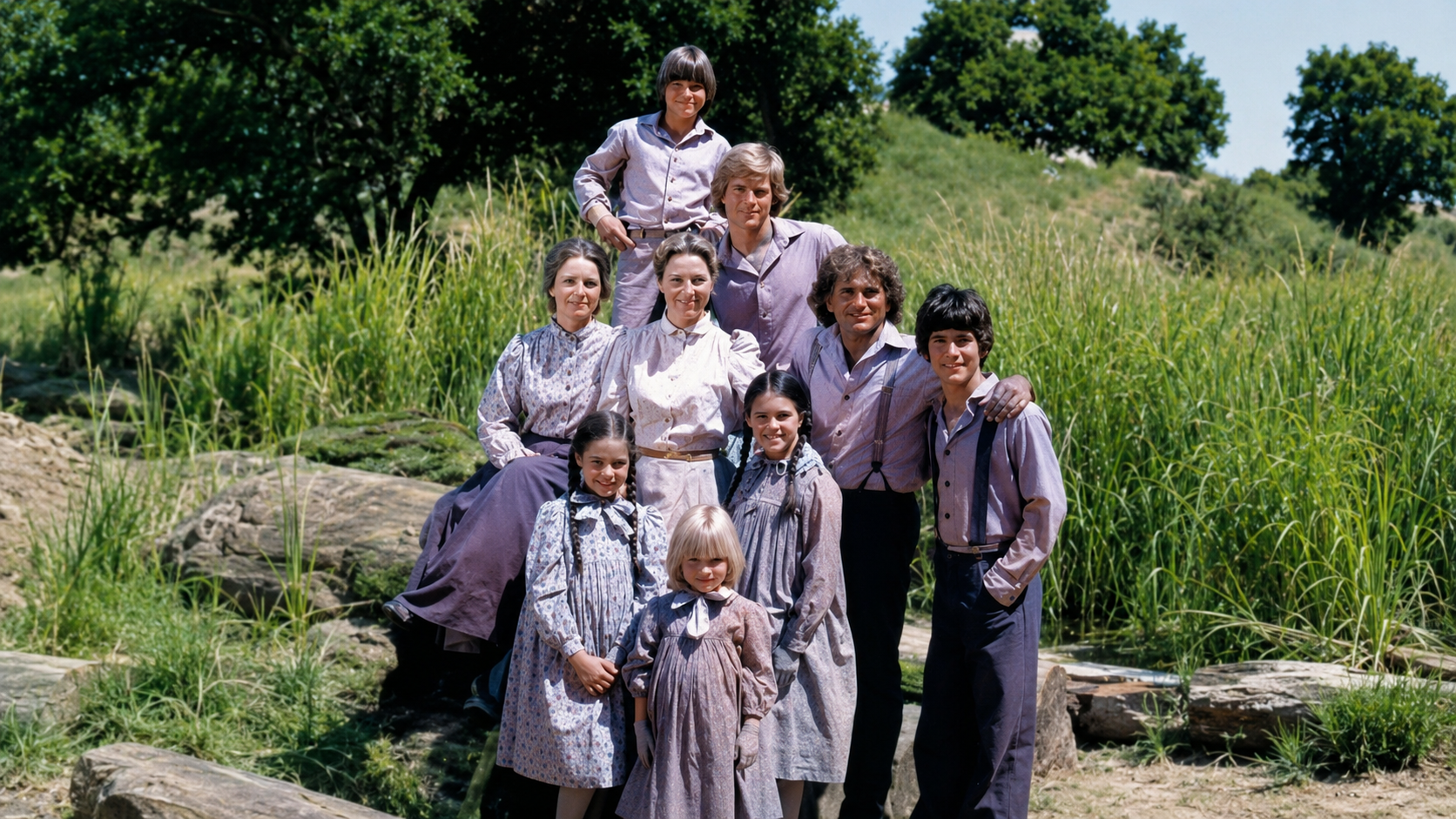
To millions of readers and television viewers, Charles Ingalls is remembered as the warm-hearted father who always found a way to keep his family together through life’s greatest challenges. On Little House on the Prairie, Michael Landon brought him to life as a strong, loving, and dependable man whose wisdom and kindness inspired generations. But behind the beloved character was a real man whose life was every bit as remarkable—and, in many ways, even more difficult.
The real Charles Phillip Ingalls was born on January 10, 1836, in Cuba, New York. Long before Laura Ingalls Wilder became a famous author, Charles was already living the adventurous life that would later fill the pages of her books. He grew up in a hardworking farming family, learning at an early age how to hunt, build, and survive in the wilderness. These skills would become essential as he spent much of his life moving west in search of better opportunities for his growing family.
In 1860, Charles married Caroline Quiner, a woman whose patience, intelligence, and determination perfectly matched his adventurous spirit. Together they would raise five children: Mary, Laura, Carrie, Charles Frederick, and Grace. Their marriage was built on love, faith, and teamwork, even when the road ahead seemed uncertain.
Charles believed that every new frontier offered hope for a brighter future. This belief led the Ingalls family on a series of moves across the American Midwest. They lived in Wisconsin, Kansas, Minnesota, Iowa, and eventually Dakota Territory. Each move came with new dreams but also new hardships.
Life on the frontier was never easy. The family built cabins with their own hands, planted crops in unpredictable weather, and often faced long, bitter winters. Grasshopper plagues destroyed harvests. Droughts left fields barren. Financial struggles were a constant part of daily life. Yet Charles rarely allowed these setbacks to break his spirit.
Laura later described her father as a gifted storyteller and musician. After exhausting days of work, Charles would take out his violin and fill the little cabin with music. Those evenings became treasured memories for the Ingalls children. The songs helped them forget their worries, if only for a little while, and reminded them that happiness could still be found even during difficult times.
One of Charles’ greatest strengths was his optimism. Whenever life knocked him down, he simply looked for another way forward. If crops failed, he found work in nearby towns. If money ran short, he accepted whatever honest labor he could find. His determination became an example for his daughters, especially young Laura, who admired her father’s courage more than anyone else.
But Charles was far from perfect. Unlike the television version, the real Charles sometimes made risky decisions. His desire to keep moving west often placed the family in uncertain situations. Several of the lands they settled on did not turn out to be as promising as he had hoped. Some historians believe his restless nature made life more difficult for the family financially.
Even so, Laura never stopped loving and respecting her father. In her books, she painted a picture of a man who valued honesty, hard work, and family above everything else. While she softened some of the hardships they experienced, the heart of her stories remained true: Charles Ingalls was a father who always tried to do what he believed was best for those he loved.
As the years passed, the family finally settled in De Smet, Dakota Territory. It was there that Laura grew into adulthood and many of the later Little House stories took place. Although life became somewhat more stable, Charles continued working tirelessly to support his family, never seeking fame or recognition.
Little did he know that his youngest daughter would one day turn their everyday struggles into one of the most beloved series of books in American history.
The Final Years and the Lasting Legacy of Charles Ingalls
By the late 1880s, Charles Ingalls had spent nearly his entire adult life building homes, breaking prairie soil, and providing for his family. Years of hard physical labor had taken a toll on his health, but he continued working whenever he could. Retirement was not a luxury many frontier families could afford.
Unlike the dramatic adventures often shown on television, Charles’ later years were quieter. He remained active in the De Smet community, earning the respect of neighbors who knew him as an honest man willing to lend a helping hand. Whether serving on local committees or assisting friends with difficult work, Charles believed that strong communities were built through kindness and cooperation.
His greatest joy came from watching his children grow into adults. Laura had married Almanzo Wilder and begun building a family of her own. Mary had become a teacher despite losing her eyesight, showing the same determination that Charles had always admired. Carrie and Grace also started new chapters of their lives, carrying with them the lessons their parents had taught.
Then tragedy struck the Ingalls family years earlier when Charles Frederick, the only Ingalls son, died as an infant. The loss deeply affected Charles and Caroline, though they rarely spoke publicly about their grief. Like many parents of the era, they quietly carried the pain while continuing to care for the children who depended on them.
In 1902, Charles’ health declined after suffering from heart problems. On June 8, 1902, at the age of 66, Charles Ingalls passed away in De Smet, South Dakota. His death marked the end of an extraordinary life that had been filled with hardship, hope, sacrifice, and unwavering devotion to his family.
He was buried in De Smet Cemetery beside other members of the Ingalls family. At the time of his passing, no one could have imagined that future generations around the world would come to know his name.
It was Laura Ingalls Wilder who ensured that her father’s legacy would never fade. Beginning in the 1930s, she transformed her childhood memories into the Little House books. Although she occasionally simplified events or combined characters for storytelling, her love and admiration for Charles shone through every page.
When television producers adapted the books in the 1970s, Michael Landon’s portrayal introduced Charles Ingalls to millions of new fans. His version emphasized compassion, integrity, humor, and unconditional love, making “Pa” one of television’s most unforgettable fathers. While the TV character was more idealized than the historical Charles, the qualities that mattered most—his devotion to family, his resilience, and his generous heart—were rooted in the real man.
Today, visitors continue traveling to Walnut Grove, Minnesota, De Smet, South Dakota, and other historic Ingalls sites to learn about the family’s remarkable journey. Museums, restored homes, and preserved landmarks allow fans to step into the world that inspired Laura’s stories and better understand the life Charles worked so hard to build.
More than a century after his passing, Charles Ingalls remains a symbol of perseverance. He was not a wealthy man, nor a famous one during his lifetime. He was a husband who loved deeply, a father who sacrificed tirelessly, and a pioneer who believed tomorrow could always be better than today.
His greatest achievement was not the cabins he built or the land he farmed—it was the values he passed on to his children. Through Laura’s books and the enduring popularity of Little House on the Prairie, the real Charles Ingalls continues to remind readers and viewers that courage, kindness, faith, and family are the strongest foundations anyone can build.


