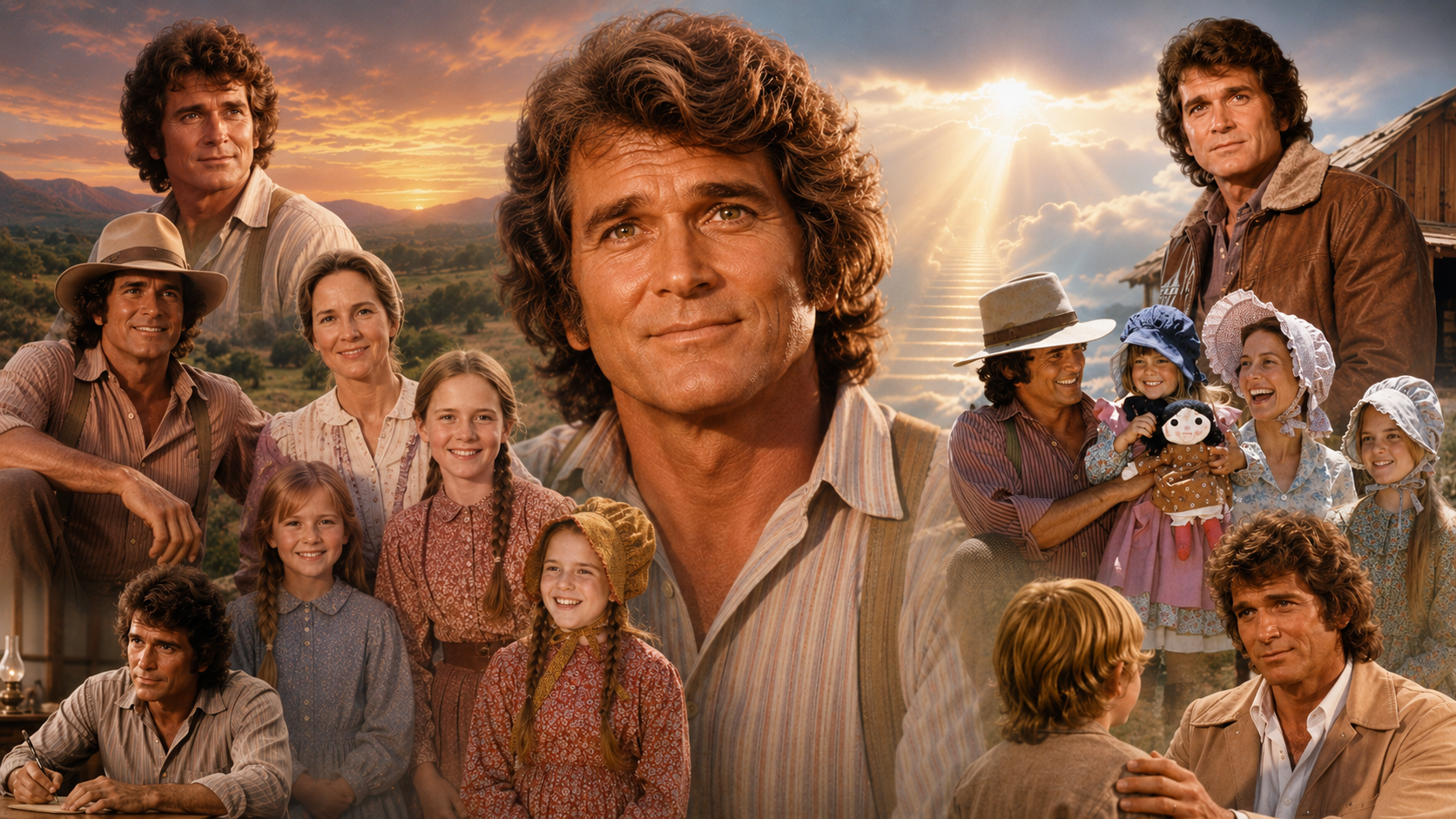
 Who Was Michael Landon? The Man Behind the Famous Smile
Michael Landon was one of the most beloved actors, writers, and directors in television history. To millions of viewers, he was more than a Hollywood star. He was Charles Ingalls in Little House on the Prairie, Little Joe Cartwright in Bonanza, and Jonathan Smith in Highway to Heaven. Through these unforgettable roles, he became a symbol of kindness, hope, and family values.
But who was Michael Landon away from the cameras? Was he really as caring as the characters he played? The answer is not as simple as “yes” or “no.” Like every person, he had strengths, flaws, successes, and mistakes. Yet the people who knew him best often remembered a man with a generous heart and a deep love for making others smile.
Born Eugene Maurice Orowitz on October 31, 1936, in Queens, New York, Michael’s childhood was far from easy. His family struggled financially, and his relationship with his parents was often difficult. His mother battled serious mental health challenges, and Michael later spoke about how painful those years were. Those early experiences shaped the man he would become. He often said that he wanted to create the kind of loving family he wished he had growing up.
His path to Hollywood was unexpected. A gifted athlete, Michael earned a track scholarship to the University of Southern California. However, a shoulder injury ended his athletic dreams. While searching for a new direction, he was discovered by a talent agent, changed his name to Michael Landon, and began acting.
His big break came in 1959 when he was cast as Little Joe Cartwright on Bonanza. The show became one of America’s biggest television hits, and Landon quickly became a household name. Fans loved his charm, humor, and natural warmth.
But he refused to remain just an actor. Michael wanted to tell stories that mattered. He learned to write, direct, and produce episodes, earning the respect of many people in the television industry. When Little House on the Prairie premiered in 1974, it became another enormous success.
As Charles Ingalls, Michael portrayed a father who believed in honesty, hard work, forgiveness, and compassion. Although the television version wasn’t always historically accurate, it reflected many of the values Michael admired. He wanted audiences to believe that kindness could overcome hardship and that family could survive almost anything.
Behind the scenes, many cast members remembered him as someone who made long filming days enjoyable. Melissa Gilbert, who played Laura Ingalls, has often spoken warmly about him, describing him as a mentor and a father figure who encouraged her to believe in herself. Dean Butler, Alison Arngrim, Karen Grassle, and many others have shared stories about Michael’s sense of humor and his ability to make everyone laugh between scenes.
He also cared deeply about the quality of his work. Michael spent long hours rewriting scripts, planning scenes, and making sure every episode connected emotionally with viewers. His goal wasn’t simply to entertain people—it was to leave them feeling hopeful.
Still, Michael wasn’t perfect. He could be demanding on set and expected excellence from everyone around him. Some coworkers admired his high standards, while others found him difficult at times. His personal life also received significant media attention, particularly his divorces and remarriage, which led to criticism during the height of his career.
These realities remind us that Michael Landon was a real person—not the flawless father he portrayed on television.
Yet despite life’s challenges, he continued creating stories that encouraged forgiveness, love, and compassion. Those values became the heart of both Little House on the Prairie and later Highway to Heaven, where he played an angel helping people through life’s hardest moments.
By the late 1980s, Michael had become one of television’s most respected creative voices. Few actors had successfully starred in three iconic television series while also writing, directing, and producing them.
For millions of families, he wasn’t simply an actor. He became part of their weekly routine and their happiest memories.
Was Michael Landon Really a Good Person?
Whether someone is a “good person” is ultimately a matter of personal judgment, but many people who worked with Michael Landon described acts of generosity, encouragement, and loyalty that left a lasting impression.
One of the qualities most often mentioned was his willingness to help young actors grow. Melissa Gilbert has frequently said that Michael treated her with patience and kindness, teaching her not only how to act but also how to carry herself with confidence. He challenged her to improve while making sure she felt supported.
Michael also believed that laughter belonged in the workplace. Crew members often recalled practical jokes, funny stories, and playful moments that helped ease the pressure during long filming days. He understood that a happy set usually created better performances on screen.
His generosity extended beyond the camera. Over the years, he quietly supported charities and community causes, though he rarely sought attention for those efforts. Friends described him as someone who preferred meaningful actions over public praise.
Perhaps his greatest gift was his storytelling. Michael believed television could inspire people to be kinder, more forgiving, and more hopeful. Episodes of Little House on the Prairie tackled poverty, prejudice, disability, addiction, grief, and forgiveness with compassion. Highway to Heaven continued that tradition by focusing on second chances and the importance of helping others.
When Michael was diagnosed with pancreatic cancer in 1991, he faced the illness with remarkable openness. Rather than hiding from the public, he gave interviews, spoke honestly about his condition, and expressed gratitude for the love he had received throughout his career.
He passed away on July 1, 1991, at just 54 years old.
His death saddened fans around the world, but his work has never disappeared. Decades later, Little House on the Prairie continues to find new audiences, introducing younger generations to stories about family, faith, resilience, and compassion.
Of course, no honest look at Michael Landon’s life can ignore that he had personal struggles. His marriages, relationships, and some professional decisions were widely discussed and sometimes criticized. Those close to him acknowledged that he was imperfect, just like anyone else.
At the same time, many colleagues have spoken warmly about his generosity, creativity, humor, and leadership. His legacy is built not only on the characters he played but also on the countless lives he influenced through his work and mentorship.
So, was Michael Landon a good person?
The evidence suggests he was a talented, compassionate, and generous man who inspired many people, while also being a human being with real flaws and personal challenges. He wasn’t perfect, but he left behind stories that continue to encourage kindness, courage, forgiveness, and hope.
More than three decades after his passing, millions still remember Michael Landon not just as a television legend, but as someone whose work reminded people that even during life’s hardest moments, love, family, and compassion are always worth holding onto.


