Part 1: The Woman by the Stage Door
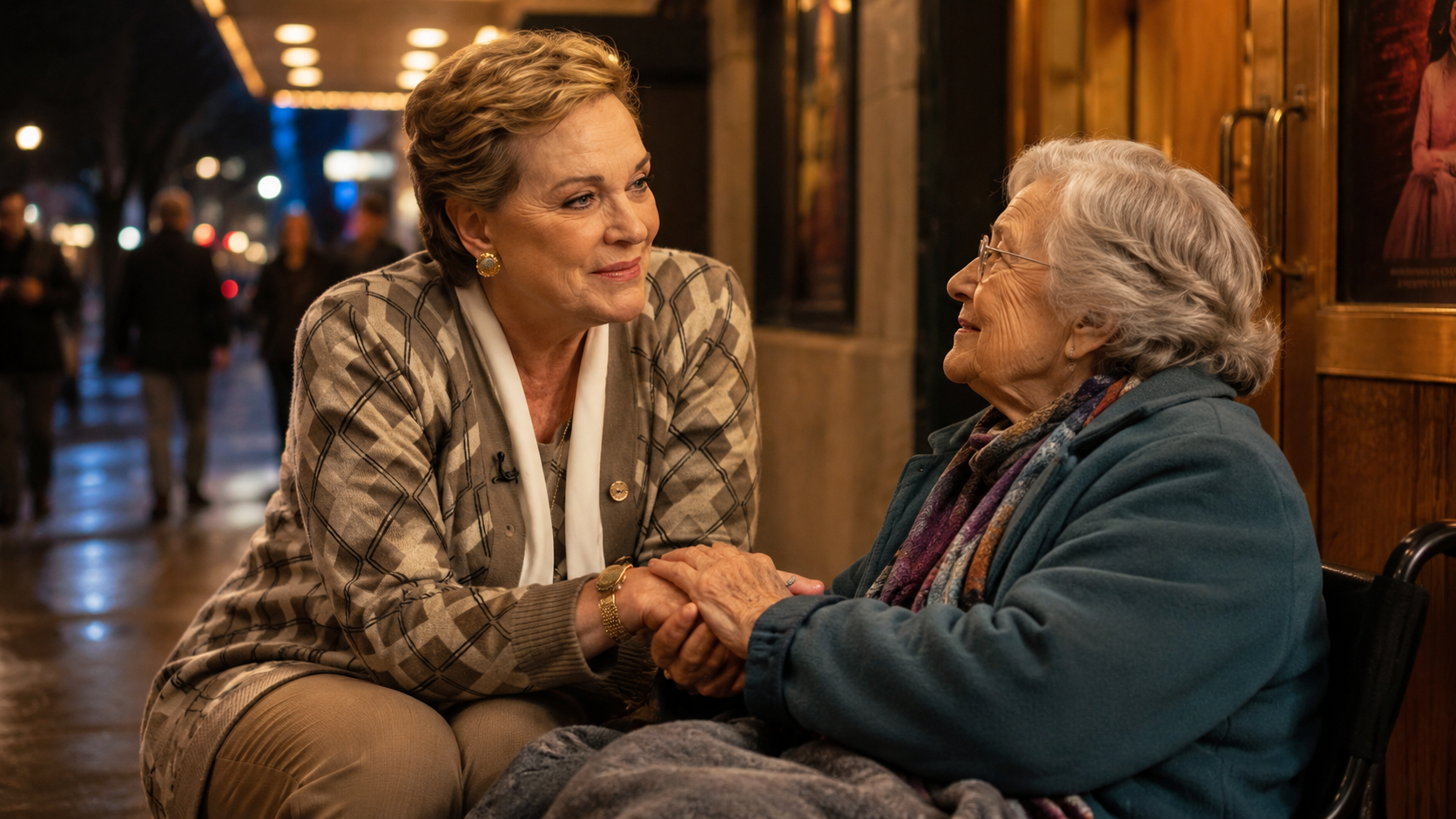
Every evening, when the theater lights began to glow, an elderly woman named Clara would arrive with a small folding chair and a warm smile.
She was seventy-eight years old, with silver hair, gentle eyes, and hands that always held the same faded notebook. Inside that notebook were old ticket stubs, newspaper clippings, and handwritten memories from every show she had attended over the years.
Clara was not rich. She lived alone in a small apartment above a bakery. Her husband had passed away many years before, and her only daughter lived far away. Most days were quiet for her, but show nights gave her something to look forward to.
She never asked for anything.
She did not push through crowds. She did not shout for attention. She simply waited outside the stage door, hoping to see the performer who had brought comfort to her life through music, stories, and kindness.
For years, the staff noticed her.
“Miss Clara is here again,” one security guard would say with a smile.
Rain or cold, she came whenever she could. Sometimes she brought homemade cookies for the crew. Sometimes she brought flowers from the small garden behind her building. She always said the same thing.
“Please tell them thank you. Their work helped me through many lonely nights.”
But she never got a real meeting.
One winter evening, the weather turned bitterly cold. Clara still came, wrapped in her old blue coat. She sat outside after the show, her notebook pressed close to her chest.
Inside the theater, the performer was preparing to leave when one crew member finally spoke up.
“There is someone you should meet,” he said. “She has waited for years.”
The performer paused.
“For years?”
The crew member nodded. “Quietly. Kindly. Never asking for special treatment.”
That night, everything changed.
Part 2: The Meeting That Changed Everything
The stage door opened slowly, and Clara looked up.
For a moment, she could not speak. The person she had admired for so many years was standing right in front of her, smiling gently.
“Are you Clara?” the performer asked.
Tears filled her eyes. “Yes,” she whispered. “I just wanted to say thank you.”
The performer pulled a chair beside her and sat down in the cold night air.
“No,” they said softly. “I should be thanking you.”
Clara opened her faded notebook and showed the memories she had saved. Ticket stubs from old shows. Notes about songs that helped her after her husband died. A small photo of her and her daughter from many years ago.
“I came because your work made me feel less alone,” Clara said. “Some nights, I felt like the world had forgotten me. But your words reminded me that life still had beauty.”
The performer listened with tears in their eyes.
That night, there was no rush. No cameras. No big speech. Just two people sitting outside a theater, sharing stories under the streetlights.
Before leaving, the performer took Clara’s hands and said, “From now on, you will never wait outside again.”
At the next show, Clara was given a seat in the front row. Afterward, the whole cast welcomed her backstage like family. Her notebook became a treasure, passed carefully from hand to hand.
But the biggest change was not the seat, the applause, or the attention.
The biggest change was that Clara felt seen.
And the performer never forgot her either. Clara’s quiet loyalty reminded them why their work mattered. Fame could fade. Applause could end. But kindness stayed.
Years later, people still talked about the elderly woman who waited outside every show.
Not because she wanted attention.
But because her patient heart brought two lives together at exactly the right time.
Sometimes, the smallest acts of love wait quietly in the cold until someone finally opens the door.


