The Literary Man 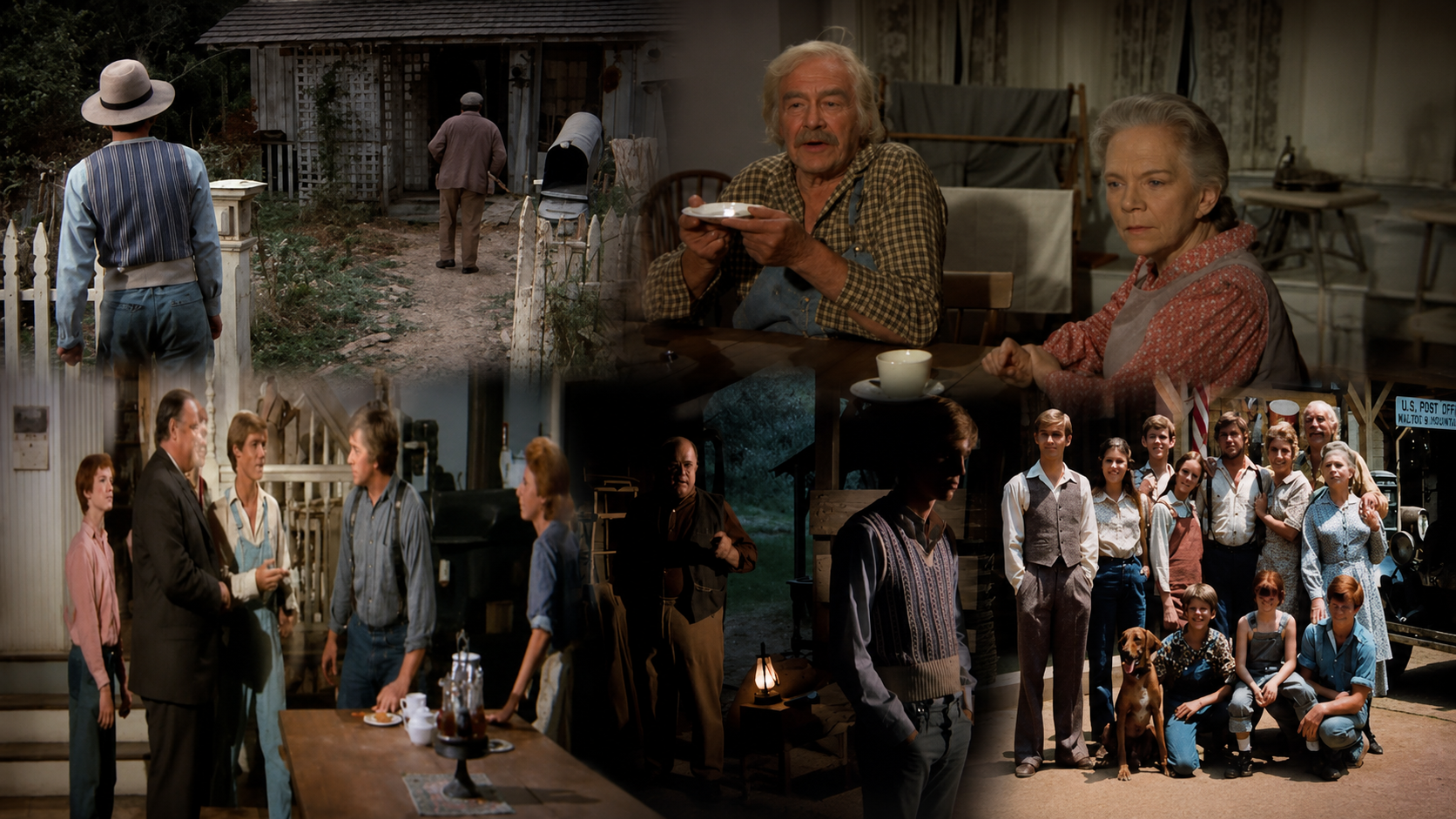
John-Boy Walton had always believed that words could carry a person farther than any road on the mountain.
Every night, after the house grew quiet, he sat near his bedroom window with a pencil in his hand and a notebook on his knees.
While the rest of the family slept, he wrote about the people he loved, the troubles they faced, and the dreams that kept them moving forward.
But lately, his writing felt small to him.
He wondered if stories from Walton’s Mountain were enough.
He wondered if a boy from a poor family, living far from big cities and famous schools, could ever become a real writer.
One afternoon, a stranger arrived in town.
He was a tall man with a worn brown coat, a polished walking stick, and a leather bag filled with books.
He introduced himself as Mr. Harrison Blackwell, a traveling writer.
He spoke with a smooth voice and had a way of making every sentence sound important.
At Ike’s store, he quickly became the center of attention.
He said he had met famous authors in New York. He said he had been invited to literary dinners in Boston.
He claimed that editors knew his name, publishers waited for his next book, and young writers often came to him for advice.
John-Boy listened with wide eyes.
To him, Mr. Blackwell seemed like a man who had walked through the very world John-Boy dreamed about.
When Mr. Blackwell heard that John-Boy wanted to be a writer, he smiled.
“A young writer on a mountain,” he said. “That has a fine sound to it.”
John-Boy felt proud.
That evening, John invited the stranger to supper. Olivia, kind as always, set another plate at the table.
The children stared at Mr. Blackwell as he told stories of hotels, train stations, famous bookshops, and crowded lecture halls.
He made the outside world sound bright and grand.
After supper, John-Boy showed him some of his writing.
Mr. Blackwell read a few pages slowly. Then he looked at John-Boy and said, “You have promise, son. But promise needs guidance.”
Those words meant everything to John-Boy.
For the next few days, Mr. Blackwell stayed in town. John-Boy followed him whenever he could.
They talked about books, newspapers, poems, and the hard life of a writer. Mr. Blackwell told him that talent was not enough.
A writer needed courage, style, and important friends.
John-Boy began to feel that this man could open a door for him.
Then Mr. Blackwell made a surprising offer.
“I know an editor who might read your work,” he said. “But you must prepare your best pages.
If he likes them, your name could travel far beyond this mountain.”
John-Boy could hardly believe it.
He worked late into the night, rewriting his story again and again. He wanted every word to be perfect. Olivia brought him coffee.
His father reminded him not to lose himself in another man’s promises. Grandpa simply watched Mr. Blackwell with careful eyes.
Grandpa did not trust a man who talked too much about his own greatness.
One afternoon, John-Boy found Mr. Blackwell alone behind Ike’s store. The man looked tired.
His proud voice was gone. In his hand was a letter, old and folded many times.
John-Boy did not mean to pry, but he saw enough to understand.
There was no famous editor waiting.
There was no new book.
Mr. Blackwell was not the successful literary man he claimed to be.
He was a man who had once dreamed of greatness, failed many times, and now carried his old dreams like heavy stones in his bag.
John-Boy felt hurt.
He had believed him.
That evening, Mr. Blackwell came to the Walton house for supper again, but the mood had changed. John-Boy was quiet.
Grandpa asked simple questions that made Mr. Blackwell uncomfortable.
Finally, John-Boy could not hold back.
“Were all those stories true?” he asked.
The room became still.
Mr. Blackwell looked down at his plate. For the first time since he arrived, he seemed small.
“Some were true,” he said softly. “Some were almost true.
And some were only what I wished had happened.”
John-Boy felt anger rise in his chest.
“You made me believe you could help me.”
Mr. Blackwell nodded sadly.
“I know. And I am sorry.”
He stood from the table, ashamed.
“I suppose I should leave in the morning.”
No one spoke for a moment.
Then John said, “A man can leave, or a man can tell the truth and stay long enough to make something right.”
Mr. Blackwell looked at him with tired eyes.
That night, John-Boy sat on the porch, confused and disappointed.
He had wanted a hero from the literary world. Instead, he had found a lonely man hiding behind stories.
But as the wind moved through the trees, John-Boy began to understand something.
Maybe writers were not great because they knew famous people.
Maybe they were great because they told the truth.
To be continued…
The Literary Man – Part 2
The next morning, Mr. Blackwell did not leave.
He came down to breakfast without his proud smile. His coat looked less grand.
His voice was quieter. He thanked Olivia for the meal and apologized to the family.
“I wanted people to see me as important,” he said. “I suppose I started believing my own stories because the truth hurt too much.”
John-Boy watched him closely.
Part of him was still angry. But another part of him felt sorry for the man.
Mr. Blackwell had not lied because he was cruel. He had lied because he was ashamed of failing.
After breakfast, Mr. Blackwell asked to speak with John-Boy alone.
They walked toward the edge of the woods, where the morning sun touched the tops of the trees.
“I cannot send your work to a famous editor,” Mr. Blackwell admitted. “I do not have that power.”
John-Boy looked away.
“But I can read your pages honestly,” the man continued. “And I can tell you what I know from trying, failing, and trying again.”
John-Boy said nothing for a moment.
Then he handed him the notebook.
This time, Mr. Blackwell did not offer big praise. He read carefully. He pointed out weak sentences.
He showed John-Boy where the story moved too slowly. He told him where the heart of the writing was strong.
“This part,” he said, tapping the page, “feels true. Keep writing like this.”
For the first time, John-Boy received advice that did not sound fancy. It sounded useful.
Over the next few days, Mr. Blackwell helped him work on his story. He taught him that simple words could be powerful.
He told him not to copy other writers, not to chase fame, and not to be ashamed of where he came from.
“Your mountain is not too small,” he said. “It is full of life. You only have to look closely.”
John-Boy began to see Walton’s Mountain differently.
He noticed Grandma humming while kneading dough. He noticed his father’s tired hands after a long day of work.
He noticed his mother’s quiet strength, his brothers’ laughter, and his sisters’ dreams.
These were not small things. They were the very things that made life worth writing about.
One evening, John-Boy read his revised story aloud to the family.
This time, the words felt honest.
The story was about a boy who wanted to leave home so badly that he almost forgot how much home had given him.
As he read, the room grew quiet. Olivia wiped her eyes. John listened with pride. Grandpa smiled like he had known the lesson all along.
When John-Boy finished, no one spoke for a moment.
Then Mr. Blackwell said, “That is the voice of a writer.”
John-Boy looked at him.
“You really mean that?”
“I do,” Mr. Blackwell said. “And this time, I am telling the truth.”
The next day, Mr. Blackwell prepared to leave Walton’s Mountain. He did not make a grand speech.
He did not claim he was going to meet famous authors or important editors.
He simply packed his bag and thanked the family for their kindness.
Before he left, he gave John-Boy an old fountain pen.
“It never made me famous,” he said with a small smile. “But maybe it will help you tell the truth.”
John-Boy accepted it with care.
“I hope you keep writing too,” he said.
Mr. Blackwell looked surprised.
“I do not know if anyone would want to read my words.”
John-Boy smiled.
“Maybe you should write the real story.”
Those words touched the older man deeply.
As Mr. Blackwell walked down the road, he looked less like a failed man and more like someone beginning again.
That night, John-Boy sat by his window with the old fountain pen in his hand. He opened his notebook and began to write.
He wrote about a stranger who came to the mountain wearing pride like a fine coat.
He wrote about a young man who learned that fame was not the same as greatness.
He wrote about truth, shame, forgiveness, and the courage it takes to begin again.
At the end of the page, John-Boy paused and listened to the sounds of home.
The fire crackled downstairs. His family talked softly. The mountain wind moved gently outside his window.
For the first time in many days, he did not feel far from the world of writers.
He felt right in the middle of it.
And he understood that every great story begins with one honest sentence.


